Melanotan I: What It Is and How the Tanning Peptide Works

Evidence strength:

Low research

REVIEWED BY

William Maish, MD MBA MPH

Clinical Product Lead

Published

Last updated

Key takeaway:

Melanotan I is a synthetic peptide that darkens skin by activating a pigment receptor, sold on the gray market as an injectable "tanning peptide." The same molecule, as the approved drug afamelanotide (Scenesse), is used for a rare light-sensitivity disorder. In two placebo-controlled trials of the approved implant in 168 adults with EPP, U.S. patients logged a median 69.4 pain-free hours in direct sunlight versus 40.8 on placebo (P = 0.04). No controlled trial supports the gray-market tanning product, which is not FDA-approved as of 2026.

Read more →

At a glance

FDA statusAs a tanning peptide, non-FDA-approved and unregulated
What it isMC1R agonist that stimulates skin pigment production
Approved formThe identical molecule is the approved drug afamelanotide (Scenesse) for a rare disorder, which this is not
ResearchNo controlled evidence supporting unregulated self-injected tanning
Evidence strengthLow research

What is Melanotan I?

Melanotan I is a synthetic analog of alpha-melanocyte-stimulating hormone (alpha-MSH), a potent activator of the skin's MC1R pigment receptor. Chemically it is the same molecule as afamelanotide, the approved drug sold as Scenesse. The distinction is the product and the use: gray-market "Melanotan I" is an unregulated, self-injected tanning product, not the approved, quality-controlled implant. It is not an approved medicine in that form.

How does it work?

Melanotan I activates MC1R on pigment-producing skin cells, which raises production of the dark pigment eumelanin, darkening the skin independently of UV exposure. The receptor pharmacology is well characterized. This describes how it produces pigmentation, separate from whether unregulated self-injection for tanning is effective or safe.

In a placebo-controlled study of 65 fair-skinned volunteers, epidermal melanin density rose an average of 41% in low-MED, burn-prone skin and 12% in high-MED skin. That result shows the molecule's pigment effect, not the quality or safety of gray-market vials.

Is it FDA-approved?

No, not as a tanning product. The identical molecule is FDA-approved as afamelanotide (Scenesse), a controlled-release implant for erythropoietic protoporphyria, a rare light-sensitivity disorder, given under medical supervision. Gray-market Melanotan I vials sold for cosmetic tanning are not Scenesse, carry none of its manufacturing or quality controls, and are not approved.

What does the research show?

The rigorous human data belong to the approved drug and a different use. Afamelanotide has clinical trial evidence for reducing phototoxicity in the rare disorder it treats, not for cosmetic tanning. There are no controlled human trials supporting unregulated self-injected Melanotan I for tanning, so its cosmetic benefit and safety as sold are unestablished.

Two placebo-controlled trials of the approved implant, reported in 2015, enrolled 168 adults with EPP, split by trial as shown below.

TrialAdults with EPPMedian pain-free hours in direct sunlight, afamelanotide versus placeboP value
United States9469.4 versus 40.80.04
European Union746.0 versus 0.80.005

In the EU trial, patients also had 77 phototoxic reactions versus 146 (P = 0.04). The most common adverse events were headache, nausea, nasopharyngitis, and back pain, with mild implant-site hyperpigmentation in about one third of treated patients. These figures come from a medical implant used for EPP, so they say nothing about tanning vials.

Evidence strength

Low research: The receptor pharmacology is solid, but there is no controlled human evidence supporting unregulated self-injected tanning; the only rigorous human data belong to the approved drug for a different, medical use.

Sources: pharmacology and bioassay work on the afamelanotide molecule (Spichty et al., Journal of Pharmaceutical and Biomedical Analysis, 2012, DOI: 10.1016/j.jpba.2012.11.040), indexed on PubMed; and FDA records for the approved product Scenesse (afamelanotide). This document is educational, is not medical advice or a health claim, and is not an offer to sell any product.


Led by doctors with 40 years of health and longevity expertise

Dr. Anant Vinjamoori

Dr. Anant Vinjamoori, MD

Chief Longevity Officer, Superpower

Dr. Leigh Erin Connealy

Dr. Leigh Erin Connealy, MD

Clinician & Founder of The Centre for New Medicine

Dr. Robert Lufkin

Dr. Robert Lufkin, MD

Physician & UCLA Medical School Professor, NYT bestselling author

Dr. Abe Malkin

Dr. Abe Malkin, MD

Founder & Medical Director of Concierge MD

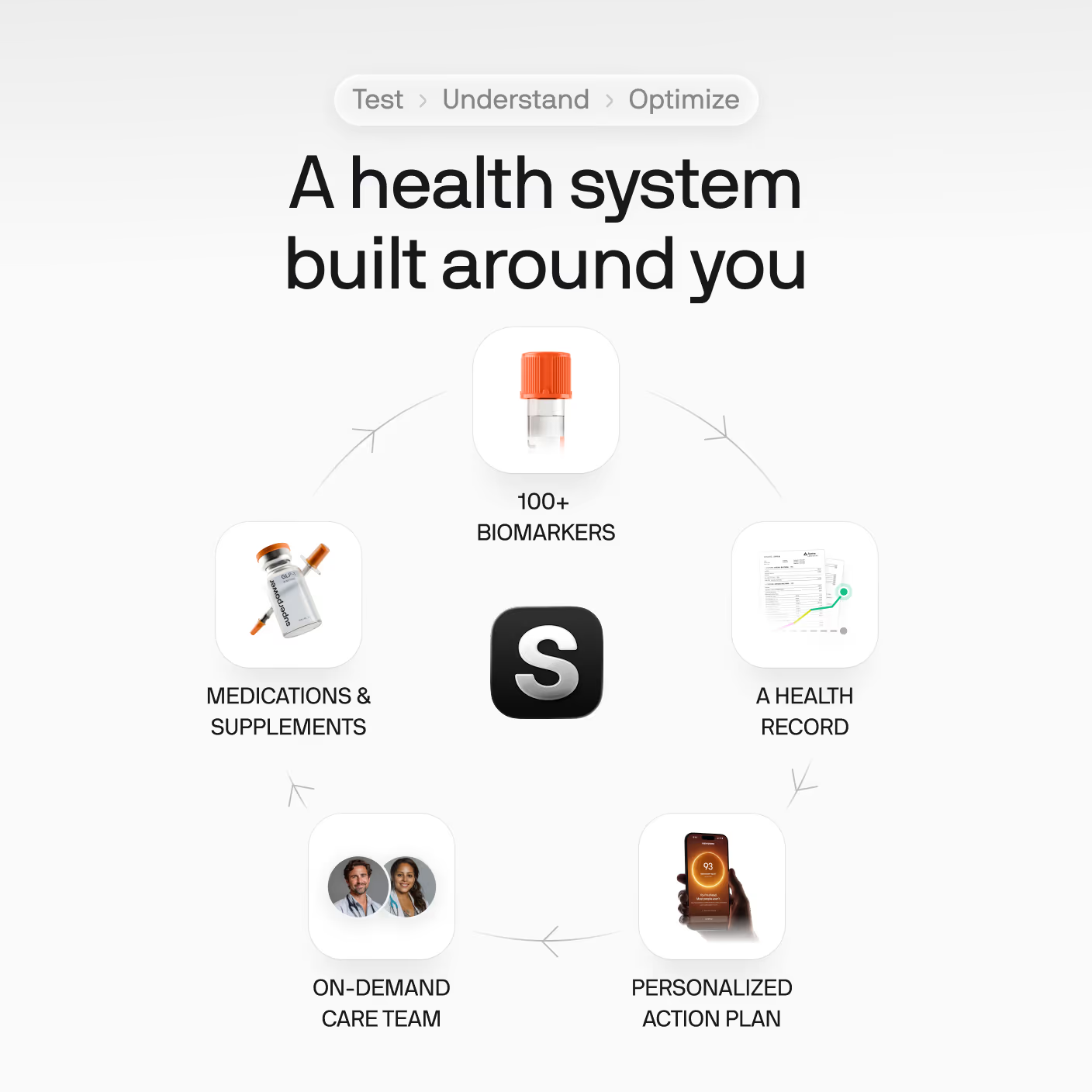
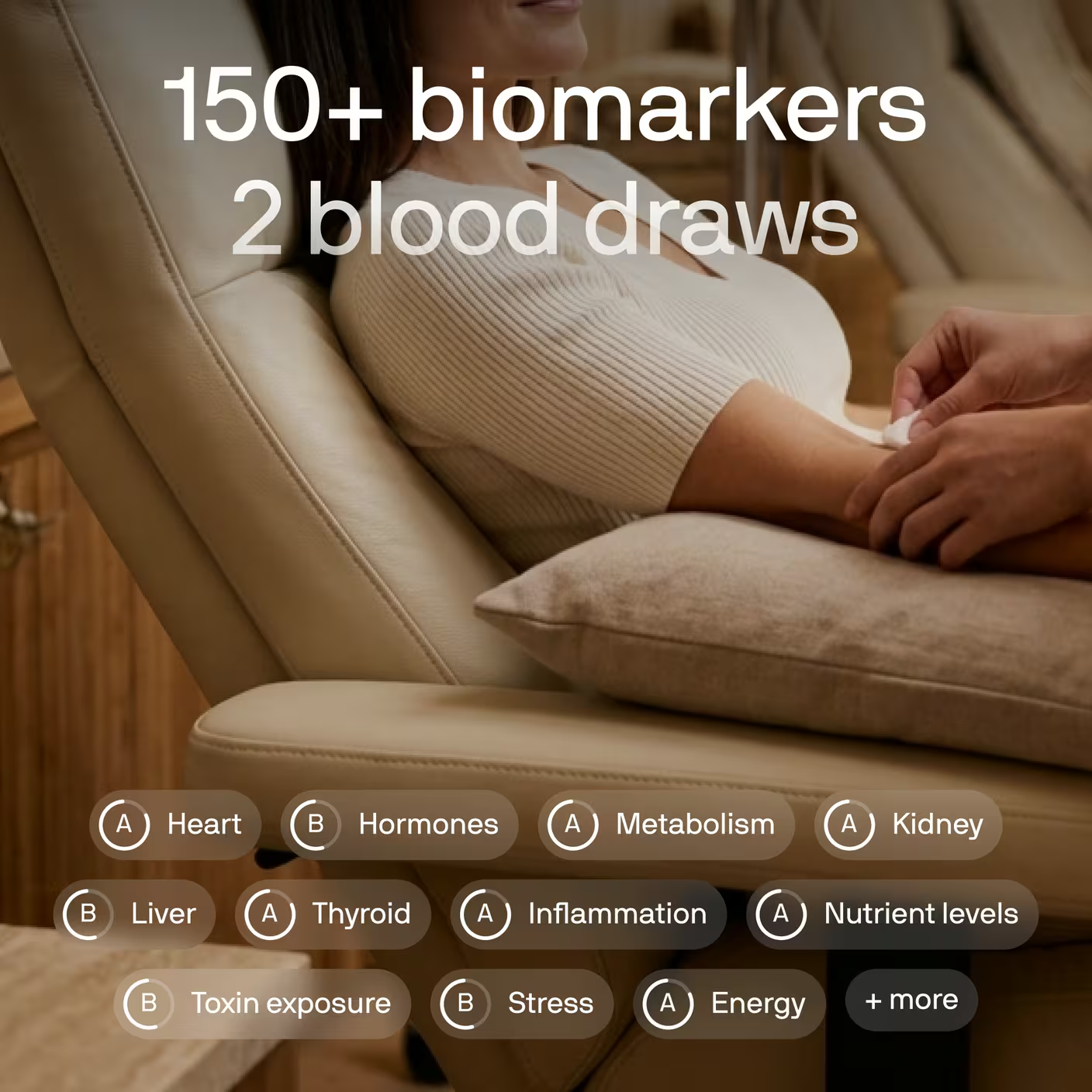
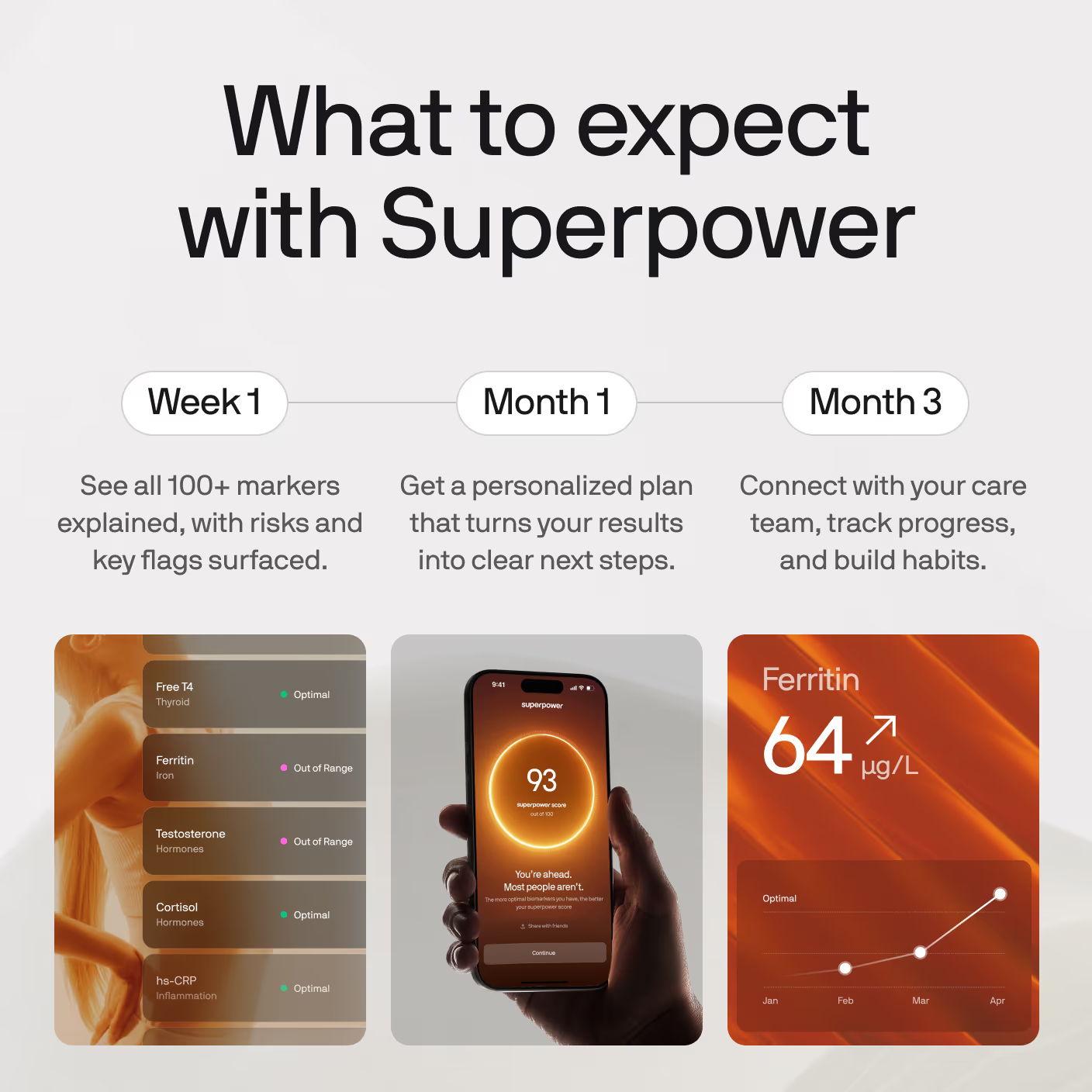
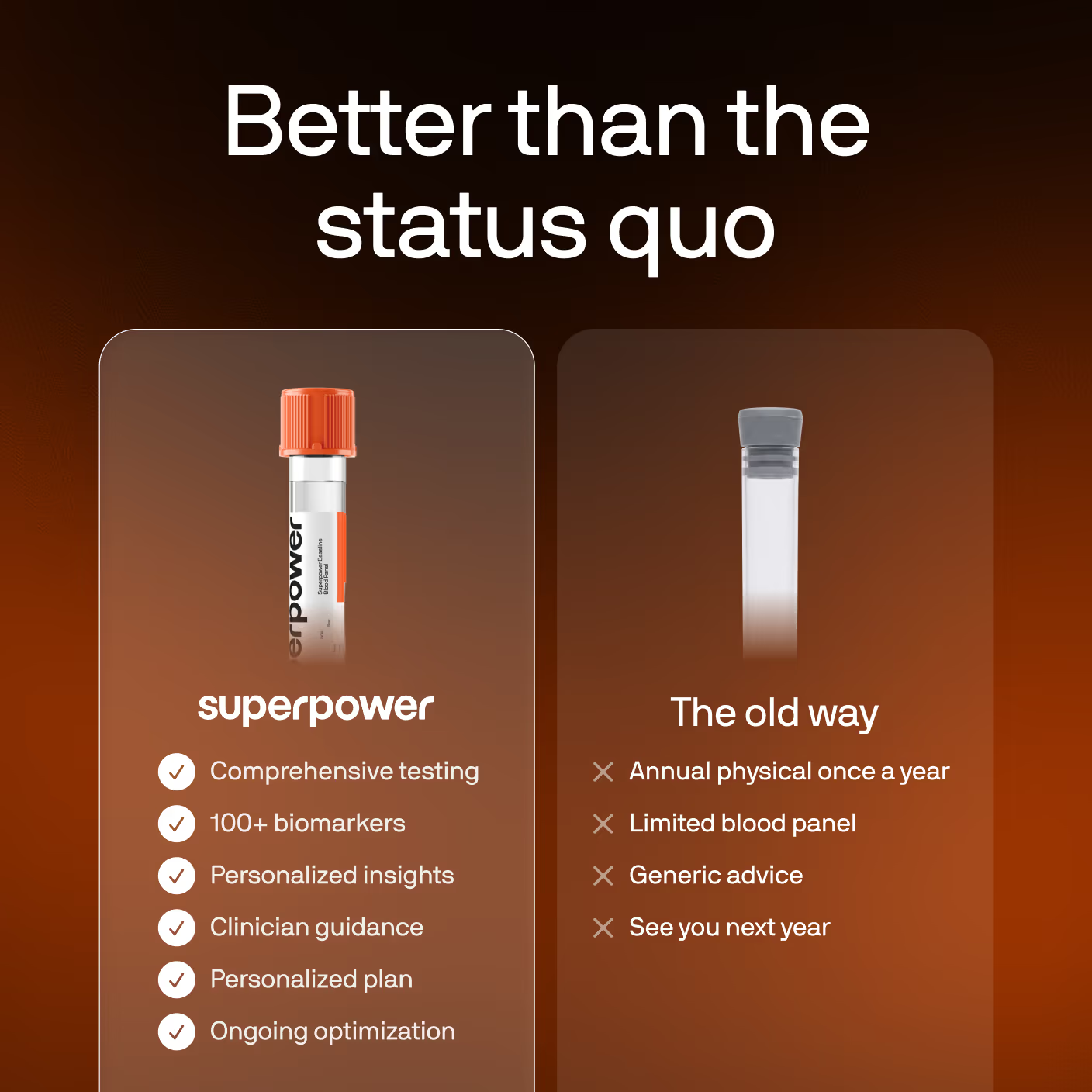
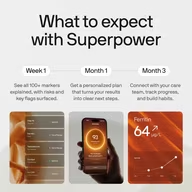
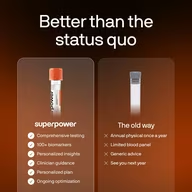
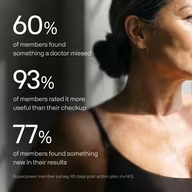
Biological age 32 — a Superpower member portraitA health system built around you — test, understand, optimize150+ biomarkers across 2 blood drawsWhat to expect with Superpower — week 1 to month 3Trusted by 64,000+ customers — member reviewsBetter than the status quo — Superpower vs the old way60% of members found something a doctor missed — member survey
Daniel OSuperpower memberDavid LSuperpower memberRachel DSuperpower memberCamelia VSuperpower member

4.6 · 64,000+ members

Superpower health membership

Find early signs of 1,000+ conditions - then act, retest, and see what changed.

$349

/year*

150+ biomarkers annually across baseline + retest

Personalized plan that turns results into action

Superpower AI and on-demand care team

Results in 10 days or less

At-home or 2,000+ labs nationwide**

Yearly membership$0.96 / dayHSA/FSA eligible

*Pricing may vary for members in New York and New Jersey

**At-home labs for an additional cost

What we test

TestosteroneFree T4Vitamin DApoBHbA1cThyroid (TSH)hs-CRPFerritinCortisolFasting insulin

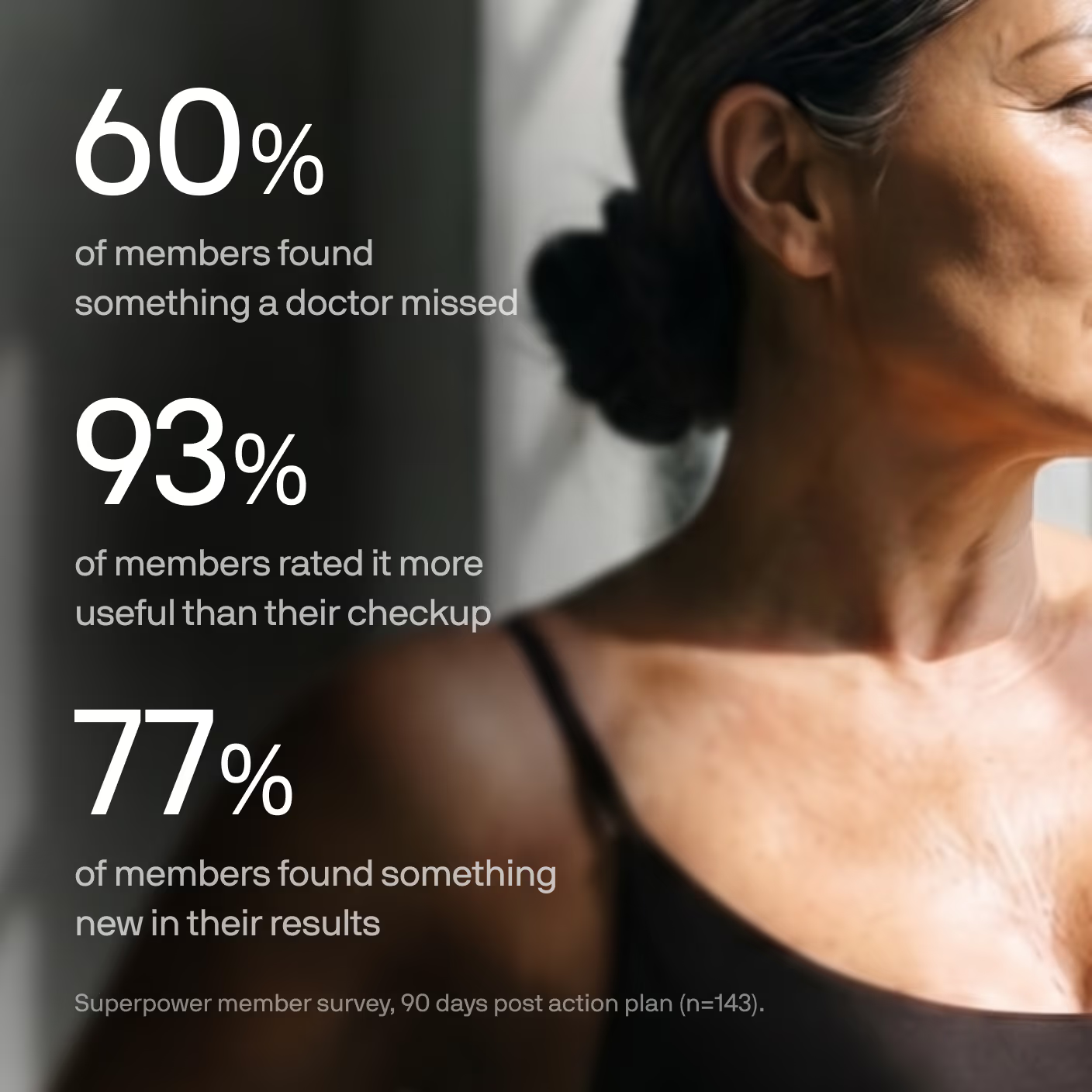
60%

found something a doctor missed

93%

rated it more useful than their checkup

77%

found something new in their results

Superpower member survey, 90 days post action plan (n=143).

How does the Superpower membership work?

We test 150+ biomarkers annually across two blood draws. Your baseline test paints a comprehensive picture of your health, and your dashboard shows what’s working, what needs attention, and what to do next. Superpower AI and your care team help you take action across lifestyle, supplements, and treatments. Then we retest to track your progress and continue refining your plan.

Can I cancel anytime?

Yes. You can cancel anytime, no fees. Your membership stays active through the end of your paid year.

How often should I test?

Your membership includes two blood tests per year: one to establish your baseline, and one to see whether your plan improved biomarkers that were out of range or not yet optimized. You can add other diagnostics anytime through the app or with help from your care team.

When will I get my results?

Book your draw at any of 2,000+ partner labs or at-home. Results are typically ready in about a week and land in the Superpower app.

What the 100+ panel measures

All 101 markers in your annual baseline draw, organized by system. Nothing here is an upsell.

Heart & Vascular Health

26

  • Apolipoprotein B
  • Atherogenic Coefficient
  • Atherogenic Index of Plasma
  • Castelli Risk Index I
  • Castelli Risk Index II
  • HDL Cholesterol
  • LDL Cholesterol
  • LDL/HDL Ratio
  • Cholesterol, Total
  • Non-HDL Cholesterol
  • Cholesterol/HDL Ratio
  • Carbon Dioxide, Total
  • High-sensitivity CRP
  • hsCRP-to-Albumin Ratio (CAR)
  • GGT-to-HDL Cholesterol Ratio
  • LDL-C to Apolipoprotein B Ratio (LDL-C/ApoB)
  • LDL Cholesterol / Total Cholesterol (Mass Ratio)
  • Monocyte-to-HDL Ratio (MHR)
  • Neutrophil-to-HDL Cholesterol Ratio (NHR)
  • Non-HDL Cholesterol-to-Apolipoprotein B Ratio (Non-HDL-C/ApoB)
  • NON-HDL Total Cholesterol Ratio
  • Triglyceride HDL Molar Ratio
  • Triglycerides
  • Triglyceride-to-Apolipoprotein B Ratio (TG/ApoB)
  • TyG Index
  • Uric Acid

Metabolic Health

4

  • Estim. Avg Glu (eAG)
  • Eag (mmol/l)
  • Glucose
  • Hemoglobin A1c

Energy

1

  • Cortisol

Liver Health

15

  • Albumin/Globulin Ratio
  • Albumin
  • Alkaline Phosphatase (ALP)
  • Alanine Aminotransferase (ALT)
  • Aspartate Aminotransferase (AST)
  • Bilirubin Direct
  • Bilirubin Indirect
  • Bilirubin, Total
  • Bilirubin-to-Albumin Ratio
  • Ferritin
  • Ferritin-to-Albumin Ratio
  • y-Glutamyl Transferase (GGT)
  • Globulin, Total
  • Indirect-to-Direct Bilirubin Ratio
  • Protein, Total

Kidney

11

  • Calcium
  • Chloride
  • Corrected Calcium (Albumin-adjusted)
  • Creatinine
  • Estimated Glomerular Filtration Rate (eGFR)
  • Potassium
  • Sodium
  • BUN/Creatinine Ratio
  • Blood Urea Nitrogen (BUN)
  • Urea-to-Creatinine Ratio
  • Uric Acid-to-HDL Cholesterol Ratio (UHR)

Sex Hormones

7

  • DHEA-Sulfate (DHEA-S)
  • Free Androgen Index
  • Sex Hormone Binding Globulin (SHBG)
  • Free Testosterone
  • Testosterone, Bioavailable
  • Testosterone, Total
  • Testosterone-to-Estradiol Ratio (T/E₂)

Thyroid Health

4

  • Free Thyroxine Index
  • T3 Uptake
  • T4 (thyroxine) Total
  • Thyroid-Stimulating Hormone (TSH)

Nutrients

13

  • Vitamin D
  • Red Cell Dist Width (RDW)
  • Hematocrit
  • Hemoglobin
  • Total Iron Binding Capacity (TIBC)
  • Iron
  • Iron Saturation
  • Mean Cell Hemoglobin (MCH)
  • Mean Corpuscular Hemoglobin Concentration (MCHC)
  • Mean Cell Volume (MCV)
  • Platelet-to-WBC Ratio (PWR)
  • Red Blood Cells
  • RDW MCV Ratio

Immune System

12

  • Basophils
  • Baso (Absolute)
  • Eosinophils
  • Eos (Absolute)
  • Lymphocytes
  • Lymphs (Absolute)
  • Monocytes
  • Monocytes (Absolute)
  • Neutrophils
  • Neutrophils (Absolute)
  • Mean Platelet Volume
  • Platelet Count

Inflammation

8

  • Lymphocyte-to-Monocyte Ratio (LMR)
  • Monocyte-to-Lymphocyte Ratio (MLR)
  • Neutrophil-to-Lymphocyte-Platelet Ratio (NLPR)
  • Neutrophil-to-Lymphocyte Ratio (NLR)
  • Platelet-to-Lymphocyte Ratio (PLR)
  • Systemic Immune-Inflammation Index
  • Systemic Inflammation Response Index (SIRI)
  • White Blood Cells
Get my health baseline

The full list of 100+ markers and 8 specialty add-ons available at superpower.com/biomarkers.