


Understand what your longevity results really mean
See your biomarkers in context with a comprehensive panel.
- CLIA-certified labs
- HIPAA compliant
- Personalized health protocol
Quick answer: Average grip strength in women peaks in the 30s at approximately 30–35 kg and declines with age, with values in the 50s and 60s typically ranging from 22–28 kg. Grip strength is an established predictor of functional capacity, cardiovascular health, and longevity in research literature. The EWGSOP2 screening cut-point for probable sarcopenia in women is below 16 kg (about 35 lb). Reference ranges vary by instrument and population.
Why grip strength matters beyond the gym
Grip strength is measured with a simple hand dynamometer, takes less than a minute, and requires no laboratory equipment. Yet the research linking it to long-term health outcomes is substantial. Grip strength is one of the most widely validated proxies for overall skeletal muscle strength and mass. It predicts physical function, fall risk, hospital outcomes, and mortality in longitudinal studies spanning multiple decades and dozens of populations.
For women specifically, grip strength trajectories are relevant because muscle mass and strength decline begins earlier than most people expect — measurable changes appear in the late 30s and accelerate after menopause — and because sarcopenia (age-related muscle loss) is associated with a range of health consequences that extend well beyond physical performance.
Understanding where your grip strength sits relative to age-matched norms, and what drives changes in it, gives you a concrete starting point for evaluating musculoskeletal health.
Average female grip strength by age: Reference values
The table shows mean grip strength for women by age from a population-based Australian study. Each value is the mean of three trials on a Jamar dynamometer, reported for the right and left hand. These are reference points, not clinical cutoffs. Values vary by dominant versus non-dominant hand, dynamometer model, testing protocol, and the population being studied.
| Age | Right hand (kg) | Right hand (lb) | Left hand (kg) | Left hand (lb) |
|---|---|---|---|---|
| 20–29 | 30 | 66 | 28 | 62 |
| 30–39 | 31 | 68 | 29 | 64 |
| 40–49 | 29 | 64 | 28 | 62 |
| 50–59 | 28 | 62 | 26 | 57 |
| 60–69 | 24 | 53 | 23 | 51 |
| 70+ | 20 | 44 | 19 | 42 |
To compare women's and men's values side by side, see the grip strength chart.
The European Working Group on Sarcopenia in Older People (EWGSOP2) uses a threshold of less than 16 kg in women as one criterion for probable sarcopenia, in conjunction with low muscle mass or function. The Foundation for the National Institutes of Health (FNIH) Sarcopenia Project has used a threshold of less than 16 kg as well. These are clinical screening thresholds, not population averages — most healthy women under 60 will be considerably above these values.
Signs of weak grip strength overlap with the signs of sarcopenia. EWGSOP2 lists the ones that should prompt a strength test: falling, feeling weak, slow walking, trouble rising from a chair, and weight loss or visible muscle wasting.
Factors that influence grip strength in women
Age and hormonal changes
Grip strength peaks in the early-to-mid 30s in most women and declines at approximately 1–2% per year thereafter. The rate of decline accelerates around menopause, reflecting the role of estrogen in maintaining skeletal muscle mass and quality. Estrogen supports muscle protein synthesis and may reduce inflammatory pathways that contribute to muscle catabolism. Postmenopausal women who experience rapid muscle loss alongside other menopausal symptoms are candidates for evaluation of hormonal status alongside musculoskeletal assessment.
Physical activity and resistance training
Regular resistance training is the most effective modifiable factor for maintaining grip strength across the lifespan. Women who engage in consistent strength-based exercise maintain grip strength values significantly above age-matched sedentary peers and show slower trajectories of age-related decline. Even beginning resistance training in the 60s and 70s produces meaningful improvements in grip and overall muscle strength. Activity level is a confounding variable that makes population norms less predictive at an individual level — an active 65-year-old may grip at the level of a sedentary 45-year-old.
Nutrition: Protein intake
Adequate dietary protein is essential for muscle protein synthesis. The Recommended Dietary Allowance (RDA) of 0.8 g/kg body weight is widely considered insufficient for older adults focused on maintaining muscle mass. Research on sarcopenia and muscle health in aging consistently supports higher protein targets — typically 1.2–1.6 g/kg — particularly when combined with resistance exercise. Distribution of protein across meals, with adequate protein at each meal rather than concentrated at dinner, is also supported by research on muscle protein synthesis optimization.
Vitamin D status
Vitamin D participates in muscle function through its receptor in skeletal muscle tissue. Deficiency is associated with muscle weakness, reduced type II (fast-twitch) fiber function, and impaired neuromuscular performance. Research has shown associations between low 25-OH vitamin D levels and reduced grip strength in older women, consistent with a mechanistic role. Whether supplementation reliably improves grip strength in already-sufficient individuals is less clearly established, but identifying and addressing deficiency in women with low grip strength is clinically reasonable. The standard assessment marker is 25-OH vitamin D.
Hormonal factors beyond menopause
Testosterone, while present in much lower concentrations in women than men, influences skeletal muscle protein synthesis and is associated with muscle mass in women. IGF-1 (insulin-like growth factor 1) mediates growth hormone's effects on muscle tissue and declines with age. Research has established that IGF-1 is independently associated with muscle mass and sarcopenia risk in older adults. Thyroid hormones regulate metabolic rate and influence muscle protein turnover — hypothyroidism is associated with muscle weakness and fatigue. These hormonal factors are measurable through blood testing and can contextualize an unexpectedly low grip strength reading.
Inflammation and chronic disease
Chronic low-grade inflammation — reflected in elevated hs-CRP, IL-6, or other inflammatory markers — is associated with accelerated muscle loss (a process sometimes called inflammatory sarcopenia or inflammaging). Conditions including rheumatoid arthritis, metabolic syndrome, and chronic kidney disease all accelerate muscle catabolism. Blood markers of systemic inflammation, kidney function, and metabolic health are relevant when grip strength is low in the context of apparent chronic illness.
Test 100+ biomarkers
One blood draw. A full picture of your health, explained in plain language.
Test 100+ biomarkers
One blood draw. A full picture of your health, explained in plain language.
Which biomarkers are associated with grip strength and muscle health?
- 25-OH vitamin D — vitamin D deficiency is associated with muscle weakness and reduced grip strength
- IGF-1 — reflects growth hormone signaling; independently associated with muscle mass in older adults
- TSH / free T4 — thyroid dysfunction affects muscle protein turnover and strength
- Total testosterone — Anabolic hormone relevant to muscle protein synthesis in women as well as men
- hs-CRP — systemic inflammation is associated with accelerated muscle catabolism
- Albumin — nutritional status marker; low albumin is associated with sarcopenia and muscle loss
- Ferritin / hemoglobin — iron deficiency impairs oxygen delivery to muscle, affecting exercise capacity and strength
Superpower's Baseline Blood Panel includes vitamin D, albumin, ferritin, hemoglobin, TSH, and additional markers relevant to the biological drivers of grip strength and muscle health.
This article is for informational purposes only and does not constitute medical advice. Always consult a qualified healthcare provider for personalized evaluation of muscle health and associated biomarkers.
Frequently Asked Questions
References
- Wu Y, Wang W, Liu T, Zhang D (2017). Association of Grip Strength With Risk of All-Cause Mortality, Cardiovascular Diseases, and Cancer in Community-Dwelling Populations: A Meta-analysis of Prospective Cohort Studies. *Journal of the American Medical Directors Association*, *18*(6), 551.e17-551.e35. https://doi.org/10.1016/j.jamda.2017.03.011
- Massy-Westropp NM, Gill TK, Taylor AW, Bohannon RW, Hill CL (2011). Hand Grip Strength: age and gender stratified normative data in a population-based study. *BMC research notes*, *4*, 127. https://doi.org/10.1186/1756-0500-4-127
- Cruz-Jentoft AJ, Bahat G, Bauer J, Boirie Y, Bruyère O, Cederholm T, Cooper C, Landi F, Rolland Y, Sayer AA, Schneider SM, Sieber CC, Topinkova E, Vandewoude M, Visser M, Zamboni M, Writing Group for the European Working Group on Sarcopenia in Older People 2 (EWGSOP2), and the Extended Group for EWGSOP2 (2019). Sarcopenia: revised European consensus on definition and diagnosis. *Age and ageing*, *48*(1), 16-31. https://doi.org/10.1093/ageing/afy169
- Collins BC, Laakkonen EK, Lowe DA (2019). Aging of the musculoskeletal system: How the loss of estrogen impacts muscle strength. *Bone*, *123*, 137-144. https://doi.org/10.1016/j.bone.2019.03.033
- Grgic J, Garofolini A, Orazem J, Sabol F, Schoenfeld BJ, Pedisic Z (2020). Effects of Resistance Training on Muscle Size and Strength in Very Elderly Adults: A Systematic Review and Meta-Analysis of Randomized Controlled Trials. *Sports medicine (Auckland, N.Z.)*, *50*(11), 1983-1999. https://doi.org/10.1007/s40279-020-01331-7
- Nishimura Y, Højfeldt G, Breen L, Tetens I, Holm L (2023). Dietary protein requirements and recommendations for healthy older adults: a critical narrative review of the scientific evidence. *Nutrition research reviews*, *36*(1), 69-85. https://doi.org/10.1017/S0954422421000329
- Bislev LS, Grove-Laugesen D, Rejnmark L (2021). Vitamin D and Muscle Health: A Systematic Review and Meta-analysis of Randomized Placebo-Controlled Trials. *Journal of bone and mineral research : the official journal of the American Society for Bone and Mineral Research*, *36*(9), 1651-1660. https://doi.org/10.1002/jbmr.4412
- Tuttle CSL, Thang LAN, Maier AB (2020). Markers of inflammation and their association with muscle strength and mass: A systematic review and meta-analysis. *Ageing research reviews*, *64*, 101185. https://doi.org/10.1016/j.arr.2020.101185












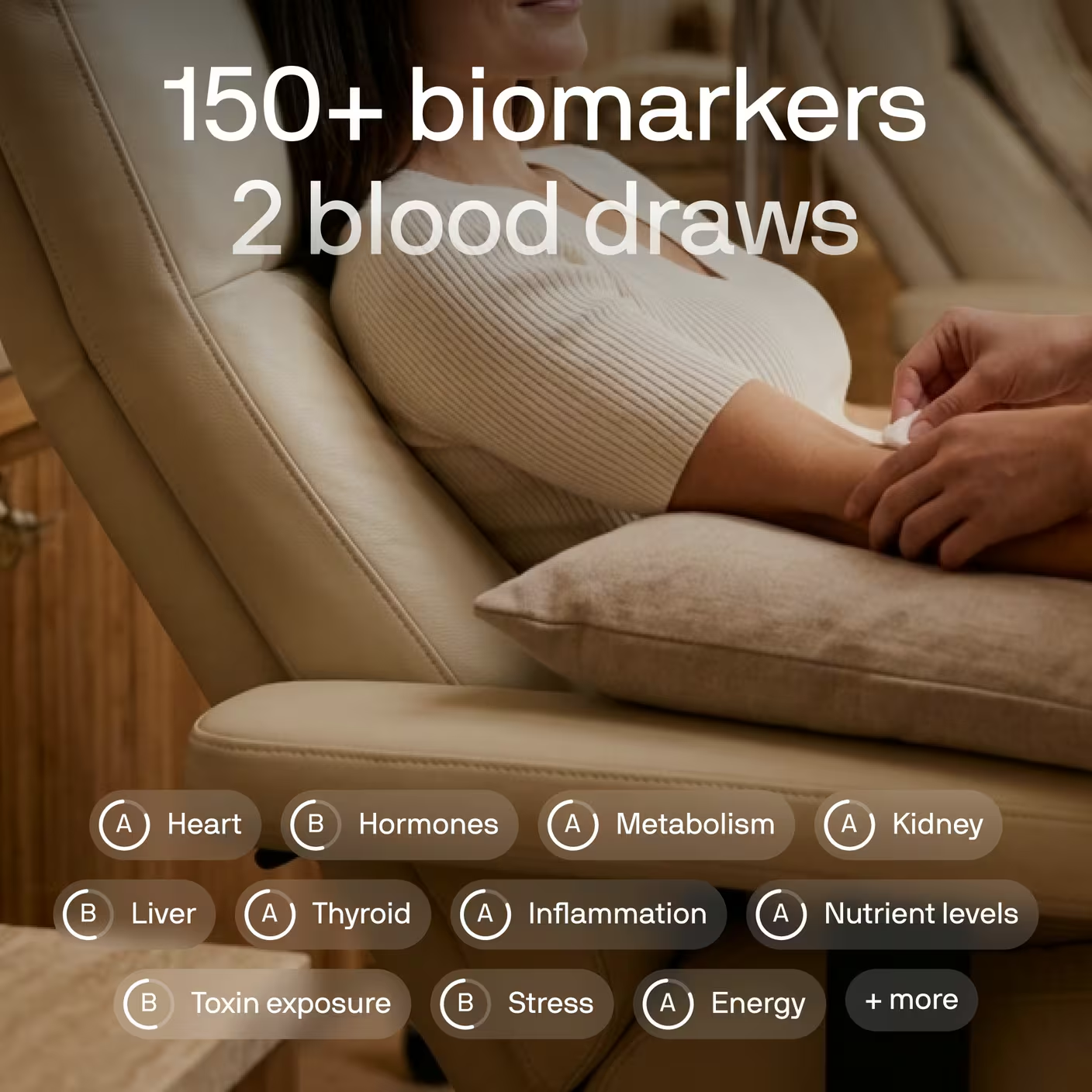











 Heart & Vascular Health
 Metabolic Health
 Energy
 Liver Health
 Kidney
 Sex Hormones
 Thyroid Health
 Nutrients
 Immune System
 Inflammation