

Understand what your liver function testing results really mean
See your biomarkers in context with a comprehensive panel.
- CLIA-certified labs
- HIPAA compliant
- Personalized health protocol
What how to check liver function at home means
Checking liver function at home means using blood test kits to measure specific biomarkers that research suggests may reveal how well your liver is working. Your liver produces enzymes that leak into your bloodstream when liver cells are damaged or stressed.
The core liver function biomarkers include:
ALT (alanine aminotransferase) is an enzyme primarily found in liver cells. When liver cells are damaged, ALT spills into your bloodstream. It's often considered the most liver-specific enzyme, making it a reliable early indicator of liver problems.
AST (aspartate aminotransferase) is found in the liver, heart, muscles, and other tissues. While less liver-specific than ALT, elevated AST alongside ALT suggests liver involvement rather than muscle damage.
Bilirubin is a waste product from breaking down old red blood cells. Your liver processes bilirubin for elimination. High levels may be associated with liver dysfunction or bile duct problems.
Albumin is a protein your liver produces to maintain fluid balance and transport substances through your blood. Low albumin may be associated with chronic liver disease or poor liver protein production.
These biomarkers work together like dashboard lights for your liver. Individual elevations might be temporary, but patterns across multiple markers reveal more serious concerns.
How to interpret how to check liver function at home
Interpreting liver function results requires understanding both individual biomarker ranges and their relationships to each other. Labs typically mark results as normal, borderline, or out of range, but context matters more than single numbers. Discuss with your care team for proper interpretation of any results.
For ALT, the true healthy range runs about 29-33 U/L for men and 19-25 U/L for women, though traditional lab cutoffs are higher. Older blood-donor data from first-time donors also support lower upper limits than most labs print. Levels 2-3 times the upper limit suggest mild liver irritation, while levels more than 10 times normal indicate severe liver damage.
The AST-to-ALT ratio provides additional insight. A ratio above 2:1 often points to advanced alcohol-related liver damage, while ratios below 1:1 might indicate viral hepatitis or advanced liver disease. When AST is much higher than ALT, consider muscle damage or heart problems.
Bilirubin levels above 1.2 mg/dL exceed the typical upper limit of normal, and substantially higher values can cause visible yellowing of skin or eyes. Elevated unconjugated bilirubin with normal liver enzymes often indicates Gilbert's syndrome, a benign inherited variation in bilirubin processing.
Low albumin (under 3.5 g/dL) combined with elevated liver enzymes may be associated with chronic liver disease and reduced liver protein production. This combination is more concerning than isolated enzyme elevations.
Remember: single out of range results need confirmation through repeat testing. Your care team should evaluate patterns over time rather than isolated readings.
What can influence how to check liver function at home
Multiple factors can temporarily or permanently affect liver function biomarkers, making interpretation more complex than just looking at numbers. Understanding these influences helps you and your care team distinguish between concerning patterns and temporary fluctuations.
Medications and supplements are common culprits. Acetaminophen at 4 g daily can raise ALT in healthy adults, especially with regular use. Statins occasionally cause enzyme elevations. Even seemingly harmless supplements like high-dose green tea extract or high-dose vitamin A can stress your liver.
Physical activity significantly impacts results. Intense exercise or strength training within 24-48 hours before testing can raise AST and ALT as muscles release these enzymes. This is why many experts recommend avoiding strenuous workouts before liver function tests.
Alcohol consumption affects multiple liver markers. Even moderate drinking can elevate enzymes, while chronic alcohol use typically shows a pattern of AST higher than ALT. Complete abstinence for 48-72 hours before testing provides the clearest picture.
Metabolic factors play a major role. Obesity, insulin resistance, and type 2 diabetes are strongly associated with fatty liver disease, which may be linked to persistently elevated ALT. Recent illness, dehydration, or significant weight changes can also temporarily affect results.
Timing matters too. Bilirubin can be elevated after fasting or during stress, while certain foods might influence results if consumed close to testing time.
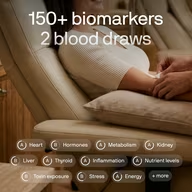
Test 150+ biomarkers
Two blood draws. A full picture of your health, explained in plain language.
Test 150+ biomarkers
Two blood draws. A full picture of your health, explained in plain language.
Related context that changes the picture
Liver function biomarkers become more meaningful when viewed alongside related health indicators. Your liver doesn't operate in isolation, and its function connects directly to metabolic, cardiovascular, and inflammatory health.
Lipid panels provide crucial context. Elevated triglycerides combined with high liver enzymes often indicate fatty liver disease. Low HDL cholesterol alongside liver enzyme elevations strengthens this connection. These patterns suggest your liver is struggling with fat metabolism.
Inflammatory markers like C-reactive protein (CRP) help distinguish between different causes of liver enzyme elevation. High CRP with elevated liver enzymes might indicate systemic inflammation affecting the liver, while normal CRP suggests localized liver issues.
Blood sugar markers including glucose and hemoglobin A1c reveal metabolic connections. Elevated liver enzymes with high blood sugar and insulin resistance create a picture of metabolic dysfunction that affects liver health. This combination significantly increases cardiovascular risk.
Complete blood count (CBC) adds another layer. Low platelets with elevated liver enzymes may be associated with advanced liver disease or portal hypertension. Changes in white blood cell counts might suggest infection or immune system involvement.
The key insight: liver health reflects your overall metabolic state. Isolated liver enzyme elevations are less concerning than patterns that include metabolic dysfunction, inflammation, and cardiovascular risk markers. This comprehensive view guides more effective interventions.
Take action on your liver health
Understanding how to check liver function at home is just the beginning. The real value comes from regular monitoring that reveals trends and catches problems early, when they're most manageable.
Superpower's blood panels include comprehensive liver function testing alongside metabolic, cardiovascular, and inflammatory markers. This complete picture shows how your liver health connects to your overall wellness, giving you actionable insights instead of isolated numbers.
Ready to take control of your liver health? Order your comprehensive blood panel today and get the complete health picture you need to optimize your wellbeing.
Frequently Asked Questions
References
- Kwo PY, Cohen SM, Lim JK (2017). ACG Clinical Guideline: Evaluation of Abnormal Liver Chemistries. *The American journal of gastroenterology*, *112*(1), 18-35. https://doi.org/10.1038/ajg.2016.517
- Prati D, Taioli E, Zanella A, Della Torre E, Butelli S, Del Vecchio E, Vianello L, Zanuso F, Mozzi F, Milani S, Conte D, Colombo M, Sirchia G (2002). Updated definitions of healthy ranges for serum alanine aminotransferase levels. *Annals of internal medicine*, *137*(1), 1-10. https://doi.org/10.7326/0003-4819-137-1-200207020-00006
- Nyblom H, Berggren U, Balldin J, Olsson R (2004). High AST/ALT ratio may indicate advanced alcoholic liver disease rather than heavy drinking. *Alcohol and alcoholism (Oxford, Oxfordshire)*, *39*(4), 336-9. https://doi.org/10.1093/alcalc/agh074
- Grant LM, Faust TW, Thoguluva Chandrasekar V, John S (2024). *Gilbert syndrome*. StatPearls Publishing. https://www.ncbi.nlm.nih.gov/books/NBK470200/
- Spinella R, Sawhney R, Jalan R (2016). Albumin in chronic liver disease: structure, functions and therapeutic implications. *Hepatology international*, *10*(1), 124-32. https://doi.org/10.1007/s12072-015-9665-6
- Watkins PB, Kaplowitz N, Slattery JT, Colonese CR, Colucci SV, Stewart PW, Harris SC (2006). Aminotransferase elevations in healthy adults receiving 4 grams of acetaminophen daily: a randomized controlled trial. *JAMA*, *296*(1), 87-93. https://doi.org/10.1001/jama.296.1.87
- Björnsson ES (2017). Hepatotoxicity of statins and other lipid-lowering agents. *Liver international : official journal of the International Association for the Study of the Liver*, *37*(2), 173-178. https://doi.org/10.1111/liv.13308
- Acosta L, Byham-Gray L, Kurzer M, Samavat H (2023). Hepatotoxicity with High-Dose Green Tea Extract: Effect of. *Journal of dietary supplements*, *20*(6), 850-869. https://doi.org/10.1080/19390211.2022.2128501
- Romagnoli M, Alis R, Aloe R, Salvagno GL, Basterra J, Pareja-Galeano H, Sanchis-Gomar F, Lippi G (2014). Influence of training and a maximal exercise test in analytical variability of muscular, hepatic, and cardiovascular biochemical variables. *Scandinavian journal of clinical and laboratory investigation*, *74*(3), 192-8. https://doi.org/10.3109/00365513.2013.873948
- Chalasani N, Younossi Z, Lavine JE, Charlton M, Cusi K, Rinella M, Harrison SA, Brunt EM, Sanyal AJ (2018). The diagnosis and management of nonalcoholic fatty liver disease: Practice guidance from the American Association for the Study of Liver Diseases. *Hepatology (Baltimore, Md.)*, *67*(1), 328-357. https://doi.org/10.1002/hep.29367
- Afdhal N, McHutchison J, Brown R, Jacobson I, Manns M, Poordad F, Weksler B, Esteban R (2008). Thrombocytopenia associated with chronic liver disease. *Journal of hepatology*, *48*(6), 1000-7. https://doi.org/10.1016/j.jhep.2008.03.009




















 Heart & Vascular Health
 Metabolic Health
 Energy
 Liver Health
 Kidney
 Sex Hormones
 Thyroid Health
 Nutrients
 Immune System
 Inflammation