


Understand what your keto low carb results really mean
See your biomarkers in context with a comprehensive panel.
- CLIA-certified labs
- HIPAA compliant
- Personalized health protocol
You've seen the dramatic keto transformations online and you're wondering what's realistic for you. Some people seem to lose 30 pounds in a month while others stall after the first week. The gap between expectation and reality is where most people quit, and understanding what actually happens on keto, week by week, can keep you on track.
What actually happens when you start keto
The ketogenic diet shifts your body from burning glucose to burning fat by restricting carbohydrates to roughly 20 to 50 grams per day. When carbohydrate intake drops, your liver depletes its glycogen stores, the stored form of glucose that's bound to water at a ratio of about 3 grams of water per gram of glycogen. As glycogen is used up, that water is released and excreted, which is why the scale drops so quickly in the first few days.
Once glycogen is depleted, typically within 2 to 4 days, your liver begins producing ketone bodies from fatty acids. This metabolic state, called nutritional ketosis, is when your body starts using fat as its primary fuel source. But entering ketosis and becoming fully fat-adapted are not the same thing. Ketosis is a metabolic state you can measure with blood ketone levels. Fat adaptation is a physiological process that takes weeks, during which your cells upregulate enzymes and transporters that make fat burning more efficient. Fat loss begins in earnest once your body has shifted its metabolic machinery, which typically happens after the first 7 to 10 days.
How keto affects your metabolism, hormones, and body composition
The ketogenic diet influences several interconnected systems that regulate energy balance, appetite, and fat storage.
Insulin and glucose regulation
Restricting carbohydrates lowers insulin levels, which reduces the signal to store fat and increases the signal to release it from adipose tissue. Lower insulin also improves insulin sensitivity over time, meaning your cells respond more effectively to smaller amounts of insulin. This shift is one reason why people with insulin resistance often see more dramatic early results on keto compared to those with better baseline insulin sensitivity.
Appetite hormones
Ketones suppress ghrelin, the hormone that signals hunger, while stable blood sugar prevents the crashes that trigger cravings. Fat and protein are also more satiating than carbohydrates, which extends the time between meals without conscious effort. This is why many people report feeling less hungry on keto, even when eating fewer calories than they did on a higher-carb diet.
Metabolic rate and thermogenesis
Converting protein and fat into usable energy requires more metabolic work than processing carbohydrates, a phenomenon called the thermic effect of food. Additionally, maintaining ketosis requires energy for gluconeogenesis, the process of creating glucose from non-carbohydrate sources. These factors can slightly increase daily energy expenditure.
Body composition changes
Keto tends to preserve lean muscle mass better than many calorie-restricted diets because adequate protein intake and lower insulin levels create an environment that favors fat oxidation over muscle breakdown. However, this protective effect depends on consuming sufficient protein and maintaining some form of resistance stimulus.
What drives keto weight loss and how long it takes
The timeline for how long does it take to lose weight on keto depends on several factors, most of which are within your control. The primary driver is a sustained caloric deficit. Ketosis makes fat available for burning, but it doesn't override the laws of energy balance.
Carbohydrate restriction is the non-negotiable input. Staying below 20 to 50 grams of net carbs per day keeps insulin low and ketone production high. Protein intake matters too. Eating adequate protein, roughly 0.8 to 1.2 grams per pound of lean body mass, supports muscle retention and satiety. Fat intake should fill the remaining calories, but it's not a target to hit if fat loss is the goal.
Exercise accelerates fat loss by increasing energy expenditure and improving insulin sensitivity. Resistance training, in particular, helps preserve muscle mass during weight loss, which keeps metabolic rate higher. Cardiovascular exercise adds to the caloric deficit and can improve mitochondrial function, making your cells more efficient at burning fat.
Why keto transformation results vary between individuals
Two people can follow the same ketogenic diet and see vastly different results. This isn't a failure of the diet or the individual. It's a reflection of metabolic individuality.
Insulin sensitivity and metabolic history
People with insulin resistance or a history of metabolic syndrome tend to lose more weight in the first few weeks of keto compared to those with better baseline insulin sensitivity. This is because their bodies are holding onto more water due to elevated insulin levels, and they experience a larger drop in insulin when carbs are restricted. However, this doesn't mean they lose more fat initially. Over time, fat loss rates tend to equalize between groups, assuming caloric intake is controlled.
Starting body composition
Individuals with higher body fat percentages typically lose weight faster than leaner individuals. This is partly because they have more fat mass to lose, and partly because their bodies can mobilize fat more readily when stores are abundant. As body fat decreases, the rate of fat loss slows, a normal physiological response.
Prior dieting history
Metabolic adaptation, sometimes called adaptive thermogenesis, occurs when your body reduces energy expenditure in response to prolonged calorie restriction. People who have dieted repeatedly or lost and regained weight multiple times may experience slower fat loss on keto because their metabolic rate has adapted downward.
Hormonal health
Thyroid function, sex hormone levels, and cortisol all influence fat loss. Hypothyroidism, low testosterone, or elevated cortisol can slow fat loss regardless of diet. If you're following keto consistently and not seeing results after several weeks, it's worth checking thyroid-stimulating hormone (TSH), free T4, testosterone, and cortisol levels.
Gut microbiome composition
Emerging research suggests that gut bacteria influence how efficiently your body extracts energy from food and how it stores fat. Some individuals may have microbiome profiles that make fat loss more difficult. The ketogenic diet itself can alter gut microbiome composition, which may contribute to its metabolic effects over time.
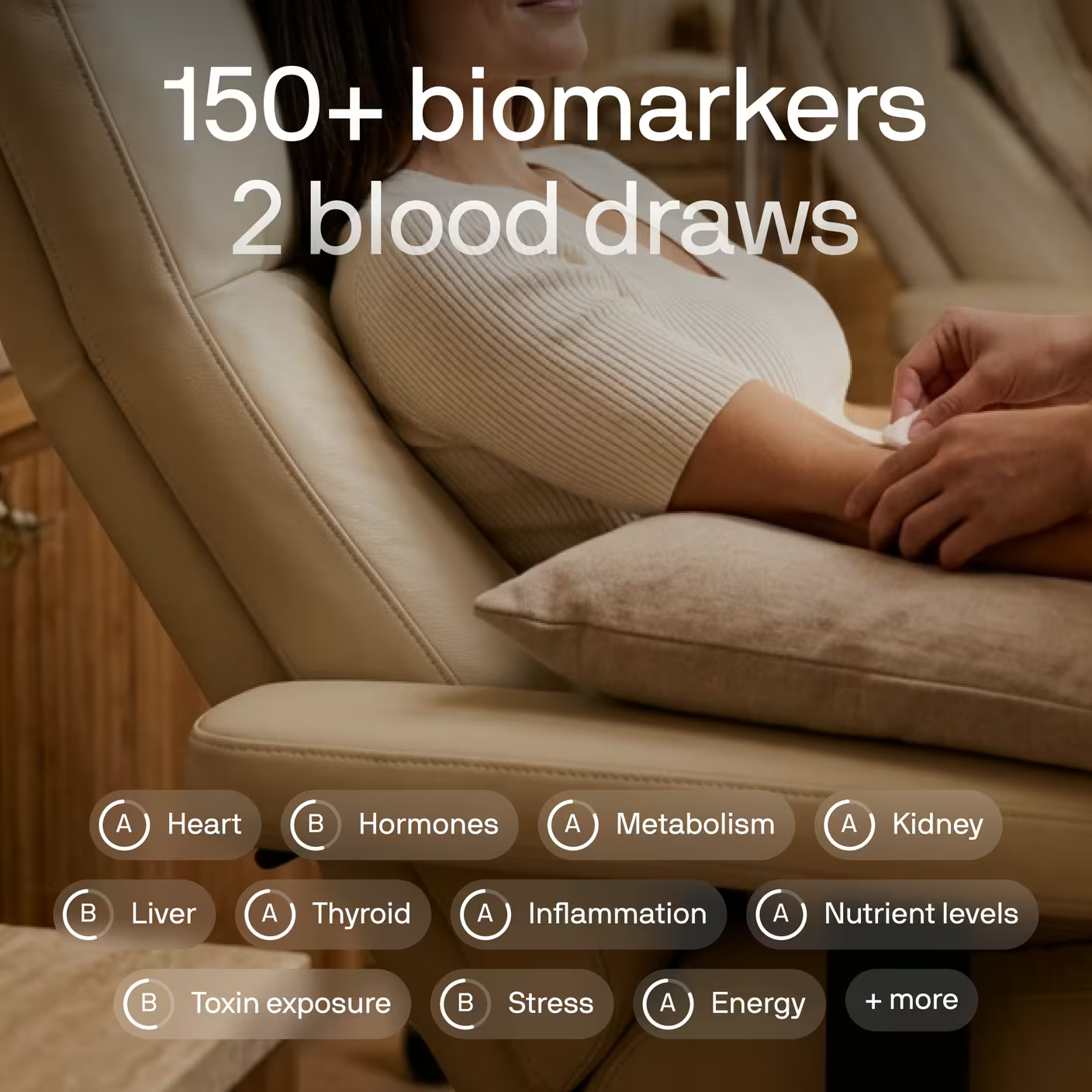
Test 150+ biomarkers
Two blood draws. A full picture of your health, explained in plain language.
Test 150+ biomarkers
Two blood draws. A full picture of your health, explained in plain language.
Tracking keto progress beyond the scale
The scale is one data point, but it's not the most informative one. Body composition, energy levels, and metabolic biomarkers provide a fuller picture of what's happening during a keto transformation.
Measuring body fat percentage, whether through DEXA scans, bioelectrical impedance, or skinfold calipers, shows whether you're losing fat or lean tissue. Waist circumference is another useful metric. A decrease in waist circumference, even without a change in scale weight, indicates visceral fat loss, which is metabolically beneficial.
Blood biomarkers reveal what the scale can't:
- Fasting glucose and fasting insulin should both decrease on a ketogenic diet, reflecting improved insulin sensitivity.
- Hemoglobin A1c, which reflects average blood sugar over the past three months, should also improve.
- Triglycerides typically drop significantly on keto, while HDL cholesterol often rises, indicating improved metabolic health.
Tracking ketone levels, either through blood or breath, confirms that you're in ketosis. Blood ketone levels between 0.5 and 3.0 mmol/L indicate nutritional ketosis. However, higher ketone levels don't necessarily mean faster fat loss. Ketones are a byproduct of fat metabolism, not a direct measure of fat loss.
Energy levels, mental clarity, and physical performance are subjective but important markers. Many people report improved focus and sustained energy once they're fully fat-adapted, typically after 3 to 6 weeks. If you're still feeling sluggish after a month, it may indicate that you're not fully adapted, or that you need to adjust your electrolyte intake, particularly sodium, potassium, and magnesium.
Using biomarker data to optimize your keto results
If you're serious about understanding your keto before and after progress, tracking biomarkers over time gives you actionable data. Superpower's 150+ biomarker panel measures not just glucose and insulin, but also markers of inflammation, liver function, kidney health, and lipid metabolism. This comprehensive view helps you see whether keto is improving your metabolic health, not just your weight. Tracking trends over weeks and months, rather than fixating on single measurements, reveals whether you're moving in the right direction. Directionality matters more than any one number, and having a full metabolic picture helps you adjust your approach based on what your body is actually doing.
Frequently Asked Questions
References
- Shiose K, Takahashi H, Yamada Y (2022). Muscle Glycogen Assessment and Relationship with Body Hydration Status: A Narrative Review. *Nutrients*, *15*(1). https://doi.org/10.3390/nu15010155
- Attaye I, van Oppenraaij S, Warmbrunn MV, Nieuwdorp M (2021). The Role of the Gut Microbiota on the Beneficial Effects of Ketogenic Diets. *Nutrients*, *14*(1). https://doi.org/10.3390/nu14010191
- Sumithran P, Prendergast LA, Delbridge E, Purcell K, Shulkes A, Kriketos A, Proietto J (2013). Ketosis and appetite-mediating nutrients and hormones after weight loss. *European Journal of Clinical Nutrition*, *67*(7), 759-764. https://doi.org/10.1038/ejcn.2013.90
- Bueno NB, de Melo IS, de Oliveira SL, da Rocha Ataide T (2013). Very-low-carbohydrate ketogenic diet v. low-fat diet for long-term weight loss: a meta-analysis of randomised controlled trials. *The British Journal of Nutrition*, *110*(7), 1178-1187. https://doi.org/10.1017/S0007114513000548
- Leung LY, Tam HL, Ho JK (2025). Effects of ketogenic and low-carbohydrate diets on the body composition of adults with overweight or obesity: A systematic review and meta-analysis of randomised controlled trials. *Clinical Nutrition (Edinburgh, Scotland)*, *46*, 10-18. https://doi.org/10.1016/j.clnu.2025.01.017

























 Heart & Vascular Health
 Metabolic Health
 Energy
 Liver Health
 Kidney
 Sex Hormones
 Thyroid Health
 Nutrients
 Immune System
 Inflammation