
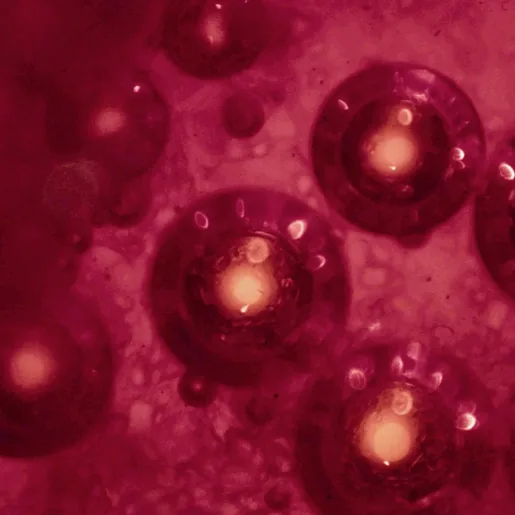

See your ferritin and hemoglobin side by side
Ferritin, hemoglobin, transferrin saturation, and hs-CRP from a single blood draw
- CLIA-certified labs
- HIPAA compliant
- Personalized health protocol
What low ferritin with normal hemoglobin means
Low ferritin with normal hemoglobin means iron deficiency without anemia, also called non-anemic iron deficiency. Ferritin is a protein that stores iron inside your cells, so a low result means stores are running down. Hemoglobin still reads above the anemia line, about 13.6 g/dL in adult men and 12 g/dL in adult women.
Iron-deficiency anemia is the later stage, when hemoglobin falls too. Guidelines now aim to identify iron deficiency whether or not anemia is present. Iron deficiency without anemia is nearly twice as common as the anemic stage, so low stores often matter before hemoglobin moves.
Why symptoms show up before anemia
Symptoms can appear before anemia because iron deficiency develops in stages, and stores run down long before hemoglobin falls. First, bone marrow stores shrink while hemoglobin and serum iron hold steady. Next, red cell production runs short of iron. Transferrin saturation, the share of iron's carrier protein holding iron, declines while hemoglobin usually stays in range. Left unaddressed, the deficiency progresses from low iron stores to anemia.
In trials of non-anemic, iron-deficient adults, iron reduced self-reported fatigue, while measured physical capacity did not change. Fatigue is one of several ways depleted iron stores show up.
Symptoms of low iron stores with normal hemoglobin
Non-anemic iron deficiency can cause vague symptoms while hemoglobin reads normal. Some people have no symptoms at all, while others notice these:
- Fatigue: ongoing tiredness
- Poor concentration: trouble focusing, sometimes with irritability
- Restless legs: an urge to move the legs, often at night
- Pica: cravings to eat non-food items
- Exercise intolerance: tiring quickly with exertion
- Lightheadedness: sometimes with cold intolerance and poor sleep
- Hair loss: recent shedding can increase
Many conditions share these unexplained, nonspecific symptoms, so a blood test links them to low iron stores and their cause.
The causes of low ferritin with normal hemoglobin
Low ferritin with normal hemoglobin develops when the body loses or uses more iron than it absorbs. The most common causes group by how they drain iron stores.
| Cause | Examples | Who it most often affects |
|---|---|---|
| Blood loss | Heavy periods, bleeding in the gut | People with heavy periods (in a study of young women, over half had low stores); men and postmenopausal women when the gut bleeds |
| Higher demand | Pregnancy, intense endurance training | Pregnant people; female athletes, up to 60% of whom are iron deficient |
| Low intake | Vegetarian or low-iron diets | Vegetarians, whose iron needs run 1.8 times higher |
| Poor absorption | Celiac disease, inflammatory bowel disease, atrophic gastritis, bariatric surgery | People with digestive conditions or past stomach surgery |
| Medications | Long-term acid-suppressing medicines, regular use of NSAID pain relievers | Acid-suppressant users, with 2 or more years of use linked to higher risk |
Serious gut disease is uncommon in non-anemic iron deficiency. Clinicians look sooner in men and postmenopausal women. Digestive symptoms or a family history of gut disease prompt an earlier look too, once blood tests confirm low stores.
How low iron stores are confirmed
Ferritin is the most efficient test for low iron stores, read alongside serum iron and TIBC (total iron-binding capacity). Iron deficiency is typically identified at a ferritin under 30 ng/mL without inflammation, or a transferrin saturation under 20%. Higher cutoffs apply to some groups, such as people with heavy periods.
Inflammation can push ferritin up by about 30% and hide low stores, so hs-CRP, an inflammation marker, is read alongside.
A lab's normal range describes where most people fall, so a ferritin can read normal yet sit near depletion. One typical female range starts at 15 ng/mL, while iron-poor red cell production begins near 25 ng/mL in US women. Confirmed low stores shift the focus to refilling them and finding the cause.
Get 100+ biomarkers tested in-lab or at home
One blood draw a year. A full picture of your health, explained in plain language.
Get 100+ biomarkers tested in-lab or at home
One blood draw a year. A full picture of your health, explained in plain language.
Managing and rechecking low ferritin with normal hemoglobin
Low ferritin with normal hemoglobin is managed in three clinician-directed steps, though evidence for iron without anemia is still limited. In fatigued women with ferritin under 50 ng/mL, 12 weeks of iron cut fatigue scores by 47.7%, against 28.8% on placebo.
- Find the cause: whatever drained the stores is identified and addressed first.
- Refill iron stores: oral iron comes first, sometimes on alternate days for higher absorption, with IV iron if oral iron is poorly tolerated.
- Recheck iron studies: ferritin and related tests are repeated after 60 to 90 days of oral iron.
Stores take months to replenish, so tracking ferritin, hemoglobin, and hs-CRP over time shows recovery.
Balance your ferritin levels with Superpower
Low ferritin can hide behind a normal hemoglobin, and a comprehensive blood test that reports both on one page shows whether your stores are low. A Superpower membership includes 100+ biomarkers in a single draw, among them ferritin, hemoglobin, iron, transferrin saturation, TIBC, and hs-CRP. As your home for health, Superpower measures those markers and supports improving them with a personalized protocol, plus AI and care team support.
Know where your iron stores stand. Start your Superpower membership and turn a single set of results into ongoing, on-demand support.
References
- Cleveland Clinic (2025). Ferritin test: levels and test results. *Cleveland Clinic Health Library*. Last updated August 11, 2025.
- Gerber GF (2024). Evaluation of anemia. *Merck Manual Professional Version*. Last updated September 2024.
- Powers JM, Lim MY, Achebe MO, et al (2026). American Society of Hematology 2026 guidelines for diagnosis of iron deficiency. *Blood Advances*. Published online August 24, 2026. https://doi.org/10.1182/bloodadvances.2025015950
- American Society of Hematology. Iron-deficiency anemia. *Hematology.org*. Accessed October 17, 2026.
- Gerber GF (2025). Iron deficiency anemia. *Merck Manual Professional Version*. Last updated April 2025.
- Office of Dietary Supplements (2025). Iron: fact sheet for health professionals. *National Institutes of Health*. Updated September 4, 2025.
- Auerbach M, DeLoughery TG, Tirnauer JS (2025). Iron deficiency in adults: a review. *JAMA*, *333*(20), 1813–1823. https://doi.org/10.1001/jama.2025.0452
- Houston BL, Hurrie D, Graham J, et al (2018). Efficacy of iron supplementation on fatigue and physical capacity in non-anaemic iron-deficient adults: a systematic review of randomised controlled trials. *BMJ Open*, *8*(4), e019240. https://doi.org/10.1136/bmjopen-2017-019240
- Balendran S, Forsyth C (2021). Non-anaemic iron deficiency. *Australian Prescriber*, *44*(6), 193–196. https://doi.org/10.18773/austprescr.2021.052
- Snook J, Bhala N, Beales ILP, et al (2021). British Society of Gastroenterology guidelines for the management of iron deficiency anaemia in adults. *Gut*, *70*(11), 2030–2051. https://doi.org/10.1136/gutjnl-2021-325210
- Pengelly M, Pumpa K, Pyne DB, Etxebarria N (2025). Iron deficiency, supplementation, and sports performance in female athletes: a systematic review. *Journal of Sport and Health Science*, *14*, 101009. https://doi.org/10.1016/j.jshs.2024.101009
- Lam JR, Schneider JL, Quesenberry CP, Corley DA (2017). Proton pump inhibitor and histamine-2 receptor antagonist use and iron deficiency. *Gastroenterology*, *152*(4), 821–829.e1. https://doi.org/10.1053/j.gastro.2016.11.023
- Thurnham DI, McCabe LD, Haldar S, Wieringa FT, Northrop-Clewes CA, McCabe GP (2010). Adjusting plasma ferritin concentrations to remove the effects of subclinical inflammation in the assessment of iron deficiency: a meta-analysis. *American Journal of Clinical Nutrition*, *92*(3), 546–555. https://doi.org/10.3945/ajcn.2010.29284
- Mei Z, Addo OY, Jefferds ME, Sharma AJ, Flores-Ayala RC, Brittenham GM (2021). Physiologically based serum ferritin thresholds for iron deficiency in children and non-pregnant women: a US National Health and Nutrition Examination Surveys (NHANES) serial cross-sectional study. *Lancet Haematology*, *8*(8), e572–e582. https://doi.org/10.1016/S2352-3026(21)00168-X
- Vaucher P, Druais PL, Waldvogel S, Favrat B (2012). Effect of iron supplementation on fatigue in nonanemic menstruating women with low ferritin: a randomized controlled trial. *CMAJ*, *184*(11), 1247–1254. https://doi.org/10.1503/cmaj.110950
- Stoffel NU, Cercamondi CI, Brittenham G, et al (2017). Iron absorption from oral iron supplements given on consecutive versus alternate days and as single morning doses versus twice-daily split dosing in iron-depleted women: two open-label, randomised controlled trials. *Lancet Haematology*, *4*(11), e524–e533. https://doi.org/10.1016/S2352-3026(17)30182-5
- Beatrix J, Piales C, Berland P, Marchiset E, Gerbaud L, Ruivard M (2022). Non-anemic iron deficiency: correlations between symptoms and iron status parameters. *European Journal of Clinical Nutrition*, *76*(6), 835–840. https://doi.org/10.1038/s41430-021-01047-5
- Özbilen M, Kaya Y (2025). Beyond anemia: a comprehensive analysis of iron deficiency symptoms in women and their correlation with biomarkers. *BMC Women's Health*, *25*(1), 376. https://doi.org/10.1186/s12905-025-03906-w


























 Heart & Vascular Health
 Metabolic Health
 Energy
 Liver Health
 Kidney
 Sex Hormones
 Thyroid Health
 Nutrients
 Immune System
 Inflammation