


Understand what your immune health results really mean
See your biomarkers in context with a comprehensive panel.
- CLIA-certified labs
- HIPAA compliant
- Personalized health protocol
COPD as a whole-body disease in bloodwork
COPD biomarkers are measurable signals in blood that mirror what’s happening in the lungs and the whole body. They help show the kind of airway inflammation present, how active it is, and whether lung tissue is being damaged or repaired. Counts of certain white blood cells can point to inflammation patterns that behave differently with treatment (eosinophils vs neutrophils). Blood proteins that rise with whole‑body inflammation can flag flare‑up risk and illness burden (C‑reactive protein, fibrinogen). Markers of enzyme balance help indicate inherited vulnerability and ongoing tissue breakdown (alpha‑1 antitrypsin and protease activity). Signals of oxidative stress and tissue remodeling reflect the wear‑and‑tear from smoke or pollutants (reactive oxygen stress, matrix fragments). Together, these markers let clinicians track disease activity between symptoms, anticipate exacerbations, personalize inhaled and anti‑inflammatory therapies, and spot systemic effects of COPD like muscle loss or cardiovascular strain. In short, COPD biomarker testing turns a simple blood draw into a window on airway inflammation, lung injury, and whole‑body stress—making care more targeted and timely.
Why inflammation markers matter between flares
COPD blood biomarkers show how the lungs, immune system, liver, and muscles are working together under chronic stress. They help distinguish quiet disease from a brewing flare, uncover hidden infection or malnutrition, and flag risks that extend beyond the lungs—like frailty and cardiovascular strain. Typical reference ranges: WBC about 4–10.5, neutrophils 40–70%, CRP usually under 3, and albumin around 3.5–5. In stable COPD, WBC and neutrophils tend to sit mid‑range; CRP is best near the low end; albumin is healthiest in the middle to higher end of normal. During exacerbations, WBC and neutrophils often climb and CRP can spike well above 10, while albumin may drift lower with ongoing inflammation and reduced intake. When values fall below normal, they tell a different story. Low WBC or neutrophils can reflect bone‑marrow suppression, viral illness, or certain medications, blunting front‑line defenses and presenting as frequent infections, muted fevers, fatigue, and worsening breathlessness. A very low CRP generally indicates minimal systemic inflammation, but in advanced liver disease it can mask serious infection. Low albumin signals protein‑energy malnutrition, chronic inflammation, or liver disease; in COPD it correlates with weight loss, weaker respiratory muscles, edema, and higher hospitalization risk. Older adults are particularly prone to low albumin; in pregnancy, albumin runs lower from hemodilution and CRP may be modestly higher, so thresholds shift. Big picture: these markers integrate airway inflammation with systemic biology—immunity, hepatic synthesis, nutrition, and muscle function. Patterns over time help anticipate exacerbations, assess recovery, and gauge risks for heart events, frailty, and mortality—making blood testing a key complement to symptoms, spirometry, and imaging in COPD care.
Test 150+ biomarkers
Two blood draws. A full picture of your health, explained in plain language.
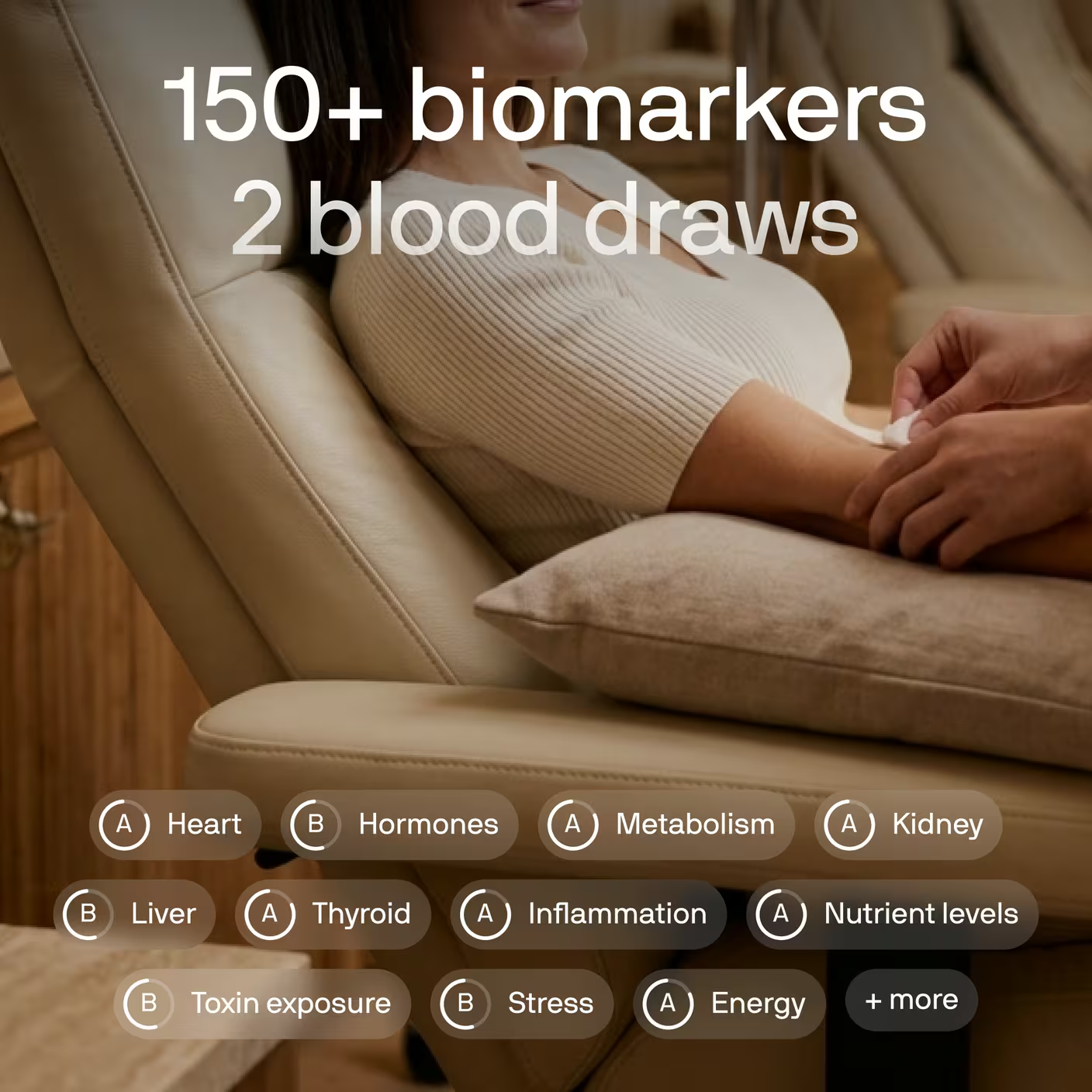
Test 150+ biomarkers
Two blood draws. A full picture of your health, explained in plain language.
What COPD bloodwork reveals and where it stops
Chronic obstructive pulmonary disease (COPD) affects not just the lungs, but the entire body’s ability to maintain energy, immunity, and metabolic balance. Blood testing in COPD provides a window into how inflammation and immune activity are impacting overall health, including cardiovascular function, resistance to infection, and even cognitive and reproductive systems. At Superpower, we focus on four key biomarkers: White blood cell count (WBC), neutrophils, C-reactive protein (CRP), and albumin. WBC and neutrophils are both indicators of immune system activity. WBC measures the total number of white blood cells, which defend against infection. Neutrophils are a specific type of white blood cell that respond quickly to inflammation or infection, and their levels often rise during COPD flare-ups. CRP is a protein produced by the liver in response to inflammation; higher levels signal active inflammation in the body, which is common in COPD. Albumin is a major blood protein that reflects nutritional status and the body’s ability to maintain fluid balance; low levels can indicate chronic inflammation or poor overall health. Stable WBC, neutrophil, and CRP levels suggest that inflammation is under control, supporting better lung function and reducing strain on the heart and other organs. Healthy albumin levels indicate the body is maintaining its protein stores and fluid balance, which is essential for healing and resilience in COPD. Interpretation of these biomarkers can be influenced by factors such as age, recent infections, pregnancy, medications (like steroids), and laboratory methods. These variables should be considered when evaluating results.
Frequently Asked Questions
References
- Agustí A, Celli BR, Criner GJ, Halpin D, Anzueto A, Barnes P, Bourbeau J, Han MK, Martinez FJ, Montes de Oca M, Mortimer K, Papi A, Pavord I, Roche N, Salvi S, Sin DD, Singh D, Stockley R, López Varela MV, ... Vogelmeier CF (2023). Global Initiative for Chronic Obstructive Lung Disease 2023 report: GOLD executive summary. *European Respiratory Journal*, *61*(4), 2300239. https://doi.org/10.1183/13993003.00239-2023
- Bafadhel M, Pavord ID, Russell REK (2017). Eosinophils in COPD: Just another biomarker? *The Lancet Respiratory Medicine*, *5*(9), 747-759. https://doi.org/10.1016/S2213-2600(17)30217-5
- Thomsen M, Ingebrigtsen TS, Marott JL, Dahl M, Lange P, Vestbo J, Nordestgaard BG (2013). Inflammatory biomarkers and exacerbations in chronic obstructive pulmonary disease. *JAMA*, *309*(22), 2353-2361. https://doi.org/10.1001/jama.2013.5732
- Miravitlles M, Dirksen A, Ferrarotti I, Koblizek V, Lange P, Mahadeva R, McElvaney NG, Parr D, Piitulainen E, Roche N, Stolk J, Thabut G, Turner A, Vogelmeier C, Stockley RA (2017). European Respiratory Society statement: Diagnosis and treatment of pulmonary disease in alpha-1 antitrypsin deficiency. *European Respiratory Journal*, *50*(5), 1700610. https://doi.org/10.1183/13993003.00610-2017
- Barnes PJ, Celli BR (2009). Systemic manifestations and comorbidities of COPD. *European Respiratory Journal*, *33*(5), 1165-1185. https://doi.org/10.1183/09031936.00128008



























 Heart & Vascular Health
 Metabolic Health
 Energy
 Liver Health
 Kidney
 Sex Hormones
 Thyroid Health
 Nutrients
 Immune System
 Inflammation