


Understand what your hormone testing results really mean
See your biomarkers in context with a comprehensive panel.
- CLIA-certified labs
- HIPAA compliant
- Personalized health protocol
What sprinting does to testosterone, acutely and over time
Yes. High-intensity sprint exercise produces one of the largest acute testosterone responses of any exercise type, and consistent sprint training can raise resting levels modestly. How much you gain depends on your baseline, your body composition, and how well you recover between sessions.
| Phase | Magnitude | Timing | Who responds most | Cortisol signature |
|---|---|---|---|---|
| Acute, after 1 session | 15–30% above baseline in men | Peaks within 15–30 minutes; back to baseline within 60–90 minutes | Men with lower body fat and a larger SHBG drop, who keep more of the spike as free testosterone | Not the driver; the spike comes from lactate, catecholamines, and lower SHBG |
| 6–12 weeks of sprint training | Resting testosterone 5–15% above pre-training baseline | Builds over 6–12 weeks of consistent training | Men with lower baseline testosterone or higher body fat; smaller gains when already optimal | Held in check when sessions allow adequate recovery |
| Overtraining | Below-baseline testosterone | Accumulates with excessive load and too little recovery | Anyone sprinting at high volume without adequate recovery | Above-baseline cortisol alongside below-baseline testosterone |
Compared to steady-state aerobic exercise, high-intensity sprint training produces a larger acute testosterone response. Compared to heavy compound resistance training — squats, deadlifts — the acute response from sprinting is broadly comparable, though the comparison depends on training parameters. Both modalities produce meaningfully larger hormonal responses than moderate-intensity aerobic work. The practical implication is that exercise intensity is the primary driver of the acute testosterone response, and sprinting sits at the high end of that intensity spectrum alongside heavy resistance training.
These population averages, however, hide substantial individual variation. Whether a given sprint program shifts your baseline testosterone depends on training consistency, recovery quality, body composition, and individual hormonal context. Blood testing before and after a training phase is the most reliable way to assess whether training is producing a measurable shift — subjective symptoms and population averages are poor substitutes for individual data.
The mechanism behind the sprint-driven hormonal spike
Testosterone is produced primarily in the Leydig cells of the testes, regulated by the hypothalamic-pituitary-gonadal (HPG) axis: the hypothalamus releases GnRH, which signals the pituitary to release LH, which in turn drives testosterone production. Sprint exercise disrupts this system in a hormonally stimulating direction through at least three proposed mechanisms.
First, lactate accumulates rapidly during maximal sprint efforts, and lactate has been shown to directly stimulate Leydig cell testosterone production — the higher the intensity, the greater the lactate signal. Second, catecholamines (adrenaline and noradrenaline) are released in large quantities during maximal effort and appear to stimulate testicular testosterone release through adrenergic receptors on Leydig cells, independent of the HPG axis. Third, sprint exercise acutely suppresses sex hormone-binding globulin (SHBG), the protein that binds testosterone in circulation and renders it biologically inactive. Even without an increase in total testosterone production, a transient drop in SHBG raises the free testosterone fraction — the portion available to tissues.
These three mechanisms can operate simultaneously, which helps explain why the sprint-induced spike tends to be larger than that seen with moderate-intensity aerobic exercise. For a comparison of how this response compares to resistance training, see does lifting weights increase testosterone.
Why sprinters get very different hormonal responses
The average acute spike hides a wide range. Some men barely register a post-sprint change; others peak near the upper reference limit. The biology behind the gap is measurable.
- Body fat percentage: Adipose tissue contains aromatase, which converts testosterone to estradiol. Higher body fat means more aromatase activity and lower net free testosterone for a given sprint-induced spike. Losing body fat through training reduces that aromatase-driven conversion.
- Sleep (≥7 hours): Short sleep is one of the biggest everyday testosterone killers. Sleep restriction to five hours per night for one week reduces daytime testosterone by 10 to 15% in young healthy men — enough to counteract any training-induced increase. Testosterone production peaks during early deep sleep; inadequate sleep undermines the hormonal benefit of training regardless of sprint quality. Overtraining is another, with the cortisol signature shown in the table above.
- Caloric and nutritional status: Severe caloric deficit suppresses the HPG axis as an adaptive energy-conservation response. Sprint training in a large deficit can blunt or reverse testosterone responses relative to neutral energy balance. Fasting insulin provides useful metabolic context here, as insulin resistance is independently associated with reduced testosterone.
- Age: Testosterone production declines approximately 1 to 2% per year after age 30, primarily through reduced Leydig cell output and rising SHBG. Older men show blunted acute and chronic training responses compared to younger men starting from a higher baseline, though sedentary older men initiating sprint training tend to show larger relative responses than those already training consistently.
- Total testosterone: Baseline production level, which sets how much room training has to move it.
- Free testosterone: The biologically active fraction; SHBG modulates how much of the sprint-induced total rise actually translates to free, bioavailable testosterone.
- SHBG: Acute sprint exercise transiently suppresses SHBG, raising the free testosterone fraction — the degree of suppression varies by individual and influences how much of the total spike is biologically meaningful.
- LH: The pituitary signal driving testosterone production; distinguishes primary testicular from secondary pituitary origins of a blunted training response.
- Cortisol: Chronically elevated cortisol suppresses HPG axis testosterone production — the key marker for distinguishing healthy training adaptation from overtraining.
- Fasting insulin: Insulin resistance is associated with reduced testosterone; provides metabolic context for interpreting the training response.
Testing testosterone in the morning (between 7 and 10 a.m.) is standard because diurnal variation is significant: levels peak in the morning and decline by 20 to 25% by evening. A single afternoon reading may underestimate your true baseline. Results should be interpreted by a qualified provider in the context of symptoms and clinical history.
Test 100+ biomarkers
One blood draw. A full picture of your health, explained in plain language.
Test 100+ biomarkers
One blood draw. A full picture of your health, explained in plain language.
How often to sprint for a testosterone benefit
Two to three sprint sessions per week, with at least 48 hours between sessions, is the range most sprint interval training research has used. More frequent sessions without adequate recovery tend to shift the cortisol-to-testosterone ratio in an unfavorable direction. Sleep and energy balance, covered above, decide whether those sessions raise testosterone or blunt it.
When sprint volume pushes testosterone the wrong way
More sprint volume does not automatically produce more testosterone — and past a threshold, it produces the opposite.
Excessive training load, particularly without adequate recovery, activates the HPG axis in a stress-response direction rather than a stimulating one. Cortisol rises with accumulating training stress, and chronic elevation of cortisol suppresses gonadal hormone production, which produces the overtraining signature in the table above. This means recovery is not a secondary variable in the sprint-testosterone relationship; it is a primary one.
For women, the risk runs in a related but distinct direction. Excessive high-intensity sprint training in the context of low energy availability can suppress reproductive hormones more broadly — a pattern known as relative energy deficiency in sport (RED-S). The hormonal suppression in this context is not limited to testosterone; it reflects a systemic adaptive response to insufficient energy relative to training demand.
The physiological distinction between a healthy testosterone response and a suppressed one is covered in more detail in is high testosterone good.
When testosterone testing becomes clinically useful
Persistent symptoms of low testosterone — reduced libido, fatigue, loss of muscle mass, mood changes — warrant clinical evaluation whether or not you're sprinting. If they persist or worsen during a sprint program, that is a clinical question, not a programming one. A morning total testosterone, free testosterone, SHBG, and cortisol panel shows whether training is producing the expected adaptation or whether overtraining, inadequate recovery, nutritional deficit, or an underlying hormonal issue is driving the pattern. Reference ranges vary by laboratory, so results should be interpreted by a qualified provider in the context of symptoms and clinical history.
Understanding the markers behind your hormonal response is the foundation of Superpower's approach to preventive health.
Frequently Asked Questions
References
- Dote-Montero M, Carneiro-Barrera A, Martinez-Vizcaino V, Ruiz JR, Amaro-Gahete FJ (2021). Acute effect of HIIT on testosterone and cortisol levels in healthy individuals: A systematic review and meta-analysis. *Scandinavian journal of medicine & science in sports*, *31*(9), 1722-1744. https://doi.org/10.1111/sms.13999
- Smith AA, Toone R, Peacock O, Drawer S, Stokes KA, Cook CJ (2013). Dihydrotestosterone is elevated following sprint exercise in healthy young men. *Journal of applied physiology*, *114*(10), 1435-40. https://doi.org/10.1152/japplphysiol.01419.2012
- Cohen PG (2001). Aromatase, adiposity, aging and disease. The hypogonadal-metabolic-atherogenic-disease and aging connection. *Medical hypotheses*, *56*(6), 702-8. https://doi.org/10.1054/mehy.2000.1169
- Feldman HA, Longcope C, Derby CA, Johannes CB, Araujo AB, Coviello AD, Bremner WJ, McKinlay JB (2002). Age trends in the level of serum testosterone and other hormones in middle-aged men: longitudinal results from the Massachusetts male aging study. *The Journal of clinical endocrinology and metabolism*, *87*(2), 589-98. https://doi.org/10.1210/jcem.87.2.8201
- Brambilla DJ, Matsumoto AM, Araujo AB, McKinlay JB (2009). The effect of diurnal variation on clinical measurement of serum testosterone and other sex hormone levels in men. *The Journal of clinical endocrinology and metabolism*, *94*(3), 907-13. https://doi.org/10.1210/jc.2008-1902
- Mountjoy M, Sundgot-Borgen J, Burke L, Carter S, Constantini N, Lebrun C, Meyer N, Sherman R, Steffen K, Budgett R, Ljungqvist A (2014). The IOC consensus statement: beyond the Female Athlete Triad--Relative Energy Deficiency in Sport (RED-S). *British journal of sports medicine*, *48*(7), 491-7. https://doi.org/10.1136/bjsports-2014-093502












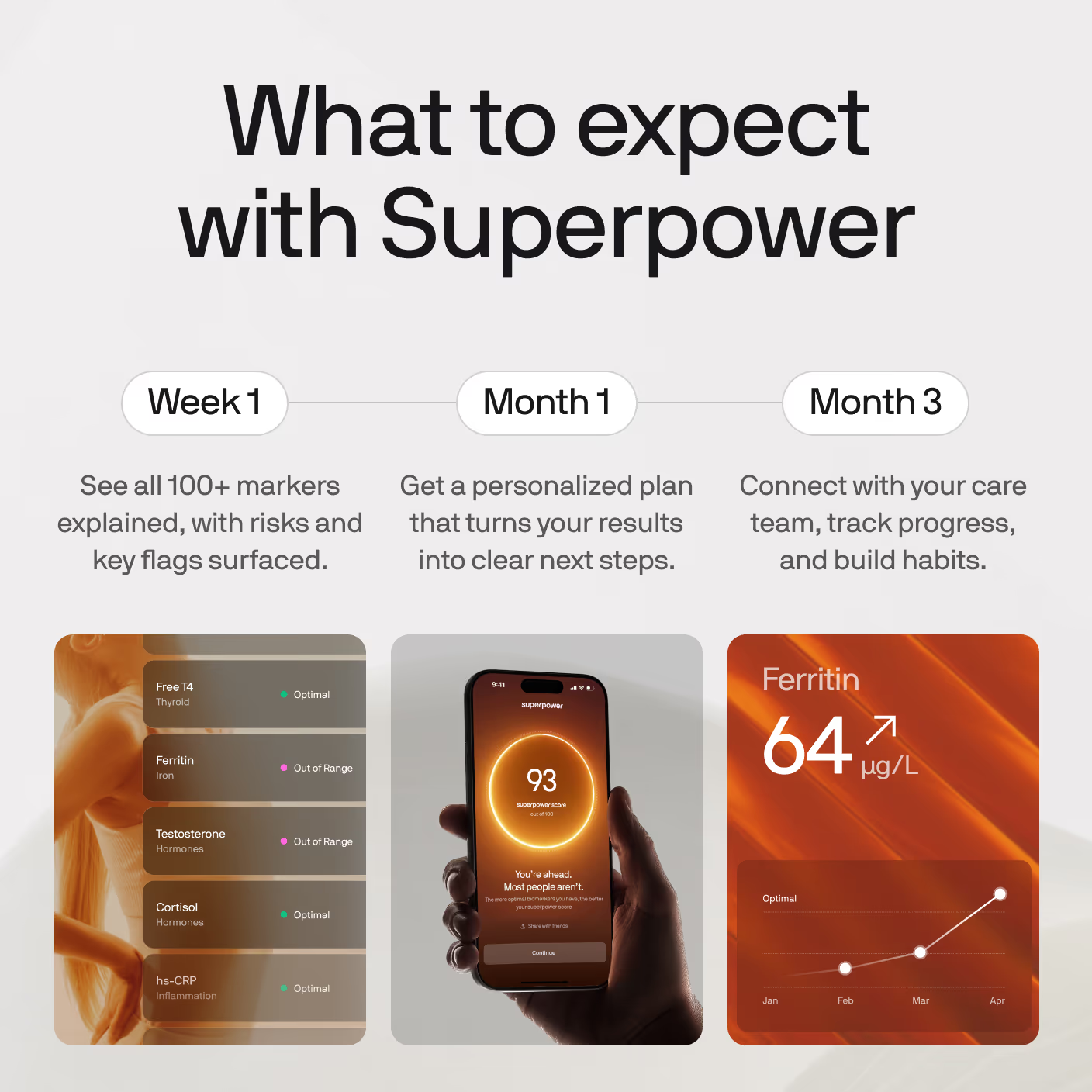

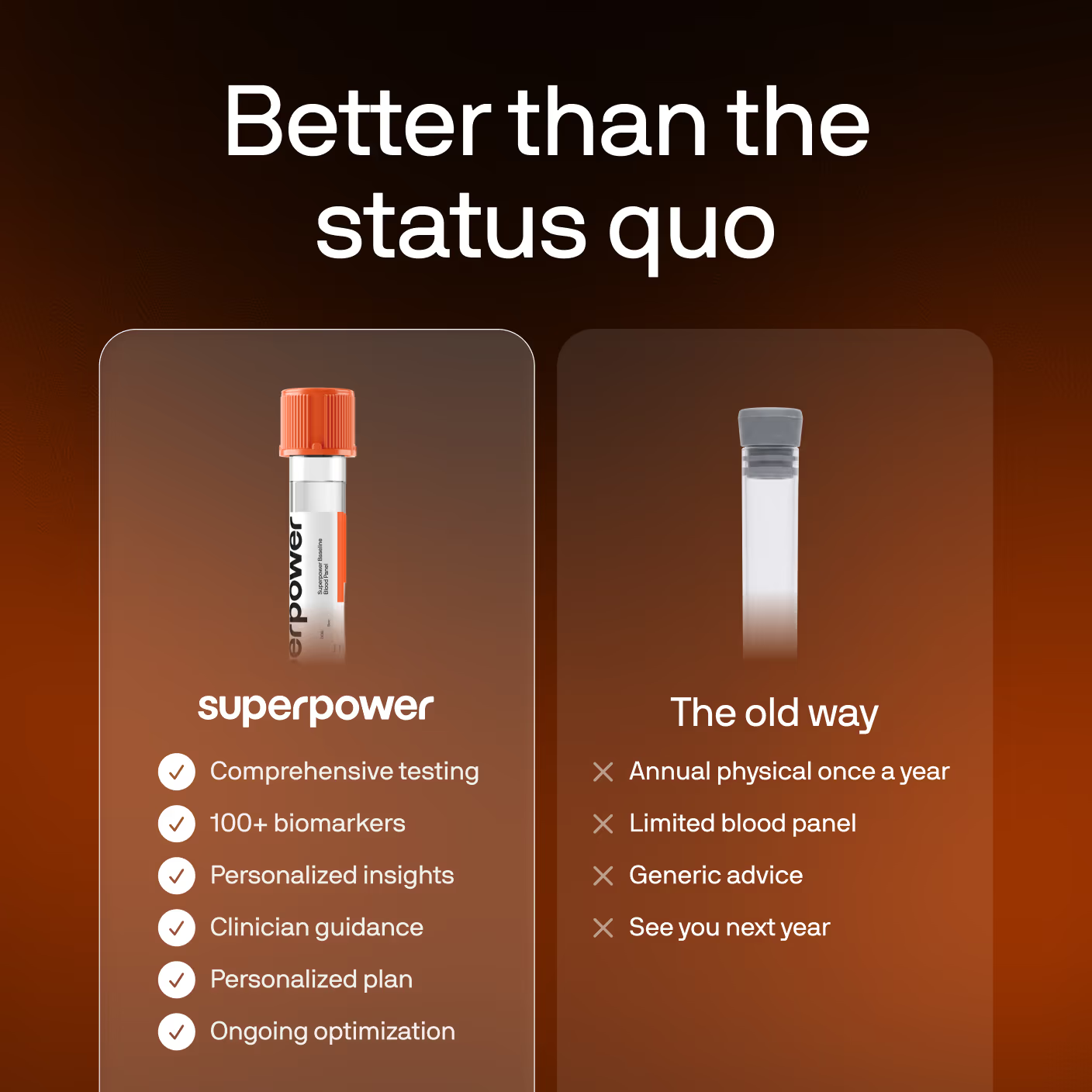








 Heart & Vascular Health
 Metabolic Health
 Energy
 Liver Health
 Kidney
 Sex Hormones
 Thyroid Health
 Nutrients
 Immune System
 Inflammation