Understanding Your Platinum Level: Exposure and Testing
REVIEWED BY
William Maish, MD MBA MPH
Clinical Product Lead
Published
Last updated
Key takeaway:
This platinum test measures your personal platinum level so you can detect recent or elevated exposure. Knowing your result helps you and your healthcare provider reduce further exposure and may lower the risk of health issues linked to platinum exposure, such as respiratory irritation and allergic reactions.
The platinum toxin test measures how much platinum is in your body, typically using a urine sample and, less commonly, a blood sample. Most labs quantify total platinum and report it as micrograms per liter (µg/L) or nanograms per liter (ng/L). For urine, results may also be “creatinine-corrected” (µg/g creatinine) to account for hydration. State-of-the-art trace metal testing uses inductively coupled plasma mass spectrometry (ICP‑MS), which provides high sensitivity and specificity at very low concentrations. Your result is compared against the laboratory’s reference interval to help determine whether your exposure falls within what’s expected for the general population or appears elevated.
Thanks for signing up!
Check your inbox — your first issue is on the way. We send clinically reviewed health science, never spam.
Why a platinum reading matters
Why this matters: platinum is a valuable industrial metal used in catalytic converters, electronics, and certain medical therapies. Even small amounts can provide clues about environmental exposure, workplace contact, or recent medical care. Elevated levels may correlate with skin or airway irritation in occupational settings and, at high doses seen with medical treatments, kidney or nerve stress. Testing offers objective data on your body’s handling of this metal—absorption, circulation, and elimination—so you can better understand short-term exposure and long-term resilience.
Big picture, testing supports prevention and detection. It creates a baseline you can revisit to see how changes in environment or work practices influence your internal exposure. If levels are elevated, repeat testing can confirm whether they trend down after adjustments. If levels are typical, that reassurance matters too. The goal isn’t to “pass” or “fail” but to map where your biology stands today and how it responds over time, so decisions about risk reduction and monitoring are grounded in data.
Who benefits most from platinum testing
Platinum interacts with key body systems. In sensitive individuals exposed to platinum salts at work (such as refining, lab, or manufacturing settings), the metal can trigger allergic-type reactions in the skin or lungs. At therapeutic doses used in oncology, platinum compounds are known to stress the kidneys and nerves; while this is a very different exposure level than environmental background, it illustrates how the metal can affect cellular function. Monitoring can be especially relevant if you live or work near heavy traffic, handle catalytic converter materials, fabricate jewelry, or have had recent medical exposure. If you have persistent wheeze, contact dermatitis, or unexplained fatigue in an exposure context, testing helps determine whether platinum is part of the story.
Test 100+ biomarkers
One blood draw. A full picture of your health, explained in plain language.
Your report displays platinum as a numeric value compared with a lab-specific reference range. “Normal” reflects what’s typical for a general population; “optimal” is sometimes used to indicate levels associated with lower long-term risk, though terminology varies by lab. Context is critical: a modest elevation in a jeweler after a busy week means something different than the same number in someone far from industrial sources.
When values sit in a low, steady zone, it suggests minimal exposure and efficient elimination. Day-to-day swings can reflect hydration, short-term contact (for example, handling certain materials), or recent medical procedures.
Higher readings may point to recent or ongoing exposure, or—if you’ve had platinum-based therapy—residual elimination. In urine, creatinine-corrected values help distinguish true elevation from dilution effects. An out-of-range result is not a diagnosis; it’s a signal to evaluate exposure sources and, if needed, related systems like kidney function.
What a platinum test can and can't tell you
The most powerful insight is trend recognition over time. when interpreted by a clinician alongside your symptoms, work and home environment, and complementary labs, your results help guide next steps with your clinician and support long-term preventive care.
Frequently Asked Questions
The platinum toxin test measures the amount (concentration) of platinum — or platinum-containing compounds — present in a biological sample (commonly blood/plasma, urine, hair or nails). It quantifies how much of the metal is in your body at the time of sampling to indicate recent or cumulative exposure, including exposure from occupational sources or from platinum-based chemotherapy drugs.
These results are solely a measurement of your personal platinum levels and do not, by themselves, diagnose a disease or predict symptoms; interpretation for health implications or treatment decisions should be done by a qualified clinician. Test reports typically give concentrations in standard units (e.g., ng/mL or µg/L) and may be used for monitoring exposure over time or assessing the need for further medical follow-up.
We collect a biological specimen—most commonly a small venous blood draw (serum or plasma) or a urine sample—depending on which specimen the specific platinum test requires; collection is performed by trained personnel or via a supplied home-collection kit with written instructions. Follow any pre-collection instructions included with your kit (timing, fasting, medication guidance) to ensure an accurate personal measurement.
This test measures only your personal platinum level and is intended solely for individual monitoring and informational purposes, not as a standalone diagnosis of any medical condition.
A platinum toxin test measures the amount of platinum in a biological sample (blood, urine or hair) and can tell you whether you have recent or ongoing exposure to platinum or platinum-containing compounds. Elevated levels indicate exposure and warrant clinical evaluation and investigation of the exposure source, but a laboratory result alone does not diagnose specific organ injury or predict outcomes.
Normal or low levels suggest no significant recent exposure. Results must be interpreted using the lab’s reference ranges, the specimen type and timing, and your clinical history (for example occupational exposure or platinum‑based chemotherapy). Clinicians may use the test for exposure screening, to monitor trends over time, or to guide further testing and monitoring of kidney function, hearing, neuropathy or allergic reactions as indicated.
Accuracy depends on the method and laboratory: instrument-based assays such as ICP‑MS or high‑resolution mass spectrometry performed in accredited labs are highly sensitive and specific for measuring platinum species and generally provide good accuracy and precision when proper sample handling, calibration, and quality controls are used. Simpler or rapid screening methods (colorimetric assays, some immunoassays) can be less specific and more prone to interference or cross‑reactivity, so they are less reliable for definitive quantification.
Clinical reliability also depends on timing of sampling, the specimen type (blood, urine, tissue), potential contamination, and biological variability. No test is 100% definitive by itself: confirmatory testing, use of certified reference materials, participation in external quality assessment, and interpretation by clinicians or toxicologists familiar with platinum exposure are recommended to ensure results are valid and meaningful.
How often you should test platinum levels depends on why you’re being tested and your exposure risk. For occupational or environmental monitoring a common approach is a baseline test (pre‑exposure or at hire) followed by more frequent checks if exposure is high or an incident occurs (often every 1–3 months until levels stabilize) and less frequent surveillance for low chronic exposure (commonly every 6–12 months). For patients receiving platinum‑based chemotherapy, testing is guided by the treating clinician — typically before treatment and at intervals during therapy (often before each cycle) and afterward as clinically indicated.
Always follow the specific recommendations of your healthcare provider, occupational health service, or the testing laboratory; if you have a known acute exposure or new symptoms consistent with platinum toxicity, arrange testing promptly and repeat as directed to confirm clearance or changing levels.
Yes — measured platinum levels can change fairly quickly after exposure: blood and urine concentrations typically rise soon after an acute exposure and then decline as the body distributes and excretes the metal.
How fast levels change depends on the exposure route and chemical form of platinum and on individual factors (kidney function, metabolism); also the sample type matters — blood/urine reflect recent exposure while hair or nails reflect longer-term accumulation — so timing of the sample and repeat measurements are important for interpretation.
No — platinum toxin test results are not diagnostic. They highlight patterns of exposure, imbalance, or physiological resilience related to platinum compounds rather than providing a definitive medical diagnosis.
Results must be interpreted in the context of symptoms, medical history, and other laboratory or biomarker data by a qualified clinician who can integrate the findings into an overall diagnostic and treatment plan.
Platinum is not an essential nutrient, so “low” platinum test results are generally not a health problem and do not require supplementation or attempts to raise levels; trying to increase platinum exposure is not recommended.
If your test shows elevated platinum (suggesting exposure), stop or reduce ongoing exposure (identify workplace or environmental sources, certain catalysts or industrial processes, jewelry or contaminated materials, or medications such as platinum-based chemotherapy) and seek prompt medical evaluation. Your clinician or an occupational/environmental medicine specialist can repeat testing, monitor kidney and neurological function, advise supportive care, and determine if any specific treatments are appropriate—there is no widely accepted, over‑the‑counter remedy to lower platinum and any chelation or other interventions should only be done under specialist supervision. Implement workplace controls, PPE, hygiene and ventilation measures to prevent further exposure and follow the guidance of your healthcare and occupational safety professionals.
Superpower member survey, 90 days post action plan (n=143).
How does the Superpower membership work?
+
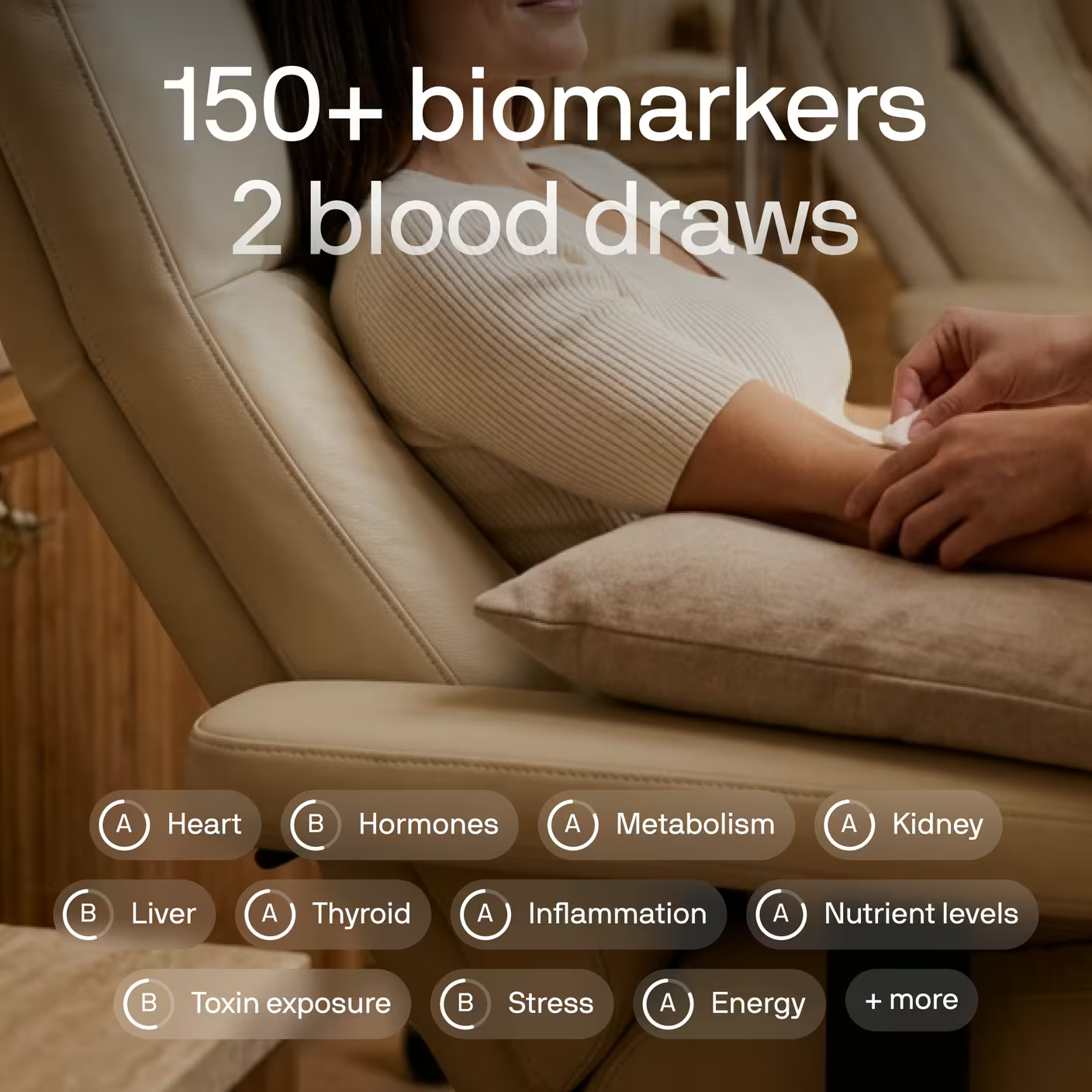
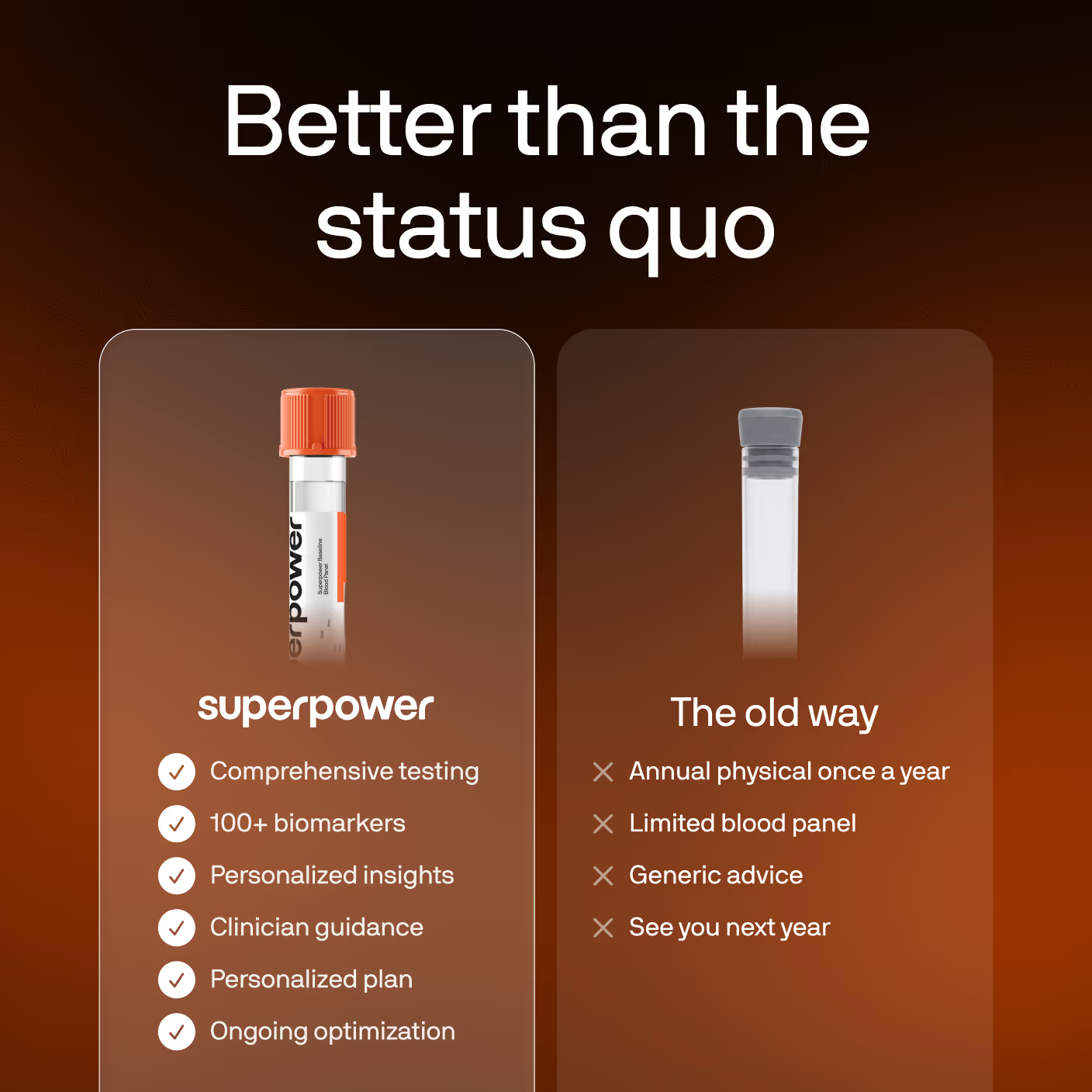
We test 100+ biomarkers from a single blood draw each year. Your baseline test paints a comprehensive picture of your health, and your dashboard shows what’s working, what needs attention, and what to do next. Superpower AI and your care team help you take action across lifestyle, supplements, and treatments.
Can I cancel anytime?
+
Yes. You can cancel anytime, no fees. Your membership stays active through the end of your paid year.
How often should I test?
+
Your membership includes two blood tests per year: one to establish your baseline, and one to see whether your plan improved biomarkers that were out of range or not yet optimized. You can add other diagnostics anytime through the app or with help from your care team.
When will I get my results?
+
Book your draw at any of 2,000+ partner labs or at-home. Results are typically ready in about a week and land in the Superpower app.
What the 100+ panel measures
All 101 markers in your annual baseline draw, organized by system. Nothing here is an upsell.
Heart & Vascular Health
26
Apolipoprotein B
Atherogenic Coefficient
Atherogenic Index of Plasma
Castelli Risk Index I
Castelli Risk Index II
HDL Cholesterol
LDL Cholesterol
LDL/HDL Ratio
Cholesterol, Total
Non-HDL Cholesterol
Cholesterol/HDL Ratio
Carbon Dioxide, Total
High-sensitivity CRP
hsCRP-to-Albumin Ratio (CAR)
GGT-to-HDL Cholesterol Ratio
LDL-C to Apolipoprotein B Ratio (LDL-C/ApoB)
LDL Cholesterol / Total Cholesterol (Mass Ratio)
Monocyte-to-HDL Ratio (MHR)
Neutrophil-to-HDL Cholesterol Ratio (NHR)
Non-HDL Cholesterol-to-Apolipoprotein B Ratio (Non-HDL-C/ApoB)




























 Heart & Vascular Health
 Metabolic Health
 Energy
 Liver Health
 Kidney
 Sex Hormones
 Thyroid Health
 Nutrients
 Immune System
 Inflammation