


Understand what your gut health results really mean
See your biomarkers in context with a comprehensive panel.
- CLIA-certified labs
- HIPAA compliant
- Personalized health protocol
Measuring how your microbes make and break GABA
The microbial GABA capacity test analyzes a stool sample to estimate how your gut microbiome handles gamma-aminobutyric acid (GABA) — both making it (via glutamate decarboxylase, GAD) and breaking it down (via the GABA shunt). Depending on the lab method, this can include metagenomic sequencing to quantify functional genes (gad, gabT, gabD), metatranscriptomics to see which genes are active, and sometimes targeted metabolomics to measure GABA in stool. Modern sequencing approaches like 16S rRNA profiling outline which microbes are present, while whole-metagenome sequencing maps their functional potential with more resolution. Results reflect your current ecosystem state, not a fixed trait, and can change with diet, stress, medications, and illness.
Why it matters: GABA is the body’s main inhibitory neurotransmitter. In the gut, GABA signaling influences motility, visceral sensation, barrier function, and local immune tone, and it communicates with the nervous system through the gut–brain axis. Certain bacteria (including strains within Lactobacillus and Bifidobacterium) can produce GABA, while others degrade it; the overall balance can shape how your gut “feels” under stress and after meals. Microbiome science is evolving, but consistent patterns — like functional diversity and stability — remain markers of resilience.
A functional window on the gut–brain axis
Connecting the dots between gut biology and daily life is the value here. The test helps identify dysbiosis patterns tied to GABA metabolism that may relate to functional GI symptoms (like IBS-type discomfort), stress-reactive bowels, or sleep disruptions. It can also clarify the effects of recent antibiotics, restrictive diets, or chronic stress on microbial GABA pathways, and it is useful after major life shifts or when symptoms persist despite basic lifestyle efforts.
Zooming out, your microbiome helps regulate inflammation, glucose handling, and mood signaling — and GABA is one of the messengers in that conversation. Repeating measurements over time can show how fiber intake, fermented foods, prebiotics, or stress-management practices are influencing microbial function in your gut. The goal isn’t a perfect number; it’s pattern recognition that helps you and your clinician align strategies with your biology for prevention and long-term wellness.
Reading a functional capacity report
Your report typically expresses GABA-related findings as functional gene abundance or pathway scores compared with a reference population, and sometimes as actual stool GABA levels. “Balanced” profiles often show the presence of GABA-synthesis genes alongside reasonable degradation capacity, anchored within a diverse community. Certain beneficial groups — for example, Lactobacillus and Bifidobacterium species with gad activity — can support GABA production, while taxa carrying gab genes participate in the GABA shunt that recycles carbon through energy pathways.
When these pathways are in balance, you tend to see signatures of efficient digestion and calmer local immune signaling, with steady short-chain fatty acid (SCFA) production that nourishes the gut lining (butyrate is a key player). Optimal ranges vary by person and geography, and they are shaped by diet, transit time, and recent exposures. Think of the result as a snapshot of function within a broader ecosystem.
If the test shows reduced GABA-synthesis capacity, an outsized degradation signal, or generally low diversity, it may indicate a microbiome that is more reactive under stress or less supportive of smooth gut motility. These findings are not a diagnosis of anxiety, depression, or any psychiatric condition; they highlight biological patterns for exploration. Evidence suggests microbe-derived GABA can signal through epithelial receptors and vagal pathways, potentially influencing visceral sensitivity and mood-related circuits, though more research is needed before drawing direct symptom-to-number conclusions.
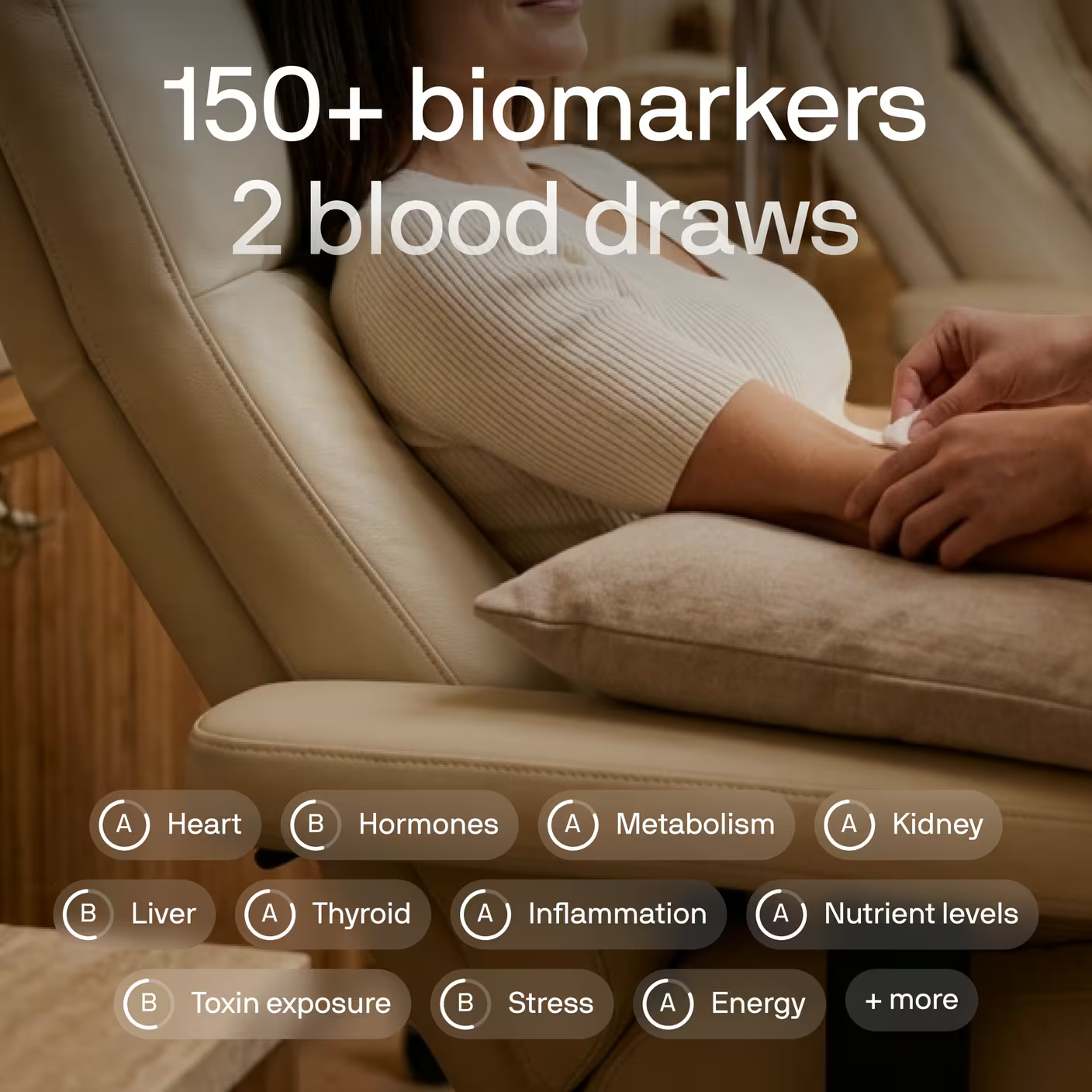
Test 150+ biomarkers
Two blood draws. A full picture of your health, explained in plain language.
Test 150+ biomarkers
Two blood draws. A full picture of your health, explained in plain language.
Companion data that sharpen the picture
Results gain power when combined with context: stool inflammation markers (e.g., calprotectin) to rule in or out active inflammation, metabolic panels to assess glucose and lipid handling, or stress-related measures that reflect HPA-axis tone. Interpreting change over time is especially useful — for example, after an antibiotic course, a new dietary approach, intense training blocks, or recovery from illness. A few practical limitations to keep in mind: gene presence does not guarantee gene expression; stool GABA reflects luminal content, not brain levels; day-to-day variability and sample handling (temperature, timing) can shift measurements; probiotics or recent fermented foods may transiently inflate producer signals; laxatives and very rapid transit can dilute metabolites; and assays differ across labs, so ranges aren’t interchangeable.
Frequently Asked Questions
References
- Braga JD, Thongngam M, Kumrungsee T (2024). Gamma-aminobutyric acid as a potential postbiotic mediator in the gut-brain axis. *NPJ Science of Food*, *8*(1), 16. https://doi.org/10.1038/s41538-024-00253-2
- Fusco W, Lorenzo MB, Cintoni M, Porcari S, Rinninella E, Kaitsas F, Lener E, Mele MC, Gasbarrini A, Collado MC, Cammarota G, Ianiro G (2023). Short-chain fatty-acid-producing bacteria: Key components of the human gut microbiota. *Nutrients*, *15*(9), 2211. https://doi.org/10.3390/nu15092211
- Ma J, Piao X, Mahfuz S, Long S, Wang J (2021). The interaction among gut microbes, the intestinal barrier and short chain fatty acids. *Animal Nutrition*, *9*, 159-174. https://doi.org/10.1016/j.aninu.2021.09.012
- Jovel J, Patterson J, Wang W, Hotte N, O'Keefe S, Mitchel T, Perry T, Kao D, Mason AL, Madsen KL, Wong, G. K.-S. (2016). Characterization of the gut microbiome using 16S or shotgun metagenomics. *Frontiers in Microbiology*, *7*, 459. https://doi.org/10.3389/fmicb.2016.00459
- Drago L (2025). Navigating microbiome variability: Implications for research, diagnostics, and direct-to-consumer testing. *Frontiers in Microbiology*, *16*, 1580531. https://doi.org/10.3389/fmicb.2025.1580531























 Heart & Vascular Health
 Metabolic Health
 Energy
 Liver Health
 Kidney
 Sex Hormones
 Thyroid Health
 Nutrients
 Immune System
 Inflammation