


Understand what your gut health results really mean
See your biomarkers in context with a comprehensive panel.
- CLIA-certified labs
- HIPAA compliant
- Personalized health protocol
Eubacterium hallii: Quantifying a quiet workhorse of the butyrate pathway
An eubacterium hallii test focuses is on detecting and quantifying E. hallii (often reported as Anaerobutyricum hallii), a beneficial anaerobe known for turning byproducts of fermentation into butyrate. Shotgun metagenomics typically offers more reliable species‑level calls and functional pathway insights, while 16S RNA profiling may resolve only to genus level depending on the region sequenced.
Why a single cross-feeder is worth measuring
Why it matters: E. hallii is part of the gut’s short‑chain fatty acid engine. By converting lactate and acetate into butyrate, it helps fuel colon cells, support a tight gut barrier, and dampen pro‑inflammatory signaling. Research links richer butyrate‑producing communities with better insulin sensitivity and more stable metabolic profiles, though individual responses vary and more clinical trials are needed. Because E. hallii performs this work within a microbial network, its abundance offers a window into how your gut community handles fiber, stress, and everyday dietary patterns.
Connecting lab readouts to daily life, microbiome testing helps identify imbalances (dysbiosis) that can line up with symptoms like bloating, irregularity, skin flares, or fluctuating energy. Measuring E. hallii provides a functional clue: do you have enough of the butyrate‑building crew to support barrier integrity and calm immune signaling? Levels can dip after antibiotic courses, during prolonged low‑fiber eating, or amid chronic stress. Testing is especially useful after major lifestyle shifts, persistent GI symptoms, or when you want to understand how your gut community is adapting to changes like new training blocks, travel, or altered sleep routines.
Zooming out, the gut microbiome influences systemic health — from post‑meal glucose and lipid handling to neuroimmune crosstalk along the gut–brain axis. Regular testing turns this into pattern recognition rather than one‑off snapshots. Watching how E. hallii and its butyrate‑producing partners move in context with overall diversity helps you and your clinician see whether interventions are nudging physiology in the intended direction. The aim isn’t a perfect score; it’s an informed map that supports prevention, early course‑correction, and long‑term resilience.
Test 150+ biomarkers
Two blood draws. A full picture of your health, explained in plain language.
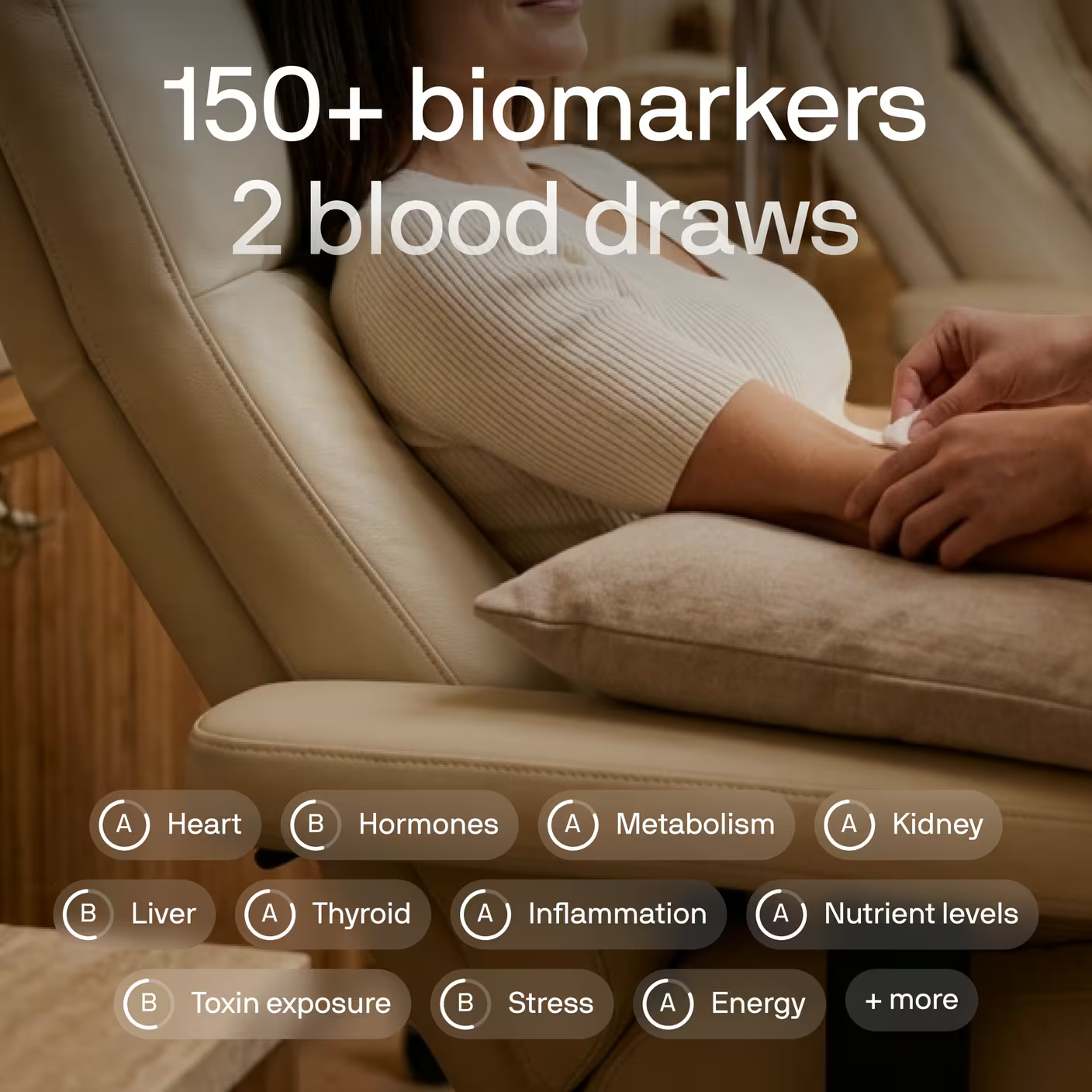
Test 150+ biomarkers
Two blood draws. A full picture of your health, explained in plain language.
From Eubacterium hallii number to practical insight
Your results are typically reported as the relative abundance of E. hallii compared with a reference population and alongside other taxa or functional pathways. In general, “balanced” communities show higher diversity and a healthy presence of butyrate producers such as E. hallii and Faecalibacterium. Lower diversity or a conspicuously low signal from butyrate‑related pathways can suggest an ecosystem under strain.
When E. hallii is present in a robust range, it points to efficient production of short‑chain fatty acids, better nourishment of the gut lining, and a lower baseline of inflammatory signaling. That often translates to steadier digestion and more predictable energy after meals. Optimal ranges vary widely across individuals because genetics, geography, and habitual diet all shape your microbial baseline.
If E. hallii is underrepresented relative to peers, it may indicate diminished capacity for butyrate generation, a shift toward lactate accumulation, or reliance on less favorable fermentation routes. This is not a diagnosis; it’s a functional finding that highlights areas worth exploring with your clinician, particularly if you have ongoing GI symptoms or metabolic goals. Context matters — the meaning of a low E. hallii signal changes if other butyrate producers are plentiful.
Reading the Eubacterium hallii result for what it means in practice
Microbiome data are most powerful when viewed over time and alongside other biomarkers, such as stool inflammation markers or metabolic panels. Interpretation should also consider life stage, recent antibiotics, and test methodology. Day‑to‑day variation is normal, 16S assays may not resolve species reliably, and some labs use the updated name Anaerobutyricum hallii. Taken together, your eubacterium hallii test helps personalize strategies for digestion, energy, and long‑term health while staying grounded in biology.
Frequently Asked Questions
References
- Engels C, Ruscheweyh HJ, Beerenwinkel N, Lacroix C, Schwab C (2016). The common gut microbe Eubacterium hallii also contributes to intestinal propionate formation. *Frontiers in Microbiology*, *7*, 713. https://doi.org/10.3389/fmicb.2016.00713
- Mukherjee A, Lordan C, Ross RP, Cotter PD (2020). Gut microbes from the phylogenetically diverse genus Eubacterium and their various contributions to gut health. *Gut Microbes*, *12*(1), 1802866. https://doi.org/10.1080/19490976.2020.1802866
- Parada Venegas D, De la Fuente MK, Landskron G, González MJ, Quera R, Dijkstra G, Harmsen HJM, Faber KN, Hermoso MA (2019). Short chain fatty acids (SCFAs)-mediated gut epithelial and immune regulation and its relevance for inflammatory bowel diseases. *Frontiers in Immunology*, *10*, 277. https://doi.org/10.3389/fimmu.2019.00277
- Laudadio I, Fulci V, Palone F, Stronati L, Cucchiara S, Carissimi C (2018). Quantitative assessment of shotgun metagenomics and 16S rDNA amplicon sequencing in the study of human gut microbiome. *OMICS*, *22*(4), 248-254. https://doi.org/10.1089/omi.2018.0013
- Porcari S, Mullish BH, Asnicar F, Ng SC, Zhao L, Hansen R, O'Toole PW, Raes J, Hold G, Putignani L, Hvas CL, Nieuwdorp M, Sokol H, Ianiro G, Cammarota G (2025). International consensus statement on microbiome testing in clinical practice. *The Lancet Gastroenterology & Hepatology*, *10*(2), 154-167. https://doi.org/10.1016/S2468-1253(24)00311-X


























 Heart & Vascular Health
 Metabolic Health
 Energy
 Liver Health
 Kidney
 Sex Hormones
 Thyroid Health
 Nutrients
 Immune System
 Inflammation