


Understand what your gut health results really mean
See your biomarkers in context with a comprehensive panel.
- CLIA-certified labs
- HIPAA compliant
- Personalized health protocol
E. coli testing: Sorting harmful strains from routine gut residents
An escherichia coli test detects potentially harmful strains of E. coli in a stool, food, or water sample. In clinical care, modern assays look for Shiga toxins (stx1/stx2) or genes that define pathogenic types, using enzyme immunoassays or PCR-based methods. Many labs also perform stool culture to isolate organisms and identify serogroups such as O157:H7, which supports public health investigation and antimicrobial susceptibility where relevant. Multiplex gastrointestinal panels can detect E. coli alongside other common pathogens from a single sample. For environmental testing, labs typically quantify E. coli as an indicator of fecal contamination in water.
Why this matters: most E. coli in the gut are harmless commensals, but specific pathotypes can trigger significant disease. STEC can cause severe cramping and bloody diarrhea with risk of hemolytic uremic syndrome (HUS), while other types (like ETEC in travelers) drive watery diarrhea. Identifying toxin presence and strain type helps explain symptoms, guides supportive management, and informs steps to prevent spread. Results reflect current exposure and shedding rather than a permanent trait.
When confirming the strain changes everything
Testing connects a real-world exposure to a biological signal you can act on with your care team. If you’ve had a suspect meal (think undercooked burger, unpasteurized juice, or a bagged salad later recalled) and develop acute cramps or diarrhea, the test helps sort out whether a pathogenic E. coli is involved versus another microbe or a noninfectious cause. It also clarifies the role of recent antibiotics or antidiarrheals, which can change both symptoms and the chance of detecting organisms. In clinical practice, confirming STEC matters because toxin-mediated illness follows a different risk pattern than routine food poisoning, particularly when blood is present in the stool.
Big picture: the stakes aren’t only gastrointestinal. Toxin-positive infections can affect the blood and kidneys; HUS is rare but serious, particularly in young children and older adults. For communities, identifying the culprit organism can prompt tracing and prevention. For families, a negative test can be equally useful — helping avoid unnecessary medications and focusing care on hydration and recovery. Over time, repeat environmental testing can confirm that a private well or building water system stays clean after remediation. The goal is not a one-off answer but a clear pattern that links symptoms, exposures, and safety.
What your Escherichia coli number actually says
Expect results to be reported as detected or not detected for toxin proteins or genes, and sometimes as a specific serogroup if culture is successful. Multiplex PCR panels may list several E. coli pathotypes separately (for example, STEC, EPEC, EAEC), while traditional culture might highlight O157:H7 and reflex to toxin testing. For environmental samples, results are often expressed as colony-forming units per 100 mL to quantify contamination. In clinical care, the reference expectation is no pathogenic E. coli detected; in drinking water, safety standards require zero detectable E. coli in routine samples.
When results are “optimal,” no pathogenic markers are found. That generally aligns with a self-limited course if symptoms are due to a different cause, or with safe water status in environmental testing. In the stool, absence of Shiga toxins and no STEC genes suggest low risk for toxin-driven complications and usually a focus on supportive care and recovery with your clinician’s guidance.
When results indicate a pathogenic E. coli, interpretation hinges on the details. Detection of stx1/stx2 or an O157:H7 isolate points to STEC, which is associated with bloody diarrhea and a higher risk of HUS; clinicians often coordinate follow-up labs such as a complete blood count and creatinine to watch for hemolysis or kidney stress. Other pathotypes (like ETEC or EAEC) are more commonly linked to watery diarrhea, especially after travel. PCR is very sensitive and may detect genetic material even as organisms die off, so timing matters: early collection during active symptoms tends to be most informative. Public health agencies may request culture confirmation and serogrouping when STEC is detected.
Test 150+ biomarkers
Two blood draws. A full picture of your health, explained in plain language.
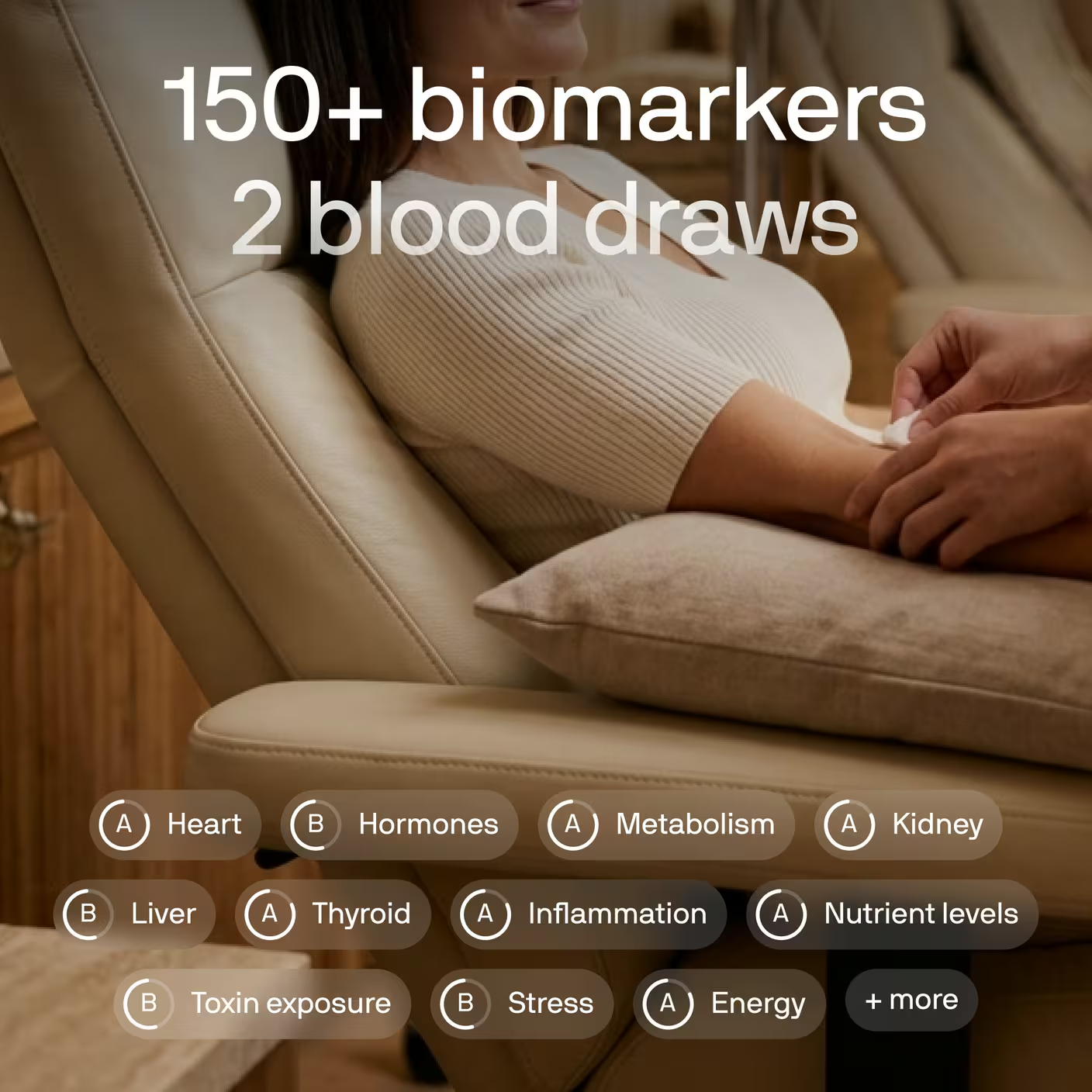
Test 150+ biomarkers
Two blood draws. A full picture of your health, explained in plain language.
Net-net on an Escherichia coli reading
Limitations to keep in mind: prior antibiotics can lower culture yield; antidiarrheals and late sampling can change detection; and different assays vary in targets and performance characteristics. A stool test does not measure your overall gut “balance” — it identifies specific harmful strains. Environmental positives confirm fecal contamination but don’t identify the human versus animal source without additional testing. Most importantly, results are one piece of the story. They carry the most weight when read alongside symptoms, exposure history, and complementary labs, and when they inform practical steps to protect you and those around you.
Frequently Asked Questions
References
- Foster-Nyarko E, Pallen MJ (2022). The microbial ecology of Escherichia coli in the vertebrate gut. *FEMS Microbiology Reviews*, *46*(3), fuac008. https://doi.org/10.1093/femsre/fuac008
- Joseph A, Cointe A, Mariani Kurkdjian P, Rafat C, Hertig A (2020). Shiga toxin-associated hemolytic uremic syndrome: A narrative review. *Toxins*, *12*(2), 67. https://doi.org/10.3390/toxins12020067
- Kotloff KL, Nataro JP, Blackwelder WC, Nasrin D, Farag TH, Panchalingam S, Wu Y, Sow SO, Sur D, Breiman RF, Faruque AS, Zaidi AK, Saha D, Alonso PL, Tamboura B, Sanogo D, Onwuchekwa U, Manna B, Ramamurthy T, ... Levine MM (2013). Burden and aetiology of diarrhoeal disease in infants and young children in developing countries (the Global Enteric Multicenter Study, GEMS): A prospective, case-control study. *Lancet*, *382*(9888), 209-222. https://doi.org/10.1016/S0140-6736(13)60844-2
- Laudadio I, Fulci V, Palone F, Stronati L, Cucchiara S, Carissimi C (2018). Quantitative assessment of shotgun metagenomics and 16S rDNA amplicon sequencing in the study of human gut microbiome. *OMICS*, *22*(4), 248-254. https://doi.org/10.1089/omi.2018.0013
- Porcari S, Mullish BH, Asnicar F, Ng SC, Zhao L, Hansen R, O'Toole PW, Raes J, Hold G, Putignani L, Hvas CL, Nieuwdorp M, Sokol H, Ianiro G, Cammarota G (2025). International consensus statement on microbiome testing in clinical practice. *The Lancet Gastroenterology & Hepatology*, *10*(2), 154-167. https://doi.org/10.1016/S2468-1253(24)00311-X





















 Heart & Vascular Health
 Metabolic Health
 Energy
 Liver Health
 Kidney
 Sex Hormones
 Thyroid Health
 Nutrients
 Immune System
 Inflammation