


Get biomarker testing without a doctor's order
100+ biomarkers in a single draw, with AI and care team support.
- CLIA-certified labs
- Results you can act on
- Personalized health protocol
Getting a lab test without a doctor's order
Getting a lab test without a doctor's order is legal in most US states, through a direct-to-consumer (direct-access) lab testing service. Direct-to-consumer lab testing is lab work the consumer initiates, with results reported straight back to them.
You get blood work without seeing a doctor, because a clinician working with the service usually approves the order. That approval step exists because federal rules let a lab run a test only on a request from an authorized person. State rules decide how that approval works where you live.
From there, each test follows the same sequence from choice to result.
How self-ordered lab testing works, step by step
Self-ordered lab testing follows five steps, from choosing a test online to getting results.
- Test choice: the consumer picks a single test or a bundled panel.
- Payment: the service is paid directly at checkout.
- Clinician review: a clinician working with the service approves the order and issues the requisition, a lab order naming the clinician, patient, and tests.
- Sample collection: blood is drawn at a patient service center (a lab's walk-in site) or collected with an at-home finger stick.
- Lab analysis and results: a lab certified under the federal Clinical Laboratory Improvement Amendments (CLIA), held to standards for accurate, reliable, and timely results, runs the sample and reports back.
Most tests sold this way are the routine ones a checkup would include.
Common lab tests available without a doctor's order
Most lab tests available without a doctor's order are standard blood tests, the same kind a physician would order at a routine physical. Menus still vary between services. Among 21 US direct-to-consumer lab companies studied, no test category was offered by more than 12 of them.
| Category | Example tests | Companies offering, of 21 studied |
|---|---|---|
| Metabolic and general | Complete blood count, comprehensive metabolic panel | Metabolic panels: 5 (24%) |
| Vitamins and nutrients | Vitamin B12, D, and E panels | 11 (52%) |
| Hormones | Thyroid tests; men's and women's health panels | Thyroid: 12 (57%); men's and women's health: 11 each (52%) |
| Heart, diabetes, and screening | Lipid panel, HbA1c, hs-CRP, sexually transmitted infection (STI) tests | Lipid: 7 (33%); diabetes (HbA1c): 11 (52%); hs-CRP: 9 (43%); STI: 10 (48%) |
Tests outside that menu still need a clinician directly involved.
Lab tests that still need a clinician's involvement
Direct-to-consumer lab testing suits routine checks, so anything more involved still runs through a clinician.
- Invasive samples: spinal fluid, pleural fluid (fluid around the lungs), and other samples needing a procedure stay with a clinician.
- Complex or acute conditions: confirming a complex condition, or an acute one such as a heart attack, takes clinical care.
- Emergencies: self-ordered testing should not be used in an emergency, and sudden chest pain or trouble breathing calls for 911.
For routine tests sold directly, access depends on where you live and how you pay.
State rules, costs, and insurance for self-ordered labs
Direct-access testing rules vary by state, and self-ordered tests are usually paid out of pocket rather than billed to insurance. The variation starts with state law, which decides who is authorized to order tests. States also differ in how closely they oversee these labs.
For people paying cash, direct-to-consumer prices often come in lower than what an uninsured patient pays for a doctor-ordered hospital test. Direct-access testing and doctor-ordered testing split on four practical points.
| Factor | Direct-access testing | Doctor-ordered testing |
|---|---|---|
| Who approves the order | A clinician working with the service | The patient's own clinician |
| Insurance billing | Usually not billed to insurance | Usually billed; Medicare, for example, pays only when the treating physician orders the test |
| Health savings or flexible spending account | Lab fees that are part of medical care generally qualify; FSA coverage depends on what the plan specifies | Same rules apply |
| Who receives results | The consumer, directly | The ordering clinician; patients have the right to request reports from the lab |
However the order is approved and paid for, the result arrives as values set against a range, and reading them is a separate question.
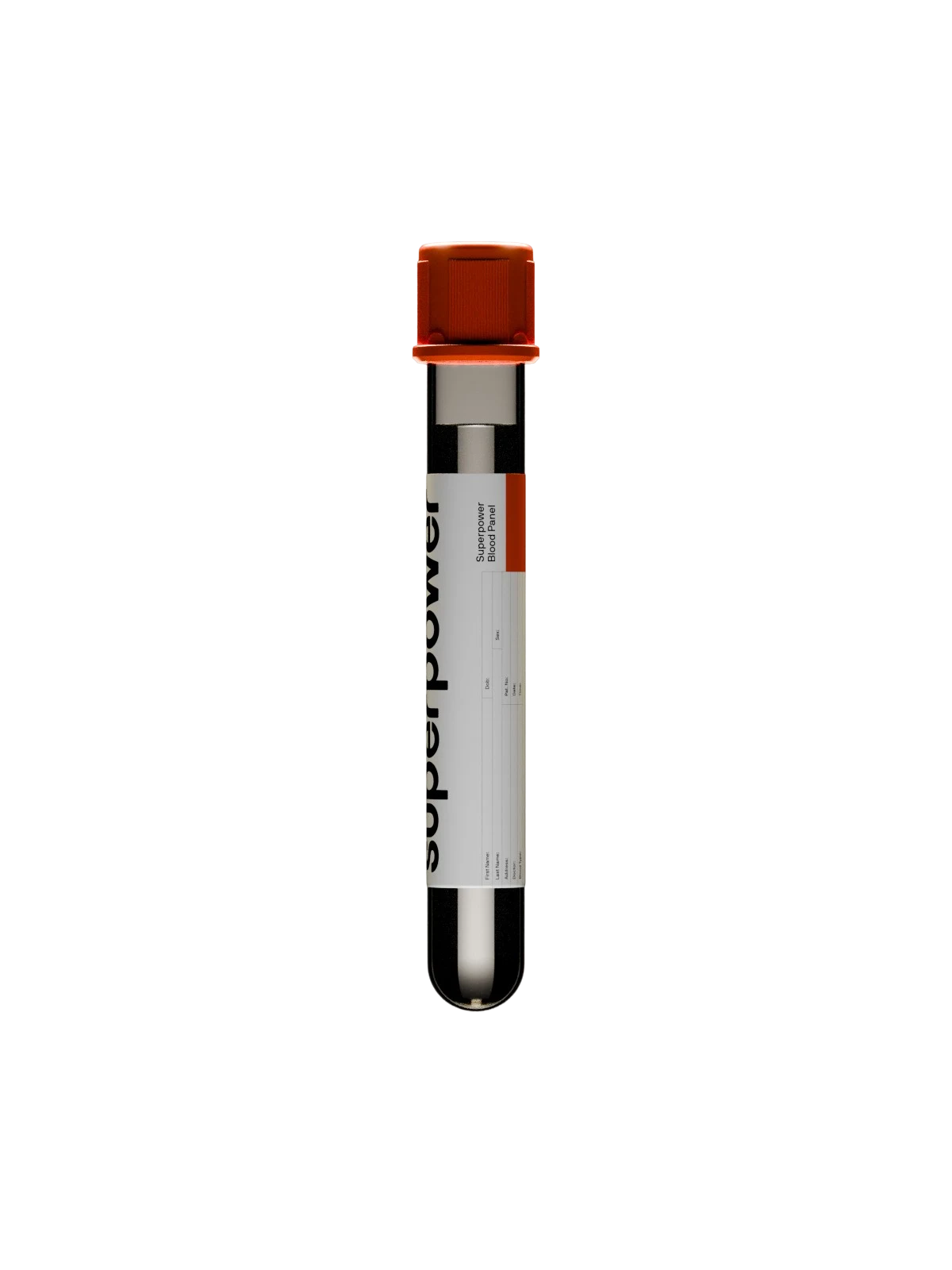
Get 100+ biomarkers tested in-lab or at home
One blood draw a year. A full picture of your health, explained in plain language.
Get 100+ biomarkers tested in-lab or at home
One blood draw a year. A full picture of your health, explained in plain language.
What self-ordered lab results can and cannot tell you
A self-ordered lab result is a starting point, not a final answer. A value outside the lab's reference range may or may not signal a health problem.
Reference ranges come from large groups of healthy people, so "normal" marks where most people fall rather than a level tied to health risk. Labs also use different methods, so tracking a trend works best at the same lab.
When a result signals an imminently life-threatening condition, the lab must immediately alert whoever requested the test, which here is the approving clinician. Follow-up on out-of-range results is offered by 18 of 21 US companies studied.
Any further investigation after a surprise result shifts to you and your own clinician. A result helps only when it is interpreted properly, so support in reading results matters as much as access to the test.
Understand your lab results with Superpower
A lab test without a doctor's order gets you a result, but reading it well matters as much as getting the test. A Superpower membership includes 100+ biomarkers in a single draw, with AI and care team support to explain your results and plan next steps. Testing is available at 2,000+ lab partner locations nationwide. Superpower is a home for your health, measuring your markers and helping you improve them.
It's time to take control of your health. Start your Superpower membership and turn a single set of results into ongoing, on-demand support.
References
- Stoffel M, Greene DN, Beal SG, et al. Direct-to-consumer testing for routine purposes. *Clin Chem*. 2022;68(9):1121-1127. https://doi.org/10.1093/clinchem/hvac106
- Ayala-Lopez N, Nichols JH. Benefits and risks of direct-to-consumer testing. *Arch Pathol Lab Med*. 2020;144(10):1193-1198. https://doi.org/10.5858/arpa.2020-0078-RA
- Electronic Code of Federal Regulations. 42 CFR § 493.1241 — Standard: Test request. Accessed October 16, 2026. https://www.ecfr.gov/current/title-42/chapter-IV/subchapter-G/part-493/subpart-K/subject-group-ECFR5f8f0b6639946fd/section-493.1241
- Kalokairinou L, Choi R, Wei NY, Wexler A. Policies of US companies offering direct-to-consumer laboratory tests. *JAMA Intern Med*. 2023;183(11):1275-1278. https://doi.org/10.1001/jamainternmed.2023.4726
- Centers for Medicare & Medicaid Services. Clinical Laboratory Improvement Amendments (CLIA). Accessed October 16, 2026. https://www.cms.gov/medicare/quality/clinical-laboratory-improvement-amendments
- Electronic Code of Federal Regulations. 42 CFR § 493.2 — Definitions. Accessed October 16, 2026. https://www.ecfr.gov/current/title-42/chapter-IV/subchapter-G/part-493/subpart-A/section-493.2
- Lin T, Margo CE. Cost comparisons of physician-ordered versus direct-to-consumer laboratory testing. *Cureus*. 2024;16(11):e74173. https://doi.org/10.7759/cureus.74173
- Electronic Code of Federal Regulations. 42 CFR § 410.32 — Diagnostic x-ray tests, diagnostic laboratory tests, and other diagnostic tests: Conditions. Accessed October 16, 2026. https://www.ecfr.gov/current/title-42/chapter-IV/subchapter-B/part-410/subpart-B/section-410.32
- Internal Revenue Service. Publication 502 (2025), Medical and dental expenses. Accessed October 16, 2026. https://www.irs.gov/publications/p502
- Internal Revenue Service. Publication 969 (2025), Health savings accounts and other tax-favored health plans. Accessed October 16, 2026. https://www.irs.gov/publications/p969
- Centers for Medicare & Medicaid Services, Centers for Disease Control and Prevention, Office for Civil Rights. CLIA program and HIPAA privacy rule; patients' access to test reports. *Fed Regist*. 2014;79:7290-7316. Accessed October 16, 2026. https://www.federalregister.gov/documents/2014/02/06/2014-02280/clia-program-and-hipaa-privacy-rule-patients-access-to-test-reports
- MedlinePlus. How to understand your lab results. National Library of Medicine. Updated September 4, 2025. Accessed October 16, 2026. https://medlineplus.gov/lab-tests/how-to-understand-your-lab-results/
- Ozarda Y, Sikaris K, Streichert T, Macri J; IFCC Committee on Reference Intervals and Decision Limits. Distinguishing reference intervals and clinical decision limits: a review by the IFCC Committee on Reference Intervals and Decision Limits. *Crit Rev Clin Lab Sci*. 2018;55(6):420-431. https://doi.org/10.1080/10408363.2018.1482256
- Electronic Code of Federal Regulations. 42 CFR § 493.1291 — Standard: Test report. Accessed October 16, 2026. https://www.ecfr.gov/current/title-42/chapter-IV/subchapter-G/part-493/subpart-K/subject-group-ECFR9482366886d579f/section-493.1291
- Holmes DT. Self-ordering laboratory testing: limitations when a physician is not part of the model. *Clin Lab Med*. 2020;40(1):37-49. https://doi.org/10.1016/j.cll.2019.11.002
- Orth M, Sandberg S, Shih P. Direct-to-consumer testing: benefits and concerns of commercially accessed laboratory tests. *Clin Chem*. 2025;71(6):652-663. https://doi.org/10.1093/clinchem/hvaf004





























 Heart & Vascular Health
 Metabolic Health
 Energy
 Liver Health
 Kidney
 Sex Hormones
 Thyroid Health
 Nutrients
 Immune System
 Inflammation