

Understand what your emerging health topics results really mean
See your biomarkers in context with a comprehensive panel.
- CLIA-certified labs
- HIPAA compliant
- Personalized health protocol
Defining the Tart Cherry Category
Tart cherry juice and tart cherry concentrate are the same Montmorency or Balaton product at different dilutions, and what you are paying for is anthocyanin density plus a small amount of food-source melatonin.
Tart cherry juice is pressed from Prunus cerasus varieties, most commonly Montmorency or Balaton cherries. It's sold as 100% juice or as a concentrate, with typical study doses running 240 mL (8 oz) of juice or 30-60 mL (1-2 oz) of concentrate daily. It's not a supplement in the traditional sense; it's a whole-food product studied across four distinct clinical areas.
The modern clinical literature grew largely out of sports-medicine research. A 2010 marathon-runner study was an early signal showing reduced inflammation markers in endurance athletes, and a 2015 resistance-training RCT helped establish the recovery evidence base. Sleep-dose specifics like the timing window, melatonin yield, and concentrate-versus-juice equivalence are covered in the dosing breakdown for sleep. One common point of confusion: sweet cherry juice (from Prunus avium) has a different anthocyanin profile and a much thinner evidence base. Tart cherry concentrate supplements are essentially the same product in capsule or powder form, though bioavailability comparisons across formats are limited.
Marketing for tart cherry juice clusters around four outcomes:
- Improved sleep quality and duration
- Reduced exercise-induced muscle soreness and faster recovery
- Support for healthy uric acid levels and reduced gout flare risk
- Support for cardiovascular and systemic inflammatory markers
The Compounds That Matter
Tart cherry juice is studied as a whole-food product, and the biologically active fractions are compound classes — anthocyanins, food-source melatonin, proanthocyanidins, and natural sugars — not single molecules. Their effects likely interact.
Anthocyanins (cyanidin glycosides)
Anthocyanins are the red-pigmented polyphenols that give tart cherries their color. Cyanidin-3-glucoside and cyanidin-3-rutinoside are the dominant forms. Montmorency cherries carry a higher anthocyanin density than Balaton or sweet Bing varieties, which is one reason most clinical trials use Montmorency specifically.
Melatonin
Tart cherries are one of the few food sources with measurable melatonin content. A 2012 randomized crossover trial showed tart cherry juice concentrate elevated urinary melatonin and improved sleep duration in healthy adults. The melatonin dose per serving is small relative to a standard supplement; the sleep effect likely also involves tryptophan availability and proanthocyanidin contributions.
Proanthocyanidins and other polyphenols
Tart cherries contain proanthocyanidins: condensed tannins with anti-inflammatory and antioxidant activity in both in vitro and in vivo settings. A 2021 meta-analysis pooled studies on muscle soreness and strength recovery, finding small beneficial effects on soreness and moderate effects on strength recovery. The recovery literature is the single most robust body of evidence for tart cherry juice.
Natural sugars
Tart cherry juice contains natural fructose and glucose at typical fruit-juice concentrations. Roughly 12-15 g of sugar per 8 oz serving. For diabetic or pre-diabetic readers, that sugar load needs to be tracked within total daily intake. Concentrate (1-2 oz) reduces per-serving sugar, though the flavor is considerably more intense.
The Biology: Melatonin, Anthocyanins, and Uric Acid
Four distinct mechanisms underlie the sleep, recovery, uric acid, and inflammation use cases, and they don't overlap much: food-source melatonin and tryptophan for sleep, polyphenol antioxidant activity for recovery, xanthine oxidase inhibition for uric acid, and broader systemic anti-inflammatory effects for cardiometabolic markers.
For sleep, the proposed pathway runs through two routes simultaneously. Cherry-derived melatonin supports sleep onset directly. Tryptophan in the juice serves as a precursor to serotonin and endogenous melatonin synthesis. A 2012 RCT documented elevated urinary melatonin and improved sleep efficiency after tart cherry juice concentrate intake. The effect size from food-dose melatonin is modest compared to supplement-dose melatonin; practical dose numbers, timing, and the concentrate-versus-juice tradeoff sit in our tart cherry dosing breakdown for sleep.
For recovery, anthocyanins and proanthocyanidins are proposed to attenuate the inflammatory and oxidative cascade that follows intense exercise. Eccentric muscle contractions generate reactive oxygen species and trigger cytokine release. Polyphenol antioxidants intercept part of that cascade, blunting the magnitude and duration of inflammation. A 2021 meta-analysis found the largest effect on strength-recovery markers rather than subjective soreness ratings. That is a meaningful distinction. A 2010 marathon-runner trial documented reduced inflammation markers in endurance athletes; a 2015 RCT showed reduced soreness and faster strength recovery in resistance-trained males; a 2019 follow-up replicated the recovery effect in females.
For uric acid, cherry anthocyanins are proposed to inhibit xanthine oxidase (the enzyme that catalyzes uric acid synthesis from purines). There may also be a renal-excretion component, though that mechanism is less established. A 2019 trial showed 240 mL of tart cherry juice daily for four weeks reduced serum urate in overweight and obese adults. A 2023 RCT in 282 gout patients found tart cherry citrate matched standard treatment for uric acid lowering. A 2020 trial in established gout found no significant effect on serum urate AUC or gout flare frequency. The full mechanistic story is still developing.
For cardiovascular and inflammatory markers, the mechanism is polyphenol-mediated systemic anti-inflammatory activity. A 2022 meta-analysis found tart cherry significantly reduced CRP across RCTs, without consistent effects on IL-6 or TNF-alpha in non-exercise contexts. A 2023 GRADE-assessed review confirmed dose-dependent reductions in CRP and TNF-alpha but found no consistent effect on blood pressure or heart rate. A 2022 review similarly found mixed or null blood pressure effects across the broader cherry literature.
Grading the Tart Cherry Claims
Tart cherry juice claims span five categories: exercise recovery and muscle soreness, uric acid, sleep quality and duration, systemic inflammation markers, and blood pressure. Each gets graded against the published literature below.
Supports exercise recovery and reduces muscle soreness: Moderate
A 2021 meta-analysis found small beneficial effects on soreness and moderate effects on strength recovery after strenuous exercise across pooled studies. A 2015 RCT showed reduced soreness and faster strength recovery in resistance-trained males; a 2019 follow-up replicated the finding in females; a 2020 meta-analysis found a moderate beneficial effect on endurance performance. Effects vary by population, exercise modality, and trial design. Among food-based recovery interventions, this is one of the better-supported claims in the literature.
Supports healthy uric acid levels: Moderate
A 2019 trial showed 100% tart cherry juice at 240 mL daily for four weeks reduced serum urate in overweight and obese adults. A 2021 acute-ingestion study documented an approximately 8% transient reduction in serum uric acid, though the effect was not maintained with continued supplementation. A 2019 systematic review found an association between cherry intake and reduced gout-attack risk, though heterogeneity precluded meta-analysis. A 2023 RCT in 282 gout patients showed tart cherry citrate matched standard treatment for uric acid lowering. The counterbalance: a 2020 trial in established gout found no significant effect on serum urate AUC, urine urate excretion, or gout flare frequency. Effects appear more consistent in non-gout populations.
Improves sleep quality and duration: Limited
A 2012 randomized double-blind placebo-controlled crossover showed tart cherry juice concentrate elevated urinary melatonin and improved sleep duration. A 2022 trial in elite female field hockey players found short-term Montmorency tart cherry improved sleep quality after intermittent exercise. A 2025 systematic review summarized the broader sleep literature. The honest counterweight: a 2022 trial of Montmorency tart cherry over 30 days did not impact sleep in healthy adults. Evidence is mixed; effects are most plausible in older adults or those with low baseline melatonin, and the practical dose numbers, melatonin yield per serving, and concentrate-versus-juice tradeoff sit in our tart cherry dosing breakdown for sleep.
Reduces systemic inflammation markers: Moderate
A 2022 meta-analysis found tart cherry significantly decreases CRP across RCTs, without consistent effects on IL-6 or TNF-alpha in non-exercise contexts. A 2023 GRADE-assessed review across 21 RCTs confirmed dose-dependent reductions in CRP and TNF-alpha. A 2019 trial supports inflammation reduction in older adults specifically. The inflammation evidence is reasonably consistent across independent reviews.
Supports cardiovascular markers (blood pressure): Limited
A 2018 trial showed tart cherry juice lowered systolic blood pressure and LDL cholesterol in older adults; a 2016 trial documented acute effects on vascular function in men with early hypertension; a 2020 study found improvements in cardiometabolic biomarkers in adults with metabolic syndrome. The counterbalance is substantial: a 2022 review found mixed or null blood pressure effects across the cherry literature, and the 2023 GRADE-assessed review found no consistent effect on blood pressure or heart rate. The inflammation story is the more consistent cardiovascular angle.
Safety, Sugar Content, and Drug Interactions
The biggest practical cost of daily tart cherry juice is the 12-15 g sugar load per serving, which matters most for diabetic or pre-diabetic readers, and a smaller but real concern is the theoretical antiplatelet interaction with anticoagulants. Pause intake 24 hours before any fasting glucose draw.
Anthocyanins have demonstrated antiplatelet activity in vitro. At typical dietary doses, the additive effect with anticoagulants like warfarin is theoretical rather than documented. But readers on chronic anticoagulation should discuss tart cherry juice with their prescribing clinician before making it a daily habit.
The dominant practical consideration for most readers is the sugar content. At roughly 12-15 g of natural sugar per 8 oz serving, daily juice intake adds up quickly for diabetic, pre-diabetic, or weight-management contexts. Concentrate at 1-2 oz per day delivers a lower per-serving sugar load, though the flavor is considerably more tart.
The most commonly reported adverse effect in trials is GI discomfort: loose stools at higher doses, driven by sorbitol and fructose content. No major safety signal has emerged across the published literature at typical study doses.
Lab-test interaction warning. Daily tart cherry juice consumption before a fasting glucose draw will affect the result due to natural sugar content; pause intake for 24 hours before fasting labs. Disclose chronic tart cherry juice intake to the ordering clinician before any inflammation, lipid, or uric acid panel, as polyphenol intake may influence those readings.
The named contraindications, summarized:
- Diabetic / pre-diabetic readers: sugar load matters; concentrate may be preferable.
- People on anticoagulants: discuss with the prescribing clinician.
- People with active gout flare: the 2020 trial in established gout was equivocal; coordinate with rheumatology.
- Lab-test interaction: pause 24h before fasting glucose; disclose chronic intake before any inflammation / uric acid panel.
If any of this applies, the right next step is a clinician, not the next TikTok recipe.
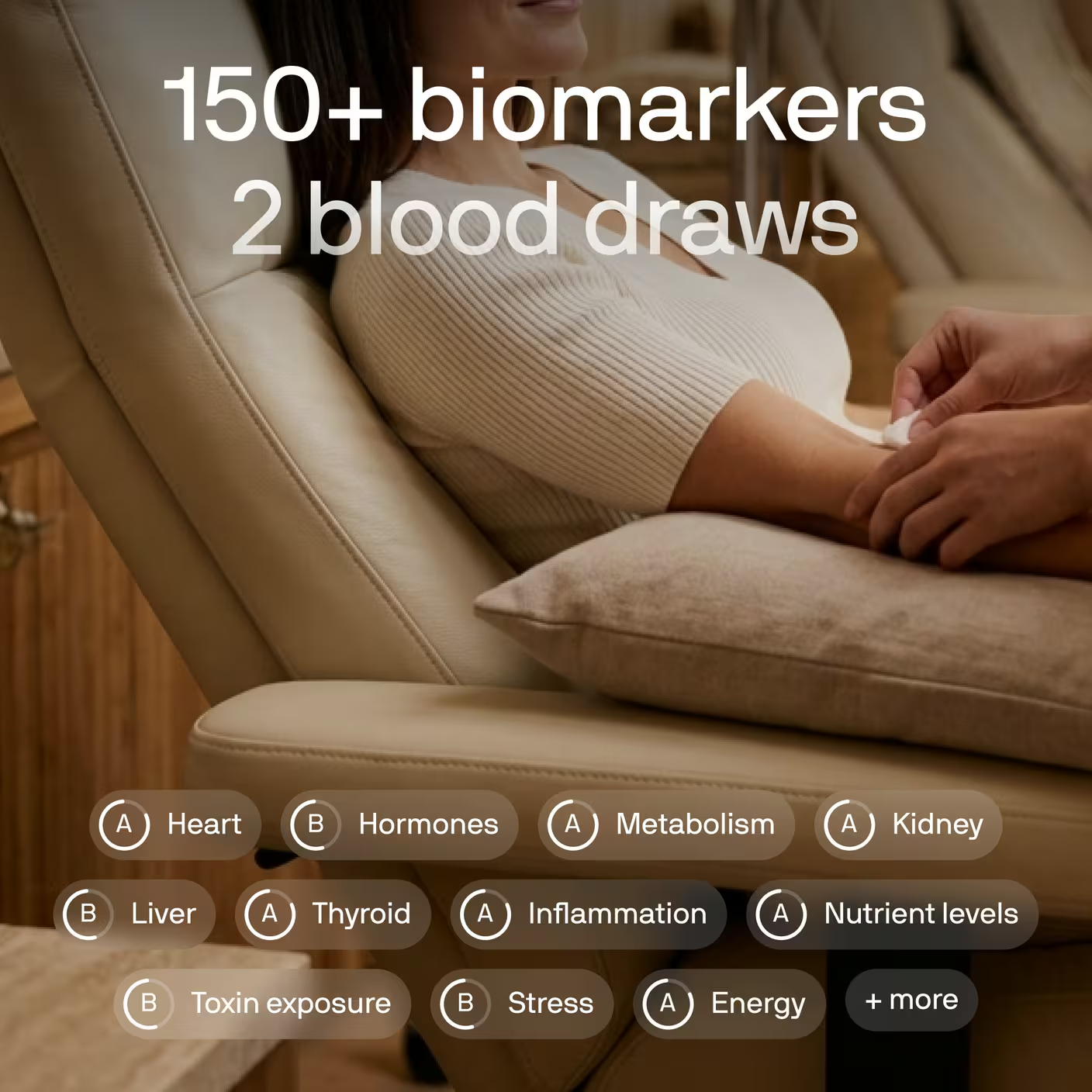
Test 150+ biomarkers
Two blood draws. A full picture of your health, explained in plain language.
Test 150+ biomarkers
Two blood draws. A full picture of your health, explained in plain language.
Tart Cherry's Real Scoreboard
You can't tell if a daily food-based intervention worked from how you feel. You can tell from a comparable Day 0 / Day N panel.
- Uric acid: A 2019 trial showed measurable serum urate reductions at 240 mL daily for four weeks. This is the cleanest readout for the uric acid claim. Re-test at 4 weeks for an acute response and 8-12 weeks for sustained effect.
- hs-CRP: Systemic inflammation; a 2022 meta-analysis and a 2023 GRADE-assessed review both show consistent CRP reductions and dose-dependent inflammatory marker reductions across meta-analyses. Average across 2-3 measurements over 4-8 weeks. Single readings are noisy.
- IL-6: A secondary inflammation marker; less consistent than CRP in tart cherry trials. The 2022 meta-analysis found no IL-6 effect in non-exercise contexts, making it a lower-yield readout for non-athletes.
- HbA1c: Relevant for diabetic or pre-diabetic readers tracking whether the daily sugar load from juice is affecting glycemic control over time.
- Sleep tracking (wearable): Not bloodwork. But for the sleep claim, a structured 2-3 week sleep log paired with wearable sleep-duration data is the right readout before drawing conclusions.
If the markers move in the direction the mechanism predicts, the daily-glass habit did something. If they don't, that's information too, and cheaper than another year of guessing whether it's "working."
Where Daily Tart Cherry Plausibly Fits
Three populations have the strongest evidence base for daily tart cherry juice, and a fourth — established gout patients seeking a substitute for urate-lowering therapy — does not. Tart cherry is not a replacement for prescribed gout treatment.
Tart cherry juice may suit an adult with mildly elevated uric acid not yet meeting gout-treatment criteria, someone willing to baseline and re-test at four weeks, consistent with the 240 mL daily for four weeks evidence base. It's also a reasonable addition for an athlete or recreational lifter in a training block with high eccentric load, where the 2021 meta-analysis supports small-to-moderate recovery benefits. Older adults with persistent low-grade inflammation represent a third plausible fit, given a 2019 trial showing inflammation reduction in that population.
Several profiles should think twice. Anyone reaching for tart cherry as a substitute for prescribed gout therapy is using the wrong tool. A 2020 trial found no significant effect on urate or flare frequency in established gout, and guideline-directed urate-lowering therapy has a substantially stronger evidence base. Anyone treating tart cherry juice as a primary sleep intervention without addressing sleep hygiene first should note that a 2022 trial found no sleep benefit over 30 days in healthy adults; the negative result is real. Diabetic readers should default to concentrate over juice to manage the sugar load.
Stronger Levers for the Same Outcomes
The alternatives worth knowing are outcome-targeted: tart cherry is one lever among several for sleep, recovery, and uric acid, and not always the strongest. The foundational lever for chronic insomnia is cognitive behavioral therapy for insomnia (CBT-I), which has substantially stronger evidence than any food, drink, or supplement for chronic insomnia.
For the sleep angle: The food-based approach is worth pairing with sleep hygiene basics, with dose specifics covered in our tart cherry dosing breakdown for sleep. CBT-I remains the first-line clinical recommendation for chronic insomnia.
For uric acid management: Dietary purine modification and adequate hydration have Moderate evidence as lifestyle levers. Clinician-directed urate-lowering therapy has Strong evidence for established hyperuricemia. Tart cherry is a complementary food-based addition, not a replacement for that clinical pathway.
For exercise recovery: The pooled meta-analytic effect is real but small-to-moderate in magnitude. The foundational recovery levers (adequate sleep, training periodization, and sufficient protein intake) carry larger effect sizes and should be supported before adding a food-based supplement on top.
Test First, Then Trend
Tart cherry juice targets real, measurable biomarkers — uric acid and hs-CRP — that give objective answers. A Day 0 draw followed by a re-test at four to eight weeks tells you whether the intervention moved the needle. "I feel better" is not a scoreboard. The food-based intervention with Moderate evidence is worth pairing with measurement, not just habit.
If the reason for reaching for tart cherry juice is suspected gout, persistent joint pain, or chronic insomnia, that's a clinical evaluation first: rheumatology for gout, sleep medicine for chronic insomnia. A juice purchase is not a diagnostic workup.
Measuring the lever before pulling it, then measuring again, is foundational to Superpower's approach to preventive health.
The Honest Verdict on Tart Cherry Juice
The single best question for any reader of this article: are your baseline uric acid and hs-CRP where you want them? That's a test question, not a juice question.
Tart cherry juice has Moderate evidence for exercise recovery and uric acid lowering in non-gout populations, and Moderate evidence for reducing systemic inflammation markers like CRP. The sleep evidence is mixed: the 2012 crossover trial is positive; the 2022 30-day trial is a genuine negative result. Blood pressure evidence is Limited and inconsistent. The sugar load is the main practical cost of daily juice use; the anticoagulant interaction is theoretical but worth flagging. The most useful question isn't whether tart cherry juice "works" in the abstract; it's whether your baseline uric acid and hs-CRP are where you'd want them. That's a test question, not a juice question.
Frequently Asked Questions
References
- Howatson G, McHugh MP, Hill JA, Brouner J, Jewell AP, van Someren KA, Shave RE, Howatson SA (2010). Influence of tart cherry juice on indices of recovery following marathon running. *Scandinavian journal of medicine & science in sports*, *20*(6), 843-52. https://doi.org/10.1111/j.1600-0838.2009.01005.x
- Howatson G, Bell PG, Tallent J, Middleton B, McHugh MP, Ellis J (2012). Effect of tart cherry juice (Prunus cerasus) on melatonin levels and enhanced sleep quality. *European journal of nutrition*, *51*(8), 909-16. https://doi.org/10.1007/s00394-011-0263-7
- Hill JA, Keane KM, Quinlan R, Howatson G (2021). Tart Cherry Supplementation and Recovery From Strenuous Exercise: A Systematic Review and Meta-Analysis. *International journal of sport nutrition and exercise metabolism*, *31*(2), 154-167. https://doi.org/10.1123/ijsnem.2020-0145
- Levers K, Dalton R, Galvan E, Goodenough C, O'Connor A, Simbo S, Barringer N, Mertens-Talcott SU, Rasmussen C, Greenwood M, Riechman S, Crouse S, Kreider RB (2015). Effects of powdered Montmorency tart cherry supplementation on an acute bout of intense lower body strength exercise in resistance trained males. *Journal of the International Society of Sports Nutrition*, *12*, 41. https://doi.org/10.1186/s12970-015-0102-y
- Brown MA, Stevenson EJ, Howatson G (2019). Montmorency tart cherry (Prunus cerasus L.) supplementation accelerates recovery from exercise-induced muscle damage in females. *European journal of sport science*, *19*(1), 95-102. https://doi.org/10.1080/17461391.2018.1502360
- Martin KR, Coles KM (2019). Consumption of 100% Tart Cherry Juice Reduces Serum Urate in Overweight and Obese Adults. *Current developments in nutrition*, *3*(5), nzz011. https://doi.org/10.1093/cdn/nzz011
- Wang C, Sun W, Dalbeth N, Wang Z, Wang X, Ji X, Xue X, Han L, Cui L, Li X, Liu Z, Ji A, He Y, Sun M, Li C (2023). Efficacy and safety of tart cherry supplementary citrate mixture on gout patients: a prospective, randomized, controlled study. *Arthritis research & therapy*, *25*(1), 164. https://doi.org/10.1186/s13075-023-03152-1
- Stamp LK, Chapman P, Frampton C, Duffull SB, Drake J, Zhang Y, Neogi T (2020). Lack of effect of tart cherry concentrate dose on serum urate in people with gout. *Rheumatology (Oxford, England)*, *59*(9), 2374-2380. https://doi.org/10.1093/rheumatology/kez606
- Gholami A, Amirkalali B, Baradaran HR, Hariri M (2022). The beneficial effect of tart cherry on plasma levels of inflammatory mediators (not recovery after exercise): A systematic review and meta-analysis on randomized clinical trials. *Complementary therapies in medicine*, *68*, 102842. https://doi.org/10.1016/j.ctim.2022.102842
- Norouzzadeh M, Hasan Rashedi M, Shahinfar H, Rahideh ST (2023). Dose-dependent effect of tart cherry on blood pressure and selected inflammation biomarkers: A GRADE-assessed systematic review and meta-analysis of randomized controlled trials. *Heliyon*, *9*(9), e19987. https://doi.org/10.1016/j.heliyon.2023.e19987
- Eslami O, Khorramrouz F, Ghavami A, Hajebi Khaniki S, Shidfar F (2022). Effect of cherry consumption on blood pressure: a systematic review and meta-analysis of randomized controlled trials. *Diabetes & metabolic syndrome*, *16*(2), 102409. https://doi.org/10.1016/j.dsx.2022.102409
- Gao R, Chilibeck PD (2020). Effect of Tart Cherry Concentrate on Endurance Exercise Performance: A Meta-analysis. *Journal of the American College of Nutrition*, *39*(7), 657-664. https://doi.org/10.1080/07315724.2020.1713246
- Hillman AR, Uhranowsky K (2021). Acute Ingestion of Montmorency Tart Cherry Reduces Serum Uric Acid but Has no Impact on High Sensitivity C-Reactive Protein or Oxidative Capacity. *Plant foods for human nutrition (Dordrecht, Netherlands)*, *76*(1), 83-89. https://doi.org/10.1007/s11130-021-00879-7
- Chen PE, Liu CY, Chien WH, Chien CW, Tung TH (2019). Effectiveness of Cherries in Reducing Uric Acid and Gout: A Systematic Review. *Evidence-based complementary and alternative medicine : eCAM*, *2019*, 9896757. https://doi.org/10.1155/2019/9896757
- Chung J, Choi M, Lee K (2022). Effects of Short-Term Intake of Montmorency Tart Cherry Juice on Sleep Quality after Intermittent Exercise in Elite Female Field Hockey Players: A Randomized Controlled Trial. *International journal of environmental research and public health*, *19*(16). https://doi.org/10.3390/ijerph191610272
- Barforoush F, Ebrahimi S, Abdar MK, Khademi S, Morshedzadeh N (2025). The Effect of Tart Cherry on Sleep Quality and Sleep Disorders: A Systematic Review. *Food science & nutrition*, *13*(9), e70923. https://doi.org/10.1002/fsn3.70923
- Hillman AR, Trickett O, Brodsky C, Chrismas B (2026). Montmorency tart cherry supplementation does not impact sleep, body composition, cellular health, or blood pressure in healthy adults. *Nutrition and health*, *32*(1), 239-248. https://doi.org/10.1177/02601060221111230
- Chai SC, Davis K, Zhang Z, Zha L, Kirschner KF (2019). Effects of Tart Cherry Juice on Biomarkers of Inflammation and Oxidative Stress in Older Adults. *Nutrients*, *11*(2). https://doi.org/10.3390/nu11020228
- Chai SC, Davis K, Wright RS, Kuczmarski MF, Zhang Z (2018). Impact of tart cherry juice on systolic blood pressure and low-density lipoprotein cholesterol in older adults: a randomized controlled trial. *Food & function*, *9*(6), 3185-3194. https://doi.org/10.1039/c8fo00468d
- Keane KM, George TW, Constantinou CL, Brown MA, Clifford T, Howatson G (2016). Effects of Montmorency tart cherry (Prunus Cerasus L.) consumption on vascular function in men with early hypertension. *The American journal of clinical nutrition*, *103*(6), 1531-9. https://doi.org/10.3945/ajcn.115.123869
- Johnson SA, Navaei N, Pourafshar S, Jaime SJ, Akhavan NS, Alvarez-Alvarado S, Proaño GV, Litwin NS, Clark EA, Foley EM, George KS, Elam ML, Payton ME, Arjmandi BH, Figueroa A (2020). Effects of Montmorency Tart Cherry Juice Consumption on Cardiometabolic Biomarkers in Adults with Metabolic Syndrome: A Randomized Controlled Pilot Trial. *Journal of medicinal food*, *23*(12), 1238-1247. https://doi.org/10.1089/jmf.2019.0240



















 Heart & Vascular Health
 Metabolic Health
 Energy
 Liver Health
 Kidney
 Sex Hormones
 Thyroid Health
 Nutrients
 Immune System
 Inflammation