
Understand what your emerging health topics results really mean
See your biomarkers in context with a comprehensive panel.
- CLIA-certified labs
- HIPAA compliant
- Personalized health protocol
Brown Noise, Defined
If you've searched it, you already know brown noise (also called red noise) is broadband sound with a 1/f² power spectrum. Most of its energy concentrates at lower frequencies. That's what gives it a deeper, richer rumble compared to white noise's flat, hiss-forward sound. The two primary use cases are ambient focus support and sleep masking.
The name comes from Robert Brown, the botanist who described Brownian motion. The random drift of particles in fluid. It has nothing to do with the color. The sound gained viral traction in ADHD communities around 2022–2023, partly building on foundational research showing white noise improved cognitive performance in children with ADHD via a mechanism called stochastic resonance. Brown noise is often confused with white noise (flat spectrum), pink noise (1/f spectrum, sitting between white and brown), and nature soundscapes (broadband but variable). The white noise and sleep guide covers the white-noise side of this family in detail.
Proponents associate brown noise with three outcomes:
- Supports focus, particularly in ADHD
- Supports sleep onset and maintenance via masking
- Is meaningfully superior to white noise for sleep or focus
Grading the Brown Noise Claims
If you're testing brown noise, the claims cover focus (particularly in ADHD via stochastic resonance), sleep support via auditory masking, and whether brown noise is meaningfully superior to white noise.
Brown noise supports focus, particularly in ADHD via stochastic resonance: Limited
The foundational research here used white noise, not brown. A 2007 study showed white noise improved cognitive task performance in children with ADHD, proposing stochastic resonance as the mechanism. But a more recent paper found that noise effects on attention are heterogeneous. Some individuals perform worse, not better, with ambient noise. A 2024 study found no effect of white noise on oculomotor control in children with ADHD. Brown-noise-specific evidence is thin; the extrapolation from white-noise ADHD research is plausible but not established.
Brown noise supports sleep via masking disruptive background sounds: Moderate
The masking mechanism is the strongest leg of the brown noise argument. Pink noise reduced the impact of traffic noise on sleep and altered the blood metabolome in a recent crossover pilot. A separate RCT-style study found that pink noise combined with earplugs mitigated intermittent environmental noise disruption during sleep. Brown noise shares the same spectral masking logic. The honest framing: this is a masking benefit, not evidence that brown noise is uniquely sleep-promoting.
Brown noise is meaningfully superior to white noise for sleep or focus: Anecdotal
This is where the evidence hits a ceiling. A 2025 study found that pupil-linked arousal does not differ between white, pink, and brown noise at the brain level. The perceived preference for brown's deeper sound is real. The measurable physiological superiority is not. There's also a counterpoint worth noting: overnight pink-noise exposure may jeopardize sleep-dependent insight and pattern detection in some contexts. The picture is genuinely mixed.
How to Test Brown Noise on Your Own Focus and Sleep
Brown noise is low-stakes for you to try. The experiment is short and the failure mode is benign. Try it as a structured 2-week trial, not a permanent habit.
- Match it to the use case. For focus, brown noise at 30–50 dB during deep-work blocks. For sleep, masking-volume only. Loud enough to cover intermittent sounds, not loud enough to fragment sleep itself.
- Run a 2-week side-by-side. Alternate brown noise with white or pink noise across matched days. Research found no measurable brain-level difference across noise colors; personal experience may vary.
- Decide based on subjective rating. Use a daily 1–10 rating for focus or sleep quality. If brown wins consistently across 2 weeks at matched volume, keep it. If not, no other change needed.
Where Brown Noise Backfires
Using brown noise as a substitute for sleep hygiene. Ambient masking does not address sleep timing, caffeine, screen exposure, or the apnea symptoms it can paper over. Treat brown noise as one input alongside established sleep-hygiene basics; if persistent issues remain, route to a clinician.
Listening at fragmenting volume. Too-loud masking sound is itself an arousal cue. The noise can paradoxically lighten sleep. Set volume at the minimum needed to cover intermittent disruption, not to fill the room.
Expecting cognitive performance gains in non-ADHD populations. Recent research confirms that noise benefit is heterogeneous across individuals. Some people perform measurably worse with ambient noise present. A/B test against silence with a daily focus rating; keep what works, drop what doesn't.
Conflating consumer brown-noise apps with research-grade closed-loop acoustic stimulation. Emerging systems like those described in closed-loop auditory stimulation of delta oscillations during anesthesia and real-time delta wave detection platforms are clinical research devices targeting specific sleep stages. Passive consumer brown noise is not the same intervention; clinical-research outcomes do not transfer to a free app.
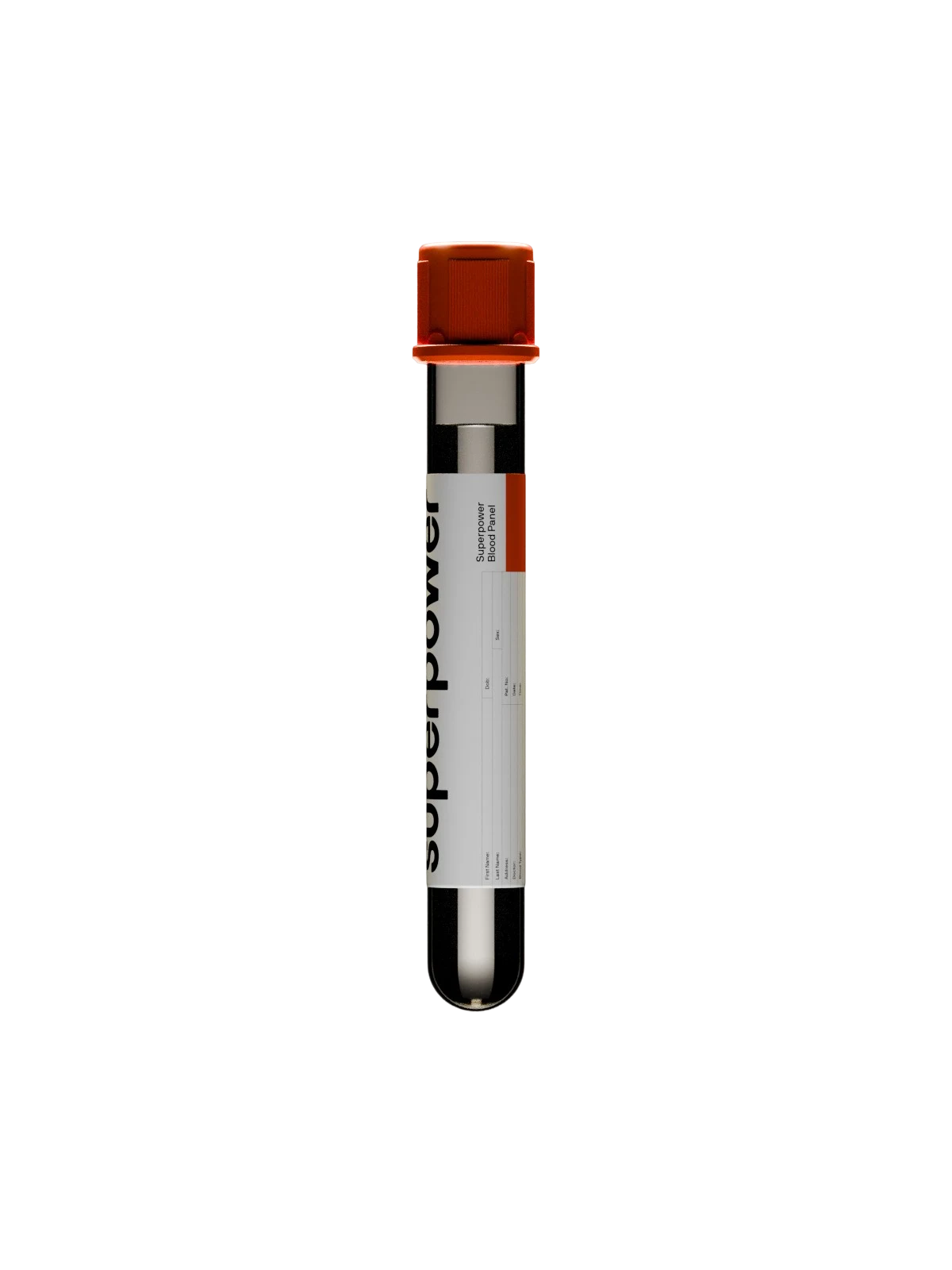
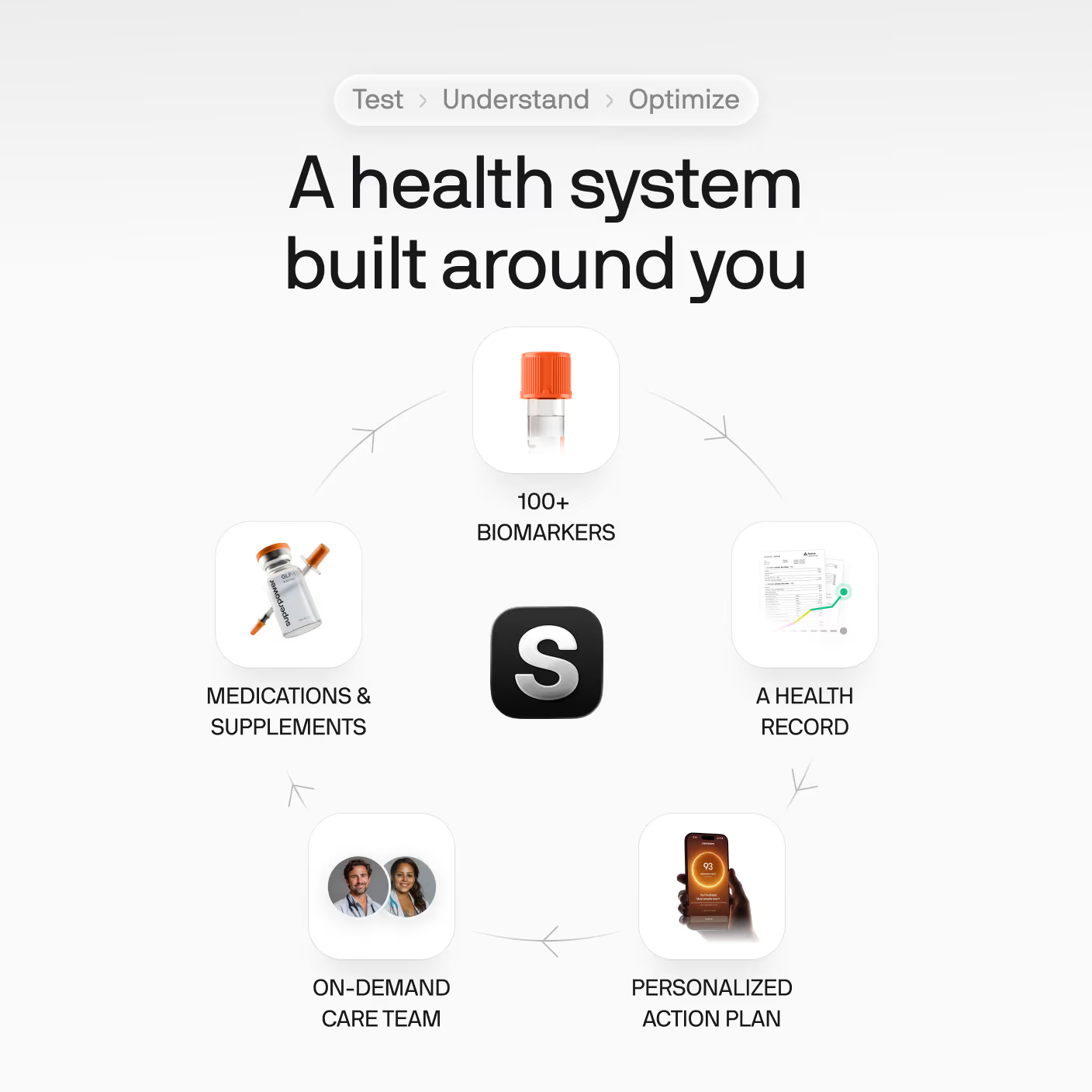
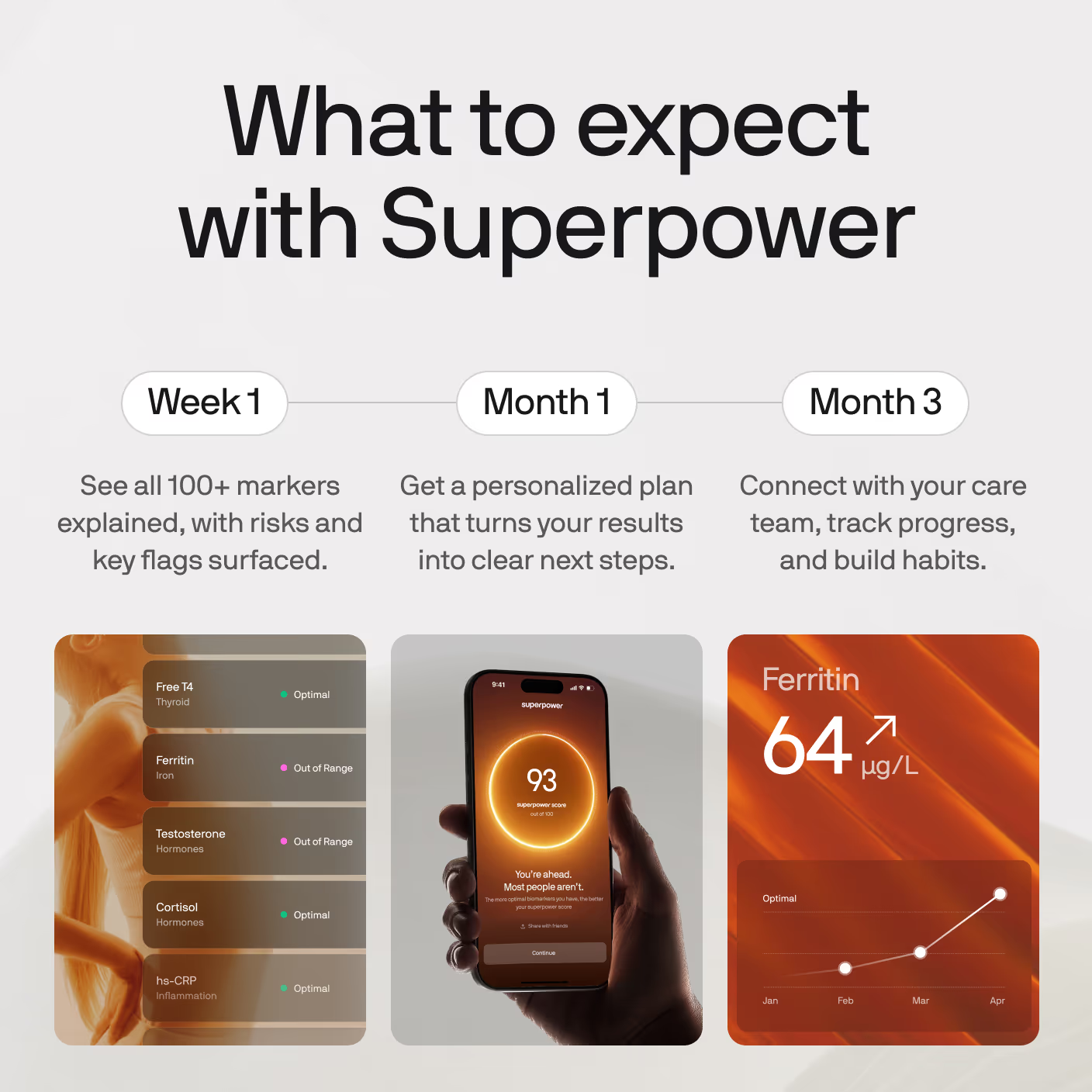
Test 100+ biomarkers
One blood draw. A full picture of your health, explained in plain language.
Test 100+ biomarkers
One blood draw. A full picture of your health, explained in plain language.
Who Brown Noise Suits. And Who Should Skip It
You're most likely to get something out of brown noise is someone working in a noisy environment who wants ambient masking, or an adult with ADHD already in treatment who wants an additional focus cue. It's also reasonable for occasional sleep-onset support in noisy bedrooms.
The caveats are mild. Environmental cue, no clinical risks:
- Hearing sensitivity or hyperacusis. Discuss with audiology before regular use at any volume.
- Persistent insomnia or daytime sleepiness. These are clinical signals, not "try brown noise" signals; route to a sleep-medicine evaluation.
- ADHD self-diagnosis. The focus literature is in clinically diagnosed populations, not self-identified ADHD. If focus or attention symptoms are interfering with daily function, a clinician evaluation is the appropriate first step, not a sound app.
If any of this applies, the right next step is a clinician, not a different brown-noise app.
What There Is to Measure
It's difficult to tell if a noise app worked from subjective feel alone. But for an environmental cue, the subjective rating is closer to the relevant readout than a bloodwork panel.
- Subjective sleep quality (daily 1–10 rating + wearable sleep duration if available): The dominant readout for sleep-masking effect; compare a 2-week baseline against a 2-week trial period.
- Subjective focus rating during deep-work blocks: The dominant readout for the focus claim; A/B test against silence across matched work sessions.
- AM cortisol (optional): If sleep disruption and HPA-axis stress are part of the picture, a retest at 4–8 weeks is reasonable. Though biomarker change is not the primary signal for an environmental cue.
For an environmental cue this cheap and this benign, the subjective signal IS the signal. If brown noise improves the subjective experience, keep it; if not, drop it. The biomarker apparatus is for the interventions where it actually moves something.
When This Is a Clinical Question, Not an App Question
If the reach for brown noise is driven by chronic insomnia, suspected sleep apnea, treatment-resistant ADHD, or persistent fatigue, that's a clinical evaluation, not a sound machine. The right pathways are sleep-medicine consultation for OSA, CBT-I for chronic insomnia, and psychiatry or behavioral health for formal ADHD assessment.
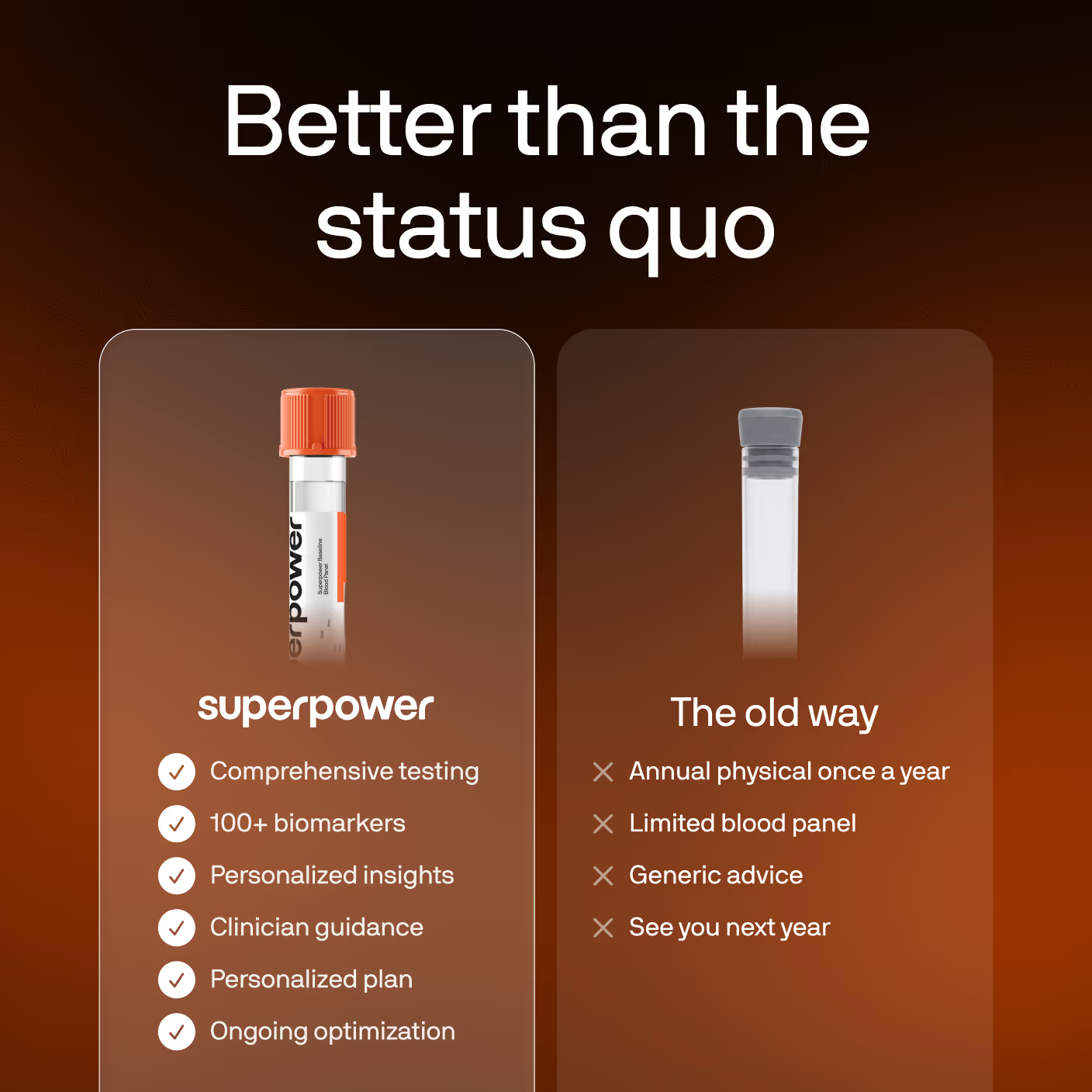
Measuring before changing, then measuring again (when there's something to measure) is the foundation of Superpower's approach to preventive health.
Frequently Asked Questions
References
- Söderlund G, Sikström S, Smart A (2007). Listen to the noise: noise is beneficial for cognitive performance in ADHD. *Journal of child psychology and psychiatry, and allied disciplines*, *48*(8), 840-7. https://doi.org/10.1111/j.1469-7610.2007.01749.x
- Söderlund GBW, Hadjikhani N, Thorsson M, E-Said S, Claesdotter-Knutsson E, Gustafsson P, Johnels, J. Å. (2024). Sensory white noise in clinical ADHD: Who benefits from noise, and who performs worse?. *Scandinavian journal of child and adolescent psychiatry and psychology*, *12*(1), 92-99. https://doi.org/10.2478/sjcapp-2024-0010
- Jostrup E, Claesdotter-Knutsson E, Tallberg P, Söderlund G, Gustafsson P, Nyström M (2024). No Effects of Auditory and Visual White Noise on Oculomotor Control in Children with ADHD. *Journal of attention disorders*, *28*(13), 1668-1683. https://doi.org/10.1177/10870547241273249
- Vincens N, Nause A, Basner M, Fredriksson S, Malmodin D, Bay Nord A, Persson Waye K, Younes M, Zou D, Smith MG (2026). Pink noise reduces impact of traffic noise on sleep and the blood metabolome: a cross-over pilot study. *Communications medicine*, *6*(1), 114. https://doi.org/10.1038/s43856-026-01380-5
- Basner M, Smith MG, Cordoza M, Kayser MS, Carlin M, Ecker AJ, Gilad Y, Park-Chavar S, Rennie K, Schneller V, Walsh S, Shou H, Cao Q, Younes M, Aeschbach D, Jones CW (2026). Efficacy of pink noise and earplugs for mitigating the effects of intermittent environmental noise exposure on sleep. *Sleep*, *49*(5). https://doi.org/10.1093/sleep/zsag001
- Erfanian M, Chait M, Kang J (2025). Pupil-linked arousal does not differ between 'white', 'pink' and 'brown' noises. *International journal of psychophysiology : official journal of the International Organization of Psychophysiology*, *218*, 113271. https://doi.org/10.1016/j.ijpsycho.2025.113271
- Vickrey B, Lerner I (2023). Overnight exposure to pink noise could jeopardize sleep-dependent insight and pattern detection. *Frontiers in human neuroscience*, *17*, 1302836. https://doi.org/10.3389/fnhum.2023.1302836
- Pic Roca C, Bazregarzadeh H, Morisson L, Martin A, Verdonck O, Gibbs S, Lina JM, Carrier J, Richebé P, Duclos C (2026). Protocol for modulating anesthesia delta oscillations using closed loop auditory stimulation. *Frontiers in human neuroscience*, *20*, 1748528. https://doi.org/10.3389/fnhum.2026.1748528
- Bazregarzadeh H, Pic Roca C, Martin A, Lacourse K, Lina JM, Carrier J, Duclos C (2026). CLAS-hdEEG: high-density EEG software platform for real-time delta wave detection and closed-loop auditory stimulation. *Journal of neural engineering*, *23*(2). https://doi.org/10.1088/1741-2552/ae4e5b
- Van den Bulcke L, Davidoff H, Heremans E, Potts Y, Vansteelandt K, De Vos M, Christiaens D, Emsell L, Jacobson LH, Hoyer D, Buyse B, Vandenbulcke M, Testelmans D, Van Den Bossche M (2025). Acoustic Stimulation to Improve Slow-Wave Sleep in Alzheimer's Disease: A Multiple Night At-Home Intervention. *The American journal of geriatric psychiatry : official journal of the American Association for Geriatric Psychiatry*, *33*(1), 73-84. https://doi.org/10.1016/j.jagp.2024.07.002








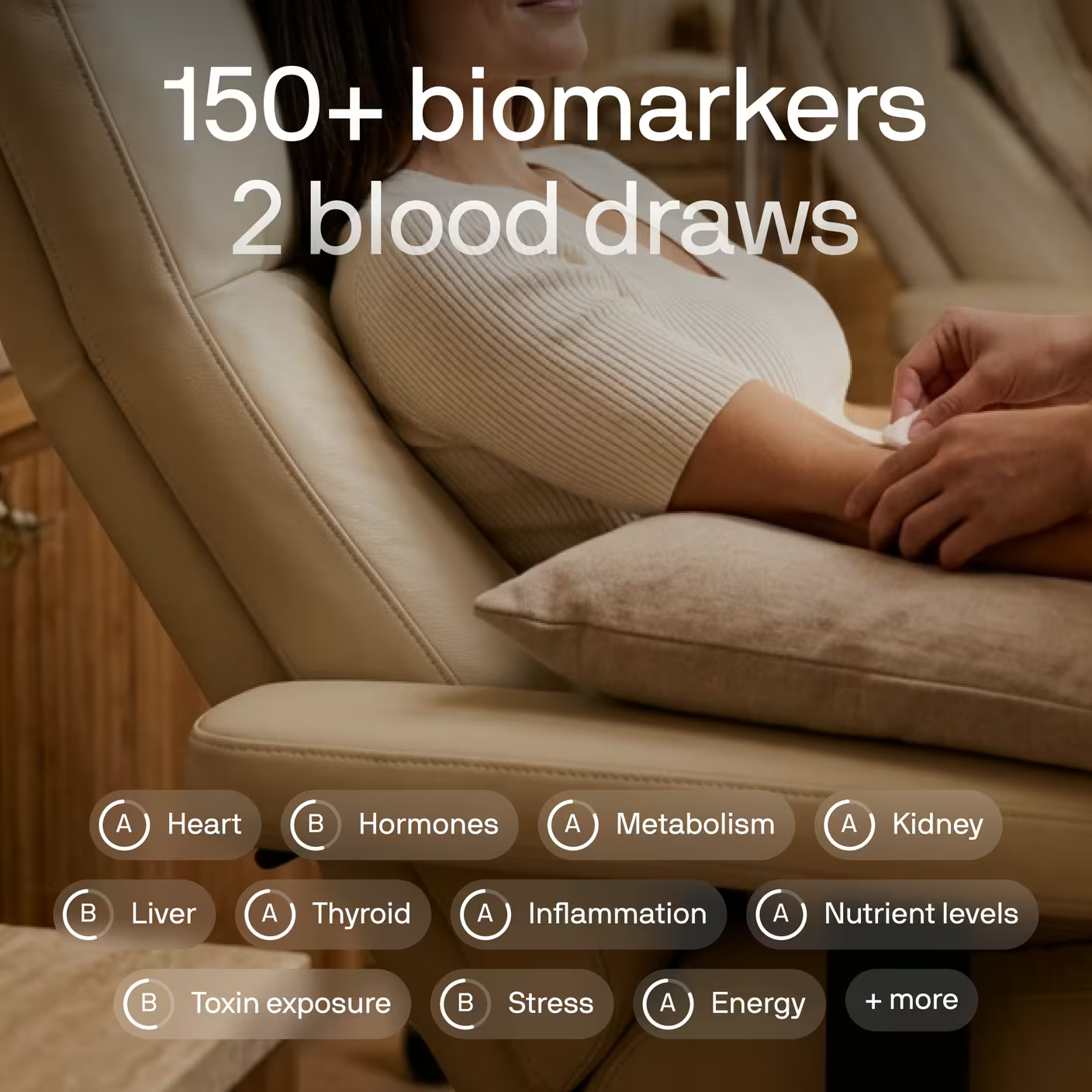



 Heart & Vascular Health
 Metabolic Health
 Energy
 Liver Health
 Kidney
 Sex Hormones
 Thyroid Health
 Nutrients
 Immune System
 Inflammation