


Understand what your diets & nutrition results really mean
See your biomarkers in context with a comprehensive panel.
- CLIA-certified labs
- HIPAA compliant
- Personalized health protocol
You're trying to cut fat from your diet, but every low-fat snack you've tried tastes like cardboard or is loaded with sugar to compensate. Finding snacks that are genuinely low in fat and still worth eating requires knowing where the flavor and satisfaction actually come from.
What makes a low-fat snack actually satisfying
A low-fat snack works when it addresses the two things your body is actually asking for: sustained energy and the signal to stop eating. Fat slows digestion and triggers the release of satiety hormones like cholecystokinin (CCK), which is why full-fat foods feel so filling. But fat isn't the only lever. Protein stimulates similar pathways, and fiber adds bulk that physically stretches your stomach, sending its own "I'm full" message to your brain. When you combine protein and fiber in a low-fat snack, you're building a different kind of satisfaction, one that doesn't rely on fat to do all the work.
The other piece is taste. Fat carries flavor, but it doesn't create it. Herbs, spices, acidity, and umami can all make food compelling without adding grams of fat. A plain baked potato is boring. A baked potato with salsa, nutritional yeast, and a squeeze of lime is a snack you'd actually choose. The difference isn't fat. It's seasoning and texture.
How low-fat snacking affects hunger, energy, and metabolism
When you eat a snack that's mostly carbohydrate and low in both fat and protein, your blood sugar spikes quickly and crashes just as fast. That crash triggers hunger again, often within an hour. This is why a handful of pretzels or a fat-free muffin leaves you prowling the kitchen 30 minutes later. Your body didn't get the signal that it was fed. It got a glucose jolt followed by a cortisol response as your blood sugar dropped.
Protein changes this by slowing gastric emptying, meaning food stays in your stomach longer. It also stimulates the release of peptide YY (PYY) and glucagon-like peptide-1 (GLP-1), both of which suppress appetite and improve insulin sensitivity. Fiber does something similar by slowing carbohydrate absorption and feeding beneficial gut bacteria, which produce short-chain fatty acids that regulate appetite and inflammation. Together, protein and fiber create a metabolic environment where you feel full longer, your blood sugar stays stable, and your body doesn't panic into storing everything as fat.
Volume also matters. Foods with high water or air content, like popcorn, raw vegetables, or fruit, take up space in your stomach without adding many calories. Your brain registers fullness partly through stretch receptors in your stomach lining. A cup of grapes and a tablespoon of peanut butter might have the same calories as a small cookie, but the grapes will make you feel more satisfied because they occupy more physical space.
What drives satisfaction in low-fat snacks
Protein content
Protein is the most satiating macronutrient. Even in small amounts, it blunts hunger more effectively than carbohydrates or fat. Greek yogurt, cottage cheese, edamame, and turkey slices all deliver protein without much fat. A half-cup of low-fat Greek yogurt has around 15 grams of protein and less than 3 grams of fat. That's enough to keep you full for two to three hours, especially if you pair it with berries or a sprinkle of cinnamon.
Fiber density
Fiber slows digestion and stabilizes blood sugar while adding bulk without calories. Vegetables, fruits, legumes, and whole grains are all high-fiber, low-fat options. A cup of raw bell pepper strips has 3 grams of fiber and almost no fat. Pair it with hummus (which adds a small amount of fat from tahini but is still relatively lean), and you've built a snack that will hold you over.
Flavor and texture
Satisfaction isn't just metabolic. It's sensory. Crunch, salt, tang, and spice all make food more rewarding. Air-popped popcorn seasoned with smoked paprika and nutritional yeast tastes like something you'd choose, not something you're tolerating. Roasted chickpeas with cumin and chili powder have the crunch of chips without the oil. Frozen grapes have the sweetness of candy with the fiber of fruit.
Blood sugar impact
Pairing a carbohydrate with protein or fiber lowers the glycemic response. An apple alone will raise your blood sugar moderately. An apple with a tablespoon of almond butter will raise it less and keep you full longer. The same principle applies to rice cakes with cottage cheese, whole-grain crackers with turkey, or a banana with a handful of roasted chickpeas.
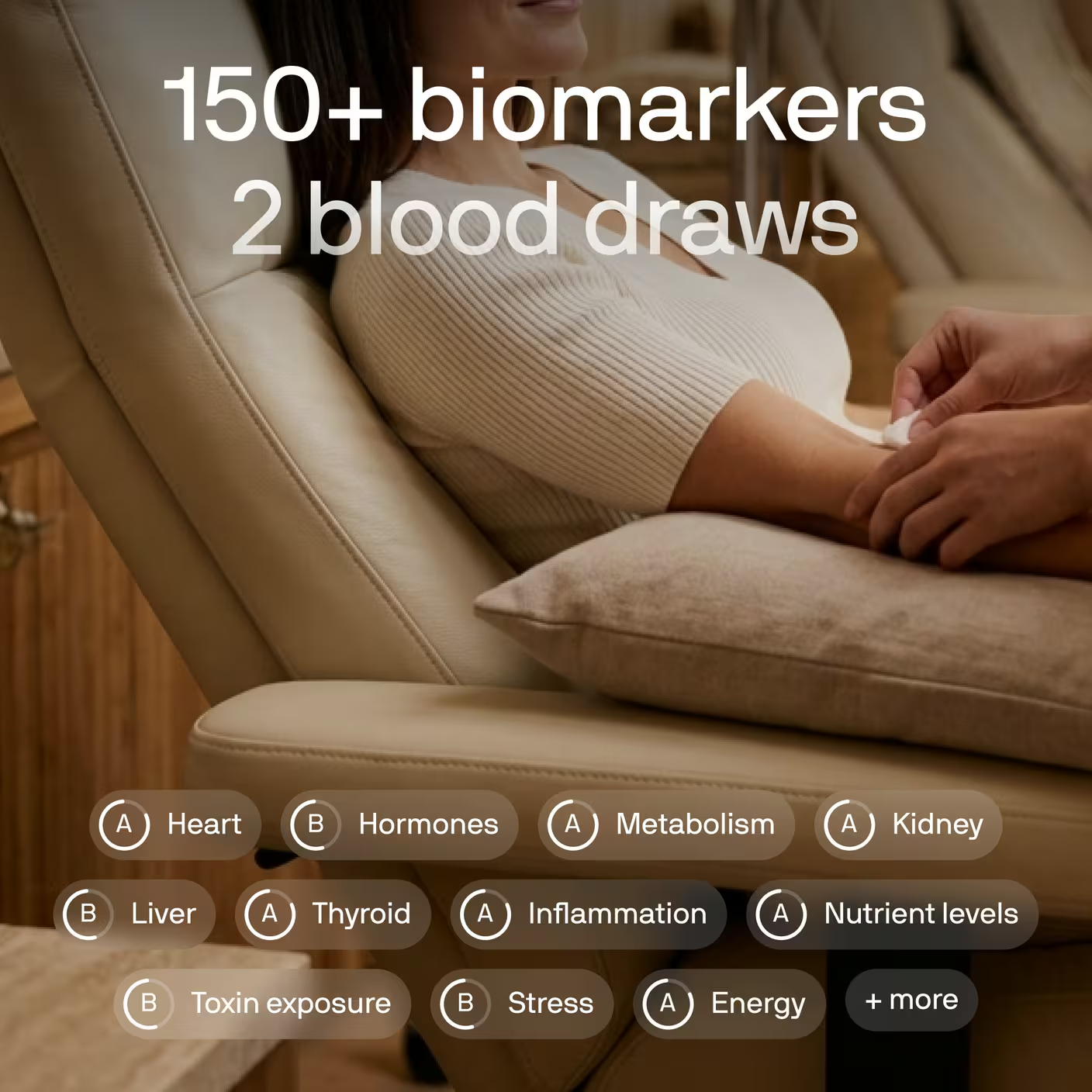
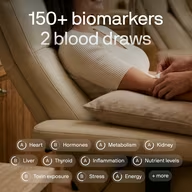
Test 150+ biomarkers
Two blood draws. A full picture of your health, explained in plain language.
Test 150+ biomarkers
Two blood draws. A full picture of your health, explained in plain language.
Why some people feel hungrier on low-fat snacks
Not everyone responds to low-fat snacks the same way. The difference often comes down to individual variation in satiety hormone sensitivity, gut microbiome composition, and metabolic flexibility.
If your body is used to running on fat, either from dietary fat or stored body fat, a sudden shift to low-fat, high-carbohydrate snacks can leave you feeling unsatisfied. Your brain is still waiting for the fat signal. Over time, your body adapts, and protein and fiber start to feel more filling. But in the short term, you might need to increase portion sizes or snack frequency to bridge the gap.
Gut bacteria also play a role. Certain bacterial strains are better at fermenting fiber into short-chain fatty acids, which suppress appetite. If your microbiome isn't optimized for fiber digestion, you might not get the same satiety benefit from high-fiber, low-fat snacks. This is one reason why some people thrive on plant-based, low-fat diets and others feel constantly hungry.
Insulin sensitivity matters too. If you're insulin resistant, even moderate amounts of carbohydrate can trigger a blood sugar spike and crash, leaving you hungry. In that case, low-fat snacks need to be very high in protein and fiber to keep your blood sugar stable. A snack like plain fruit might not work for you, but fruit with cottage cheese or a hard-boiled egg might.
Building a low-fat snack strategy that works
The goal isn't to eliminate fat entirely. It's to build snacks that don't rely on fat to do all the heavy lifting. Start with a protein or fiber base, then add flavor and texture. Greek yogurt with berries and a drizzle of honey. Celery sticks with salsa and black beans. A rice cake with mashed avocado and everything bagel seasoning. Roasted edamame with sea salt. A smoothie made with frozen fruit, spinach, and a scoop of protein powder.
Volume is your friend. A large bowl of air-popped popcorn feels more indulgent than a small handful of nuts, even if the calories are similar. A plate of cucumber slices, cherry tomatoes, and bell pepper strips with a small container of hummus looks like a meal, not a snack. Your brain responds to visual cues as much as metabolic ones.
Tracking your response over time is more useful than following a generic plan. If a snack keeps you full for three hours and doesn't trigger cravings, it's working. If you're hungry again in 45 minutes, adjust. Add more protein. Add more fiber. Add more volume.
Superpower's Baseline Blood Panel measures over 150 biomarkers, including fasting glucose, hemoglobin A1c, and insulin, so you can see how your body is actually responding to the way you're eating. If your blood sugar is stable and your insulin sensitivity is improving, your snack strategy is working. If not, you have data to guide your next move.
Frequently Asked Questions
References
- Sacks FM, Lichtenstein AH, Wu JHY, Appel LJ, Creager MA, Kris-Etherton PM, Miller M, Rimm EB, Rudel LL, Robinson JG, Stone NJ, Van Horn LV (2017). Dietary fats and cardiovascular disease: A presidential advisory from the American Heart Association. *Circulation*, *136*(3), e1-e23. https://doi.org/10.1161/CIR.0000000000000510
- Leidy HJ, Clifton PM, Astrup A, Wycherley TP, Westerterp-Plantenga MS, Luscombe-Marsh ND, Woods SC, Mattes RD (2015). The role of protein in weight loss and maintenance. *The American Journal of Clinical Nutrition*, *101*(6), 1320S-1329S. https://doi.org/10.3945/ajcn.114.084038
- Anderson JW, Baird P, Davis RH, Ferreri S, Knudtson M, Koraym A, Waters V, Williams CL (2009). Health benefits of dietary fiber. *Nutrition Reviews*, *67*(4), 188-205. https://doi.org/10.1111/j.1753-4887.2009.00189.x
- Ludwig DS (2002). The glycemic index: Physiological mechanisms relating to obesity, diabetes, and cardiovascular disease. *JAMA*, *287*(18), 2414-2423. https://doi.org/10.1001/jama.287.18.2414
- Westerterp-Plantenga MS, Lemmens SG, Westerterp KR (2012). Dietary protein - its role in satiety, energetics, weight loss and health. *British Journal of Nutrition*, *108*(S2), S105-S112. https://doi.org/10.1017/S0007114512002589




















 Heart & Vascular Health
 Metabolic Health
 Energy
 Liver Health
 Kidney
 Sex Hormones
 Thyroid Health
 Nutrients
 Immune System
 Inflammation