Test details
- Sample type:
- Single blood draw (blood only)
- Location:
- In-person at local lab / At-home phlebotomist visit (+$119)
- Availability:
- Available in 40 states
- Turnaround:
- Results typically within 10 days
- Preparation:
- No cycle-day timing required; AMH is stable across the cycleStop biotin-containing supplements at least 48 hours before your drawStay well hydrated before your appointment
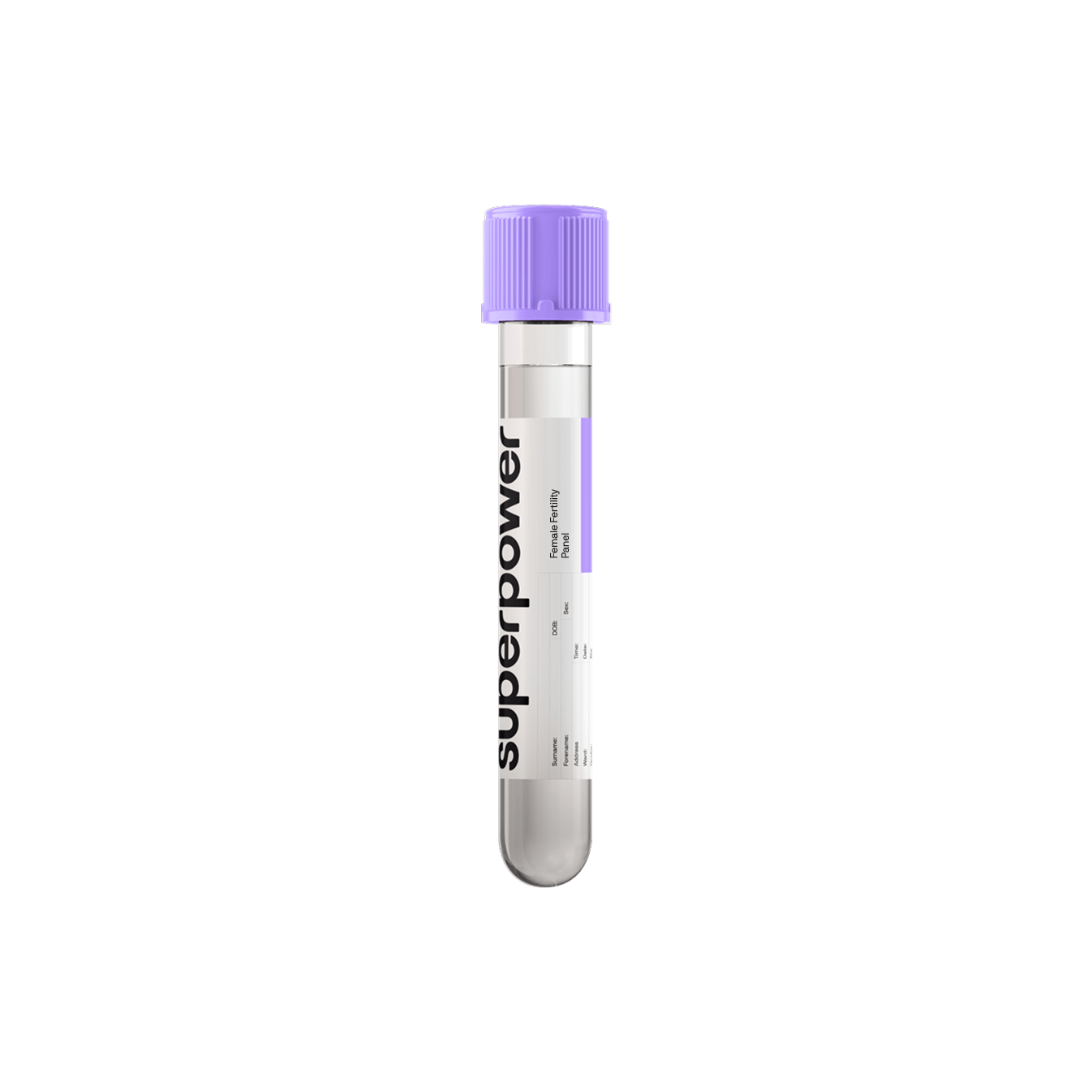
There is a question a lot of people hold for years before they act on it: do I have time? It is not always about trying to conceive right now. Sometimes it is about understanding the window, knowing whether the option to wait is still open, or whether something in the environment may be affecting the picture. The Fertility Planning panel measures two specific things in a single blood draw: your ovarian reserve, via AMH, and your blood mercury level. Together they give you a clearer biological foundation for conversations about timing and next steps. Measure both, with results delivered to your dashboard, typically within 10 days.
This panel is for informational purposes only and does not constitute medical advice. It does not diagnose infertility or any condition, and it does not predict pregnancy outcomes. Results should be reviewed with a qualified healthcare provider.
What this panel measures
Anti-Müllerian Hormone (AMH)
AMH is produced by the small follicles in your ovaries, and it is one of the most reliable markers of ovarian reserve, meaning how many eggs you have remaining. Unlike other fertility markers, AMH stays relatively stable throughout your cycle, so it can be tested on any day. What it reflects is the size of your remaining follicle pool, one important variable in a larger picture. It does not measure egg quality, and it does not predict whether you will conceive. A lower-than-expected AMH in your 20s or early 30s may indicate that your fertility window is shorter than you assumed: useful context for a planning conversation, not a verdict.
Mercury (blood)
Blood mercury measures recent exposure to mercury, a reproductive toxin that accumulates from fish consumption, dental amalgams, and environmental exposure. Elevated mercury levels are associated with reduced fertility, increased miscarriage risk, and developmental concerns during pregnancy. Mercury is rarely tested in preconception care, but it should be, because most fertility panels skip it entirely. This one includes it because environmental toxin burden is a variable that affects reproductive health, and one most people do not know to check. Because it reflects recent exposure rather than a fixed trait, it is a marker worth understanding before conceiving.
Why mercury is part of this panel
Mercury has been associated with endocrine-disrupting effects. It has been associated with disrupted ovarian function, irregular cycles, and impaired hormone signaling, sometimes at levels below those that cause obvious neurological symptoms. Common sources include large predatory fish such as tuna, swordfish, and king mackerel, along with occupational exposures and dental amalgam fillings.
Blood mercury reflects recent exposure, typically over the past several weeks. If mercury is elevated, reducing exposure and allowing time for levels to drop before conceiving is the practical response, and that is much better to know before pregnancy than during it. Most fertility panels don't include mercury, so pairing it with AMH is what makes this one different.
Who benefits from testing
- Anyone considering egg freezing in the next one to three years who wants a current AMH baseline before making a timing decision
- People who are starting to try to conceive and want foundational fertility data alongside their clinical workup
- Those in their late 20s or 30s who want to understand where their ovarian reserve stands relative to age-based ranges, not because anything is wrong, but because they want to know
- People with a family history of early menopause or diminished ovarian reserve who want to assess their own reserve at an earlier age
- Anyone who eats fish regularly and wants to check mercury levels before conceiving, or who has a history of dental amalgam fillings or occupational exposure
- People already working with a fertility specialist who want to add mercury context to an existing AMH result
What your results will tell you
Your results will show two values.
AMH level, measured against age-referenced ranges. Where your ovarian reserve stands relative to your age helps inform decisions about timing. If AMH is lower than expected, it does not mean you cannot get pregnant, but it may mean moving sooner or exploring preservation options is worth discussing with a provider. A result in range can provide reassurance about reserve for your age group, while a higher-than-expected result may sometimes be associated with PCOS patterns. It does not confirm PCOS, which requires clinical evaluation.
Blood mercury level, measured against established reference limits. If elevated, reducing exposure and allowing time for levels to drop before conceiving is the practical next step, and much better to know before pregnancy than during it.
Reference ranges vary by lab and individual. Your Superpower care team and your provider will interpret your specific results in context.
How to prepare
- Cycle timing: AMH is relatively stable throughout the menstrual cycle, so you can collect this sample on any day, and no specific cycle-day timing is required.
- Hormonal contraceptives: If you are currently using hormonal contraception, your AMH result may reflect a suppressed level rather than your natural ovarian reserve. This is worth noting when you review your results with a provider.
- Supplements: Stop any supplement containing biotin (multivitamins, B-complex, and hair, skin, and nail formulas) at least 48 hours before your draw. Continue all prescribed medications as normal.
- Stay well hydrated before your appointment.
How it works
- Order online: add the Fertility Planning panel to your Superpower account or order it as a standalone add-on.
- Schedule: book at a local clinic near you, or arrange an optional at-home visit with a trained phlebotomist (+$119).
- Get your blood drawn: a single blood sample, with no cycle-day restrictions for AMH.
- Review your results in your dashboard, with your Superpower care team available to walk through them.
Accuracy and privacy
- Processed in a CLIA-certified laboratory
- Your Superpower care team is available to help you understand your results
- Optional at-home phlebotomist visit (+$119) available in most major metros
- Your data is private and never sold
Frequently asked questions
Frequently asked questions
Biomarkers tested
Mercury is a naturally occurring heavy metal with no beneficial role in human biology.
Learn moreMethod: Laboratory-developed test (LDT) validated under CLIA; not cleared or approved by the FDA. Results are interpreted by clinicians in context and are not a stand-alone diagnosis.